
In aggregate processing and mining, the characteristics of feed material are never uniform. One of the most challenging scenarios arises when processing materials with high moisture content, such as wet clay, sticky laterite, saturated sandstone, or certain mineral ores after rainfall. These materials can cause severe clogging, reduced throughput, and accelerated wear in many types of crushing equipment. In this demanding context, the jaw crusher distinguishes itself through inherent design features that grant it superior adaptability. This article examines the capabilities, operational strategies, and practical considerations for using jaw crushers effectively with high-moisture feed.
1. The Challenge: Why Moisture and Clay Cause Problems
High-moisture materials, especially those containing fines and clays, present specific challenges:
- Adhesion and Packing: Wet, sticky particles adhere to metal surfaces, building up in the crushing chamber, on feed chutes, and on discharge points, eventually causing blockages.
- Reduced Flowability: Material ceases to flow freely, leading to bridging in hoppers and uneven feeding.
- Carryback and Spillage: Damp fines stick to conveyor belts, reducing cleaning efficiency and creating housekeeping issues.
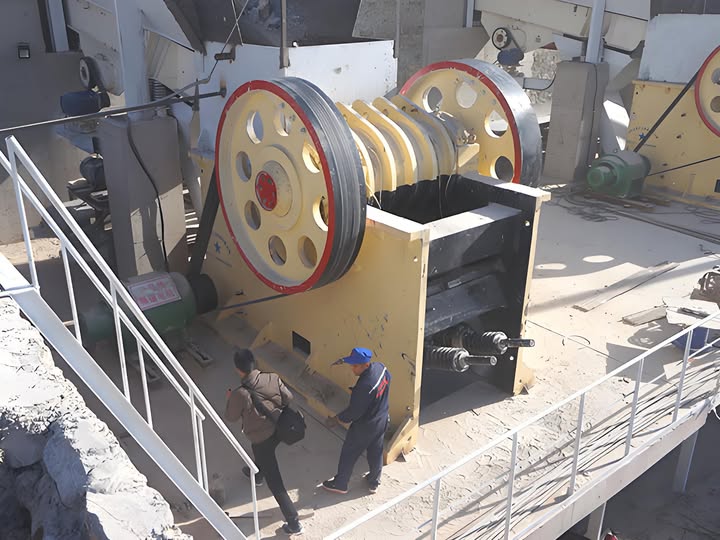
2. Inherent Advantages of Jaw Crusher Design for Wet Material
Compared to other primary crushers like gyratories or impactors, the jaw crusher’s mechanics offer natural benefits in damp conditions.
- Gravity-Assisted Discharge: The crushing action in a jaw crusher is primarily vertical. The downward stroke of the moving jaw, combined with gravity, helps push the processed material down and out of the discharge opening, even if it’s somewhat cohesive. This is more effective than the horizontal/material-retention action in a standard cone crusher chamber.
- Less Prone to Packing in the Chamber: The geometry of the crushing chamber and the aggressive “nipping” action are less conducive to the progressive build-up and compaction that can “choke” other crusher types. Material is typically forced through more readily.
- Simplicity and Robustness: With fewer internal shelves, ledges, or complex crushing chamber profiles common in secondary/tertiary crushers, there are fewer places for sticky material to accumulate and cause problems.
- Tolerance for Variable Feed: Jaw crushers can handle a mix of large rock and fine, wet matrix better than crushers requiring a more consistent feed for optimal performance.
3. Key Operational Advantages and Strategies
3.1. Effective Handling of Clay-Bearing Materials
Jaw crushers are often the preferred primary crusher for soft, wet, and clayey materials like lateritic nickel ore or bauxite. Their robust action can break up clumps of clay and allow the mixed material to pass through.
3.2. Adjustable Discharge Setting
Running the crusher with a slightly wider discharge setting (CSS) can improve material flow and reduce the risk of damp fines packing in a tighter chamber. While this may increase the top size of the product, it ensures continuous operation.
3.3. Reliable Operation with Basic Setups
In remote or preliminary operations where material drying or sophisticated feeding systems aren’t available, a jaw crusher often represents the most reliable and lowest-risk option for primary size reduction.
4. Practical Limitations and Critical Considerations
Despite its adaptability, success is not automatic. Specific measures must be taken.
- Not Immune to Buildup: Severe conditions can still lead to material buildup on the cheek plates, in the discharge chute, and on the feeder. Regular inspection and cleaning protocols are essential.
- Importance of Pre-Screening (Scalping): Using a grizzly or scalping screen before the crusher is arguably more critical with wet feed. It removes the ultra-fines and sticky soil that contribute most to packing problems, allowing the crusher to process the larger rock more efficiently.
- Feed Control is Paramount: An apron feeder is strongly recommended over a vibrating feeder for very wet, sticky material. Apron feeders provide a positive, steady material pull that prevents flooding and ensures a consistent “head” of material in the crusher cavity, which aids in self-cleaning.
- Material-Specific Wear: Highly abrasive and wet materials (like certain sands) can combine abrasive and adhesive wear on jaw dies. Monitoring wear patterns and potentially selecting different jaw plate profiles or materials may be necessary.
5. Comparison with Other Crusher Types in High-Moisture Conditions
| Crusher Type | Primary Advantage | Major Challenge with Wet/Sticky Material |
|---|---|---|
| Jaw Crusher | Robust, gravity-assisted discharge, tolerates clays. | Build-up on feeder/discharge areas; requires scalping. |
| Gyratory Crusher | High capacity for hard rock. | More prone to packing/choking in the chamber; sensitive to clay. |
| Cone Crusher (Secondary) | Excellent product shape and gradation. | Very prone to choking with damp fines; requires very controlled, dry feed. |
| Primary Impact Crusher | High reduction ratio, good for softer rock. | Material can build up on impact aprons and grate baskets; wear can be high. |
6. Best Practices for Optimal Performance
To maximize jaw crusher performance with high-moisture material:
- Invest in Effective Scalping: Remove as much fine, wet material as possible before the crusher.
- Use an Apron Feeder: Ensure consistent, controlled feeding.
- Consider Chamber Design: Opt for jaw plates with a more aggressive tooth profile to aid in gripping and breaking up sticky masses, rather than smooth plates.
- Maintain a Routine Cleaning Schedule: Schedule regular shutdowns to clear build-up from around the crusher discharge area, feeder, and chutes.
- Monitor Power Draw: A rising power draw can indicate the beginning of packing or an overload condition, allowing for proactive intervention.
Conclusion
The jaw crusher stands as one of the most adaptable and reliable primary crushing solutions for handling materials with high moisture content. Its mechanical simplicity, gravity-assisted discharge, and inherent tolerance for variable feed give it a distinct advantage over more complex compression or impact crushers in wet and sticky conditions.
However, this adaptability is not a substitute for proper system design and proactive operation. Success hinges on effective pre-scalping, controlled feeding via an apron feeder, and diligent maintenance to manage the inevitable challenges of adhesion and build-up. When configured and operated with these principles in mind, a jaw crusher provides a robust and efficient first line of defense in processing circuits where moisture is a constant factor, ensuring continuous operation and protecting downstream equipment from problematic feed.
- > High-Performance Granite Jaw Crusher: 350 Tons Per Hour for Efficient Crushing
- > The Application of Mobile Jaw Crushers for Limestone in South Africa
- > Utilizing Jaw Crushers in Gold Mining Operations
- > The Extensive Use of Popular Mining Ball Mills in Cement Production Lines
- > Jaw Crusher Performance in Volcanic Rock Processing: A Robust and Efficient Solution
- > Solving High Cone Crusher Maintenance Frequency in Copper Ore Crushing
- > Common Issues and Solutions for Jaw Crushers
- > The Role of Vibrating Screens in the Mining Industry


Online


Message