
Road emergency repairs—whether due to storm damage, landslides, pavement failure, or accident-related destruction—demand a rapid, efficient, and cost-effective response. Traditional methods involving hauling damaged material to distant disposal sites and importing new aggregate are time-consuming, logistically complex, and expensive. In this high-pressure context, mobile crushing plants emerge as a transformative solution, offering a paradigm shift in how repair crews restore critical infrastructure. By processing material directly on-site, these self-contained units deliver significant advantages that are crucial for successful and timely road rehabilitation.
Core Challenge of Road Emergency Repair
The primary obstacles in emergency roadwork are:
- Time Sensitivity: Roads must be reopened to traffic as soon as possible.
- Remote or Constrained Sites: Damage often occurs in areas with limited access or space.
- High Logistics Costs: Transporting both waste and new material doubles hauling expenses.
- Material Shortages: Sourcing and delivering sufficient new aggregate can cause delays.
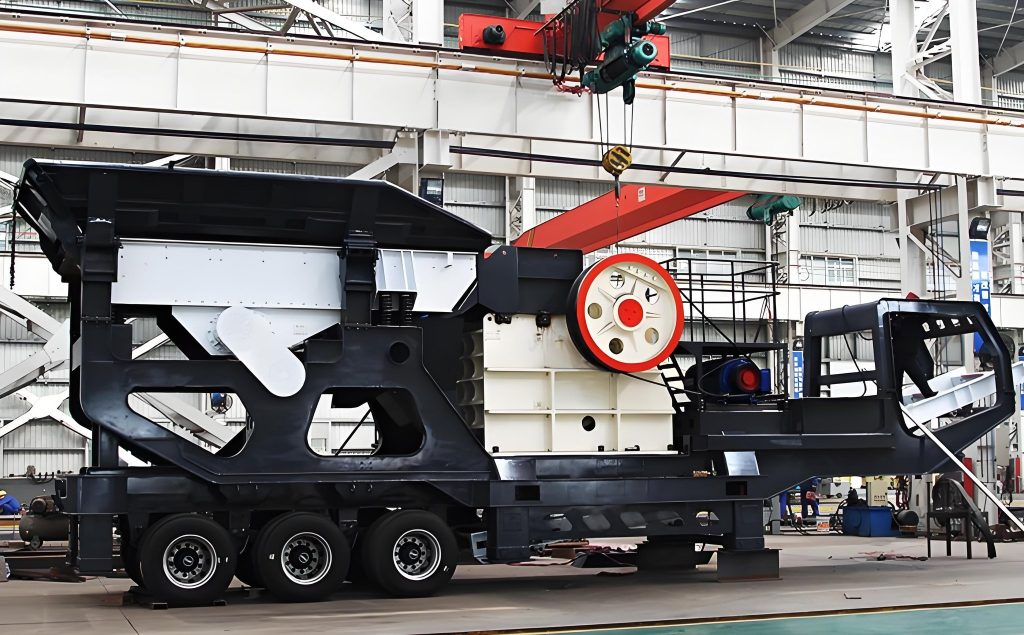
Key Advantages of Mobile Crushing Plants
1. Unmatched Speed and Rapid Deployment
The most critical advantage in an emergency is speed.
- Quick Setup: A modern track-mounted mobile crusher can be operational on a leveled site within an hour. There is no need for fixed foundations, cranes (for most models), or complex installation.
- Direct On-Site Processing: The plant is driven directly to the pile of damaged asphalt, concrete, or rock debris. This eliminates the time lag associated with organizing waste removal and new material delivery.
2. On-Site Material Processing and Closed-Loop Recycling
This creates a self-sufficient “production island” at the repair site.
- Eliminate Haul-Off and Import Costs: The rubble is fed into the mobile crusher and transformed into high-quality, specification aggregate (e.g., base course, sub-base, or backfill material) right where it’s needed. This cuts transportation costs by up to 70-80%.
- Immediate Availability of Material: The processed aggregate is produced continuously and can be directly re-used in the repair process—for stabilizing the roadbed, creating new layers, or as backfill for slopes and embankments.
- Waste Elimination: It turns a disposal problem (damaged pavement) into a valuable resource, minimizing landfill use and associated fees.
3. Superior Accessibility and Terrain Adaptability
- Track-Mounted Mobility: Equipped with heavy-duty crawlers, these plants can access steep, soft, or uneven terrain typical of landslide sites or rural road damage where conventional trucks and fixed equipment cannot easily go.
- Compact Footprint: They operate in confined work zones common in roadside repair projects without requiring extensive space for material stockpiling and handling.
4. Versatility and Operational Flexibility
- Handles Various Feed Materials: Capable of processing a wide range of materials found in road emergencies: fractured asphalt, broken concrete (from bridges or barriers), natural rock from landslides, and existing roadbase.
- Adjustable Output: The final product size can be adjusted to meet specific engineering requirements for the repair, whether it’s coarse drainage material or fine-graded base material.
- Standalone or Combined Operation: A single unit with a jaw/impact crusher and integrated screen can operate independently. Multiple units (e.g., a jaw and a cone) can be combined for more complex tasks.
5. Significant Cost Reduction and Economic Efficiency
The economic model shifts from a linear (haul away, buy new, haul in) to a circular (process and re-use on-site) system.
- Dramatically Lower Transportation Costs: The largest cost component in traditional repair is logistics. Mobile crushing minimizes this almost entirely.
- Zero Cost for New Aggregate: The need to purchase virgin aggregate is greatly reduced or eliminated.
- Reduced Disposal Fees: Costs for tipping waste at landfills are avoided.
6. Environmental Sustainability
- Lower Carbon Footprint: Eliminating dozens of truck trips for removal and delivery significantly reduces fuel consumption and CO₂ emissions.
- Resource Conservation: Promotes the circular economy by recycling existing materials, preserving natural quarries, and reducing landscape disruption from new aggregate mining.
Practical Application in a Road Repair Scenario
- Site Assessment & Clearance: Debris is cleared and piled by excavators.
- Plant Positioning: The mobile crushing plant is positioned adjacent to the debris pile.
- Crushing & Screening: The excavator feeds debris into the crusher. An integrated screen sorts the output into required sizes (e.g., 0-20mm for base, 20-40mm for sub-base).
- Direct Re-use: Sized aggregate is conveyed directly to the roadbed for compaction and layering by the paving crew.
- Site Departure: Once repair is complete, the plant drives away or is transported, leaving a restored road with minimal environmental trace.
Conclusion: A Strategic Game-Changer for Rapid Response
In road emergency repair operations, mobile crushing plants are not just a piece of equipment; they are a force multiplier for efficiency and effectiveness. Their ability to deliver speed, logistical independence, cost savings, and environmental benefits directly addresses the core challenges of emergency infrastructure restoration.
For departments of transportation, road maintenance contractors, and disaster response teams, investing in or contracting mobile crushing capability is a strategic decision that enhances preparedness. It ensures the ability to respond faster, control costs more effectively, and rebuild vital infrastructure with resilience and sustainability in mind. In the race to reopen roads, the mobile crusher provides the decisive advantage.
- > Extensive Use of Jaw Crushers in the Mining and Quarrying Industry
- > Rock Impact Crusher: An Essential Tool for Mining and Quarrying Operations
- > The Unmatched Convenience of Mobile Jaw Crushers for Mountain Road Construction
- > Efficient 100-150 TPH Cone Crusher for Nickel Laterite Ore Processing
- > Cost-Effective Jaw Crusher Equipment for Sandstone Crushing in Pakistan
- > Common Applications of Jaw Crushers in Sand and Gravel Plants
- > Mobile Jaw Crushers for Mining: Versatile Solutions for Efficient Ore Processing
- > The Application of Mobile Crushers in Slag Grinding with Grinding Mills


Online


Message