
Road widening is a critical infrastructure upgrade to alleviate traffic congestion, improve safety, and support economic growth. These projects, however, present unique logistical and material challenges: managing vast quantities of excavated material (rock, old pavement, soil) and sourcing large volumes of new aggregates for sub-base and base layers. The traditional method of hauling waste to distant landfills and importing fresh materials is not only costly but also environmentally taxing. Mobile crushing and screening plants have emerged as a transformative, on-site solution, fundamentally changing the efficiency and sustainability of road widening projects.
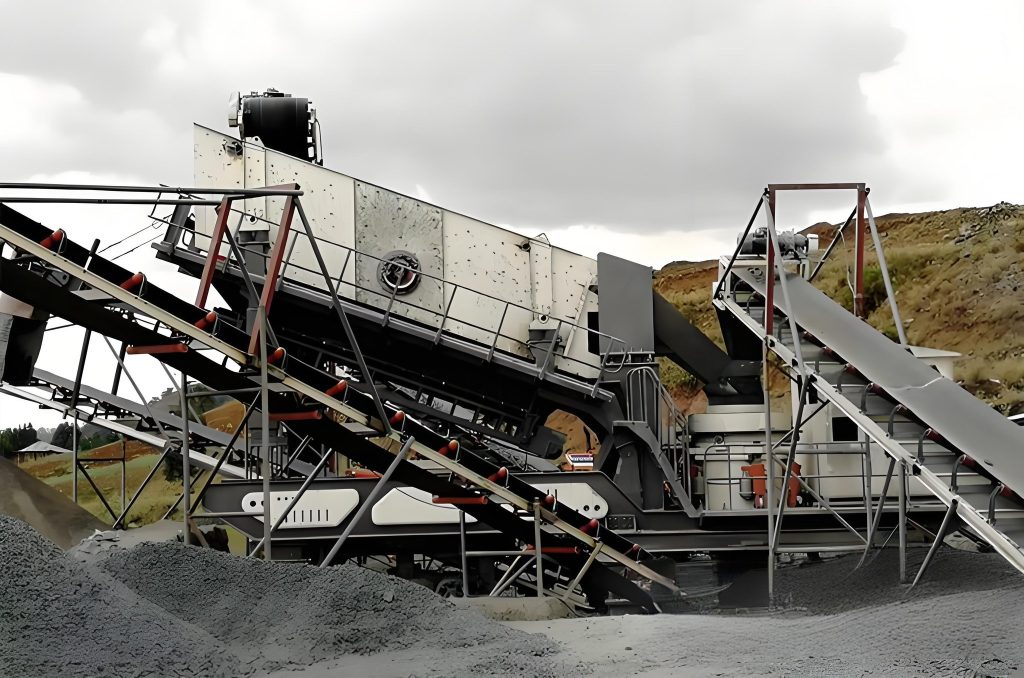
Core Challenges in Road Widening & The Mobile Plant Solution
Road widening projects are often linear and constrained, creating specific pain points that mobile plants are uniquely designed to address:
- Challenge 1: Disposal of Excavated Material. Excavation yields large quantities of rock, old concrete, and asphalt. Hauling this “waste” off-site is expensive and fills landfills.
- Mobile Plant Solution: On-site Processing. The mobile crusher is set up directly in the work corridor. It processes the excavated rock and demolished old pavement, turning it into usable recycled aggregates.
- Challenge 2: Sourcing and Transporting New Aggregates. Importing virgin aggregates from remote quarries incurs high fuel, trucking, and material costs.
- Mobile Plant Solution: In-situ Material Production. The plant produces specification-grade aggregates (e.g., base course, sub-base) right on the project site from the processed excavation material, slashing import needs.
- Challenge 3: Limited Space and Linear Work Progression. Fixed plants are immobile, and traditional setups require large, dedicated spaces.
- Mobile Plant Solution: Compact Footprint and Mobility. Track-mounted plants require minimal setup, can operate in confined areas, and can be easily relocated along the project length as work progresses.
- Challenge 4: Project Sustainability Goals. Modern projects mandate reducing carbon footprint and promoting circular economy practices.
- Mobile Plant Solution: Closed-Loop Recycling. It creates a sustainable, closed-loop system: demolition waste becomes construction material, drastically reducing truck trips, landfill use, and virgin material consumption.
Key Advantages of Using Mobile Crushing Plants in Road Widening
1. Dramatic Cost Reduction
The most significant benefit is the drastic cut in logistics costs. By eliminating or massively reducing the need to transport both waste out and new materials in, projects can save 30-50% or more on aggregate-related costs. The mobile plant turns a major cost center (waste disposal and material procurement) into a value-generating asset.
2. Unmatched Flexibility and Continuous Workflow
A track-mounted mobile crushing plant can be relocated within hours. As the widening work advances kilometer by kilometer, the crushing operation can follow closely behind the excavation team. This ensures a continuous supply of recycled aggregates right where they are needed, preventing delays.
3. Production of High-Quality, Specification-Ready Materials
Modern mobile plants, especially closed-circuit impact crushers or cone crushers, can produce precisely graded aggregates that meet or exceed DOT (Department of Transportation) specifications for road base (Type 1, Type 2), sub-base, and drainage layers. The quality of well-processed recycled concrete aggregate (RCA) is often perfectly suitable for these applications.
4. Enhanced Environmental Credentials and Community Relations
On-site crushing minimizes dust and noise from constant truck traffic on local roads. It reduces the project’s overall carbon emissions and demonstrates a commitment to sustainable construction. This can improve community relations and help in meeting regulatory environmental mandates.
5. Ideal for Processing Diverse Feed Materials
Road widening involves multiple material streams: virgin rock from cuts, old Portland cement concrete (PCC) pavement, and asphalt millings. A well-configured mobile plant, often a primary jaw crusher paired with a secondary impactor, can efficiently handle this mix, separate rebar via magnet, and produce clean, blended aggregates.
Typical Workflow in a Road Widening Project
- Planning & Zoning: Identify a suitable area within the work corridor for the mobile plant setup, often near the active excavation front.
- Excavation & Demolition: Crews excavate the new roadbed and demolish the old pavement shoulder or lanes.
- On-site Crushing & Screening: Excavated rock and demolition debris are fed into the mobile plant. The plant crushes, screens, and separates metal.
- Direct Reuse: The freshly produced aggregates are stockpiled and immediately used by the paving crew for constructing the new roadbed layers.
- Relocation: Once work in that section is complete, the entire mobile setup is moved forward to the next segment, repeating the process.
Critical Considerations for Success
- Plant Configuration: Choose the right crusher type (Jaw for primary, Impact or Cone for secondary) based on material hardness. A closed-circuit system with a screen is essential for grade control.
- Feed Material Management: Pre-sorting to remove excessive soil, clay, or foreign debris improves efficiency and final product quality.
- Dust Control: Employing effective water spray or dust suppression systems is non-negotiable for compliance and worker safety.
- Operator Expertise: Skilled operators are needed to optimize settings for different materials and maintain consistent product specs.
Conclusion: Redefining Efficiency in Linear Infrastructure
The application of mobile crushing plants in road widening projects represents a paradigm shift in civil engineering logistics. It is no longer just a crushing solution; it is a comprehensive strategy for material management, cost control, and environmental stewardship.
By transforming excavated rubble into valuable construction material directly on-site, mobile plants turn linear projects into highly efficient, self-sustaining operations. For contractors and government agencies, adopting this technology is a proven method to complete projects faster, under budget, and with a significantly reduced environmental impact, paving the way for smarter, more sustainable infrastructure development.
- > Cross-Country Capability: How Track-Mounted Crushers Conquer Rough Terrain
- > Efficient Material Processing with Russian Mobile Jaw Crushers
- > What equipment is required to crush copper ore from 300 mm down to 10 mm?
- > How to Efficiently Crush High-Moisture Indonesian Coal with Impact Crushers
- > Cone Crusher in Granite Crushing Production Line
- > Jaw Crusher with a Capacity of 80 Cubic Meters Per Hour: Applications and Benefits
- > The Role of Vibrating Feeders: Enhancing Efficiency in Material Handling
- > Aplicación de Trituradoras Móviles para Basalto, Caliza y Cuarzo en la Industria de Agregados


Online


Message