
Based on our recent field kinematic audits in high-quartz fluvial deposits, attempting to process river pebbles without understanding their microscopic crystalline lattice leads to catastrophic mechanical failure. The physical reality of materials exceeding 200 MPa compressive strength demands strict adherence to precise fracture mechanics. In the laboratory and on the quarry floor, the structural differences between impact shear and compressive yielding become brutally apparent.
Kinematic Frictions of High-Silica Fluvial Minerals
The fundamental error in abrasive material processing is relying on velocity-based impact shear rather than localized inter-particle compression.
River pebbles typically feature a Mohs hardness of 7 to 8, characterized by dense, unyielding silicon dioxide matrices. When operators deploy an impact crusher to process these stones, the extreme kinetic energy transfer at the blow bar interface results in instantaneous thermal and mechanical degradation. The high-velocity collisions necessary to shatter the crystalline bonds generate micro-fractures in the chrome metallurgy of the blow bars. You will distinctly hear the deafening metallic screech of quartz fracturing against a high-chrome rotor, which is the audible signature of rapid capital depreciation.
The physics simply do not support this methodology. The friction coefficients inherent to river pebbles cause severe abrasion on any fixed geometric surface striking at high revolutions. Consequently, the expenditure per shift skyrockets as the machine consumes wear parts at an unsustainable velocity. To maintain micron and mesh consistency in the final sand product, a fundamentally different mechanical approach is non-negotiable.
Inter-Particle Compression: The Laminated Kinematic Advantage
Laminated crushing dynamics neutralize point-load abrasion, distributing fracture energy across the material bed rather than the internal manganese liners.
By utilizing the high-capacity secondary cone crusher architecture, such as the HPT300 operating with a 250 kilowatts motor load, the crushing chamber induces multi-directional, inter-particle compression. Instead of the mantle and concave taking the direct abrasive shear, the dense silicon dioxide matrices are forced to grind against one another. This “stone-on-stone” attrition efficiently breaks down the 200 MPa compressive strength while insulating the mechanical alloy surfaces.
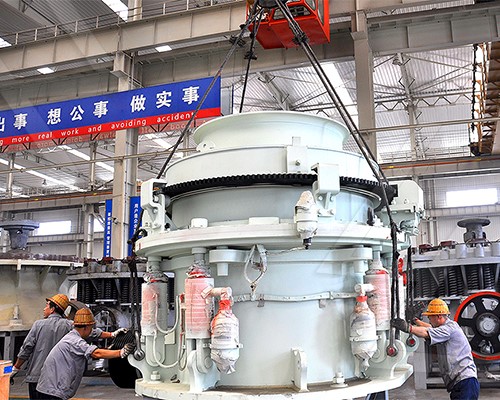
This dynamic creates a profound shift in operational viability. As the eccentric shaft oscillates, the deep, rhythmic crunch of a fully choked cone chamber indicates that the kinetic energy is being utilized efficiently to produce micro-fines. Furthermore, the hydraulic tramp release systems ensure that any uncrushable anomalies bypass the chamber without compromising the geometric integrity of the discharge setting. The capital payback velocity is mathematically secured when the alloy liners survive hundreds of hours rather than a mere dozen shifts.
Synthesized Matrix for Fluvial Quartz Reduction
Precision configuration dictates that primary and secondary compression stages must seamlessly feed specialized tertiary impactors for final particle shaping.
To handle the abrasive silica of river pebbles while targeting optimal sand micron distribution, we have engineered the following circuit based on strict metallurgical and thermodynamic limits. While a CI5X1213 impact crusher is documented below, it serves strictly as a counter-example for soft rock baselines, whereas the HPT framework is mandatory for the fluvial application.
| Process Stage | Recommended Model | Capacity (tons per hour) | Power (kilowatts) | Max Feed (millimeters) |
|---|---|---|---|---|
| Secondary Compression (Mandatory) | HPT300 Cone Crusher | 110-440 | 250 | 230 |
| Secondary Impact (Soft Rock ONLY) | CI5X1213 Impact Crusher | 200-300 | 200-250 | 550 |
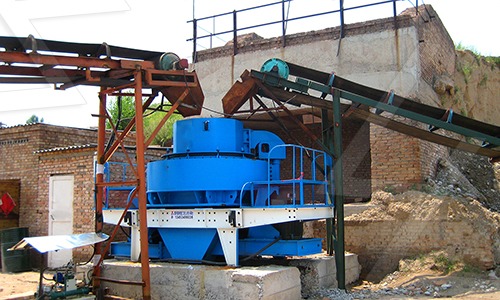
| Tertiary Shaping (Sand Making) | VSI6X1040 Sand Maker | 264-515 | 200~2 | 40 |
The progression from the HPT300 into the VSI6X1040 allows the multi-stage granite crushing circuit principles to be applied to river pebbles. The VSI utilizes an autogenous “rock-on-rock” rotor architecture, ensuring that the 40 millimeters feed is reduced to premium sand without the catastrophic wear associated with traditional heavy impactors.
Fluvial Quartz Crushing: Kinematic Stress Baselines
- Max Feed Baseline: 230 millimeters
- Kinematic Load Threshold: 250 kilowatts
- Aggregate Hardness Value: Mohs 7 to 8
- Compressive Resistance: > 200 MPa
- Volumetric Yield: 110-440 tons per hour
Technical Index: LH-SHOULD AN IMPACT CRUSHER OR A CONE CRUSHER BE USED FOR CRUSHING RIVER PEBBLES INTO SAND?-April/2026-Ref-#49201
Material Scientist’s Log: Predicting Metallurgical Fatigue in Fluvial Quartz Processing
Why does the CI5X1213 blow bar exhibit micro-spalling when fed river pebbles? Microscopic analysis reveals that the high silica content acts as a hyper-abrasive cutting matrix. When the 200 kilowatts rotor accelerates the blow bars into the 200 MPa stone, the localized thermal spikes exceed the tempering threshold of the high-chrome alloy, causing the crystalline structure of the metal to shear instantly. How does inter-particle crushing in the HPT300 alter the micron output distribution? Unlike early-generation impactors, the hydraulic multi-cylinder design maintains a rigid closed side setting under peak load. This forces the 230 millimeters feed into a dense, compacted layer where the internal friction between the stones dictates the fracture planes, yielding a geometrically superior cubic particle without internal micro-fissures. What is the direct consequence of ignoring the Mohs hardness variable? A rapid collapse of operational viability. Deploying an impact crusher for Mohs 8 materials results in the immediate vaporization of the rotor geometry. The machine will spend more time locked out for metallurgical replacement than actively fracturing aggregate, destroying the fiscal efficiency per unit. Why is the VSI6X1040 integrated post-cone rather than as a primary unit? Thermodynamic modeling confirms that feeding 40 millimeters aggregate into an autogenous rotor ensures the kinetic energy is entirely converted into particle shaping rather than primary cleavage. The cone crusher handles the brute-force 250 kilowatts volumetric reduction, allowing the VSI to safely execute the precise micron-level finishing required for construction sand.
Eliminating Blow Bar Vaporization in High-Quartz Sand Circuits
When engineering a circuit for fluvial aggregates, the microscopic reality of the 200 MPa compressive strength dictates that relying on impact shear will result in the total thermal and mechanical vaporization of your wear parts within the first 48 hours of operation. You must strictly deploy the laminated inter-particle compression dynamics of the HPT cone crusher to absorb the abrasive forces within the material bed itself, ensuring that the kinetic energy fractures the silica matrix rather than the machine’s metallurgy.
Stop Guessing on Quartz Fracture Cycles
“Submit your material’s precise silica percentage and compressive load thresholds for a rigorous kinematic audit.” — From the Desk of your Lead Material Scientist
- > Portable Magnetic Separator and Iron Ore Crusher in Iran: A Game-Changer in Mineral Processing
- > jaw crusher for granite crushing plant Indonesia
- > How Rock Hardness in Different Regions Impacts Crusher Selection
- > Cone Crusher Applications in Pakistan’s Stone Quarrying Industry
- > Versatility of the XS Series Sand Washer for Various Materials
- > Advanced Cone Crushers for Sulfide Nickel Processing in Morocco
- > How Much Does a 100 Tons Per Hour Mobile Impact Crushing Station Cost?
- > Applications of Mobile Dolomite Cone Crusher in Malaysia: A Comprehensive Overview


Online


Message