
In industrial aggregate production, evaluating a stone crusher plant price by upfront sticker cost alone introduces substantial fiscal risk. A crushing plant is a long-term capital asset, not a short-term commodity. For senior financial decision-makers, quarry owners, and project developers, true capital efficiency is measured by balancing initial Capital Expenditure (CAPEX) against long-term Operational Expenditure (OPEX) to minimize the Total Cost of Ownership (TCO).
This executive guide bypasses superficial price ranges to deliver structured, data-verified asset configurations. By engineering high-availability circuits utilizing genuine Liming machinery, operators can optimize asset depreciation profiles, compress payback periods, and maximize yield per kilowatt-hour.
1. The Financial Architecture of Crushing Plant Procurement
When assessing a stone crusher plant configuration, capital allocation must be analyzed through two distinct financial vectors:
Capital Expenditure (CAPEX) vs. Asset Longevity
Upfront CAPEX comprises major machinery, structural steel, electrical integration, and civil works. Premium equipment engineering mitigates the risk of early structural fatigue under high mechanical stress. Lowering initial CAPEX by selecting substandard machinery directly creates compounding liabilities in structural repairs and unscheduled downtime.
Operational Expenditure (OPEX) and Yield Metrics
OPEX is dictated by three primary operational cost drivers:
- Energy Consumption: Power requirements per produced ton of spec aggregate.
- Wear-Part Lifecycle: Premium manganese liners, blow bars, and mantle consumption rates determined by material abrasiveness (e.g., silica content).
- Maintenance Labor: Scheduled intervals for lubrication, adjustments, and component swaps.
Executive Matrix: The TCO Formula
$$TCO = CAPEX + \sum_{t=1}^{n} \frac{OPEX_t + DowntimeLoss_t}{(1 + r)^t}$$
Where $r$ represents the cost of capital, and $t$ represents the asset lifecycle years. Maximizing component reliability directly suppresses the compounding friction of $DowntimeLoss$.
2. Tiered Production Configurations & Technical Specifications
To align investment profiles with targeted regional market demands, Liming has structured three distinct capacity tiers. All technical data matches engineering baselines identically.
Tier 1: The 100–150 TPH Entry-Level Starter Circuit
Designed for regional commercial aggregate supply, pilot mine sites, or contractors requiring high geographic mobility to mitigate localized market risks.
| Stage / Module | Equipment Model | Capacity (t/h) | Power (kW) | Key Technical Note / Configuration Parameters |
|---|---|---|---|---|
| Primary Crushing (Mobile) | NK100E Primary Mobile Plant | 150–350 | 138.5 | Integrates PE3040 Jaw Crusher, FK0936 Vibrating Feeder, 6m³ Hopper. Max feed: 680mm. |
| Secondary Crushing (Stationary) | CS75 Cone Crusher | 50–180 | 75 | Standard coarse cavity type for stable reduction ratios in hard rock processing. Weight: 12T. |
| Classification Block | 3YZS1848 Vibrating Screen | 50–250 | 15 | 3 decks, 1800×4800mm screening area for multi-grade output separation. |
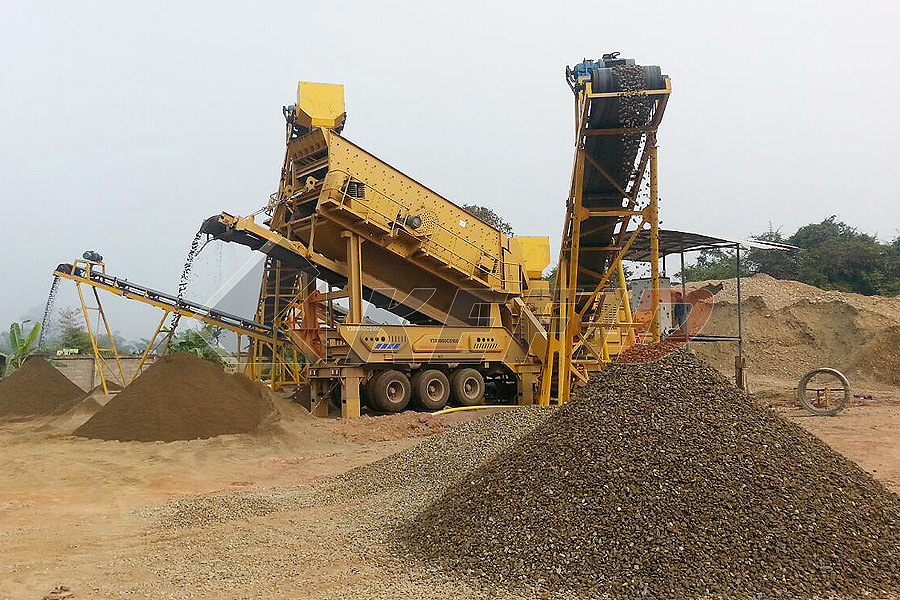
Tier 2: The 200–300 TPH Mid-Market Scalable Circuit
Engineered for large-scale infrastructure projects, high-output commercial quarries, and standard highway/railway ballast production lines.
| Stage / Module | Equipment Model | Capacity (t/h) | Power (kW) | Key Technical Note / Configuration Parameters |
|---|---|---|---|---|
| Primary Crushing (Mobile) | NK1213C Mobile Plant | 150–300 | 228.5 | Integrates CI5X1213 Impact Crusher, FK0936 Vibrating Feeder, 6m³ Hopper. Max feed: 550mm. |
| Secondary Crushing (Mobile) | NK300H Mobile Plant | 110–440 | 323.5 | Integrates HPT300 Cone Crusher. Configured with SKX1536 Vibrating Screen & return material circuit. |
| Fines Washing System | XSD3220 Sand Washer | 60–150 | 15 | Wheel-type washing mechanism. Weight: 8.3T. Optimizes silt elimination to meet concrete standards. |
Tier 3: The 500+ TPH Enterprise High-Yield Installation
A massive, continuous-operation industrial installation designed for high-capacity mining concessions, heavy infrastructure hubs, and macro-regional aggregate distribution.
| Stage / Module | Equipment Model | Capacity (t/h) | Power (kW) | Key Technical Note / Configuration Parameters |
|---|---|---|---|---|
| Primary Stage | PE1200×1500 Jaw Crusher | 400–800 | 160 | Stationary ultra-heavy design. Max feed size: 1020mm. Structural weight: 100.9T. |
| Secondary Stage | HPT500 Cone Crusher | 215–790 | 355 | Multi-cylinder hydraulic optimization for fine-crushing efficiency. Max feed: 290mm. Weight: 31T. |
| Tertiary / Shaping Stage | VSI6X1150 Sand Making Machine | 344–653 | 400 | Four-opening impeller design. Performs premium cubical stone shaping and high-volume manufactured sand production. |
3. Financial Metrics & Value Engineering Analysis
To demonstrate the economic viability of premium Liming configurations over low-tier market alternatives, we evaluate a 5-year operating horizon based on a Tier 2 (250 TPH) baseline working 3,000 operational hours per annum.
5-Year Fixed Asset Depreciation Profile
By leveraging premium heavy-duty steel structures and advanced stress-relief welding tech, Liming assets retain superior residual value. Utilizing the Straight-Line Depreciation method over a standard 10-year accounting horizon with a 10% salvage value ($S$), the annual depreciation tax shield is calculated as:
$$D = \frac{CAPEX – S}{10}$$
Because these systems achieve high mechanical reliability, operators avoid premature write-downs, maintaining an orderly balance sheet for corporate financing or asset-backed lending.
Wear-Part Consumption Cost per Ton ($OPEX_{wear}$)
Standard crusher plants suffer from rapid liner deformation, leading to high replacement costs and lost production time. Liming’s high-manganese alloy components ($Mn18Cr2$ to $Mn22Cr2$) optimize wear cycles. In medium-hard rock applications (e.g., limestone to basalt variants), wear-part consumption is compressed to approximately $0.015 to $0.035 USD per ton, compared to the industry average of $0.055 USD per ton. Across 750,000 annual tons, this engineering advantage saves over $15,000 to $30,000 USD annually in wear components alone.
Energy Efficiency Savings (Kilowatt-Hour Optimization)
Energy efficiency directly impacts a plant’s operating margin. Consider a comparison between the high-efficiency HPT300 Cone Crusher (integrated into the NK300H mobile plant) and an older generation hydraulic cone crusher running at identical capacities:
| Efficiency Parameter | Standard Generic Plant Circuit | Liming Engineered Circuit (NK1213C + NK300H) |
|---|---|---|
| Combined Kinetic Power Draw | ~610 kW | 552 kW |
| Average Energy Cost | $0.12 USD / kWh | $0.12 USD / kWh |
| Hourly Power Expenditures | $73.20 USD | $66.24 USD |
| Annual Energy Overhead (3,000 Hrs) | $219,600 USD | $198,720 USD |
| Net Annual Cash Flow Savings | Baseline | $20,880 USD / Year Saved |
Over a 5-year production window, this power optimization yields **$104,400 USD** in direct utility savings. When combined with reduced wear-part expenses and decreased unscheduled downtime, the premium configuration compresses the total payback period by **14 to 18 months**, accelerating the asset’s transition into highly profitable cash-generation territory.
4. Frequently Asked Questions on Crusher Plant Capital Allocation
What is the primary factor driving the stone crusher plant price variance between mobile and stationary configurations? Mobile plants (such as the Liming NK Series) carry a higher upfront CAPEX compared to raw stationary machinery components due to integrated steel chassis structures, onboard material conveyors, multi-tiered feeder units, and rapid-deployment hydraulic legs. However, mobile configurations eliminate massive civil concrete engineering costs, slash onsite installation timelines from months to days, and allow simple relocation, drastically reducing localized market risk and infrastructure overhead (OPEX). How do I accurately calculate the expected ROI for an enterprise-level VSI sand-making installation? ROI should be computed by modeling the market price premium of manufactured sand (crushed stone fines reshaped into cubical particles) versus raw, unshaped quarry screenings. By deploying a VSI6X1150 Sand Making Machine, the percentage of low-value elongated/flaky particles drops below 8%, matching strict premium concrete aggregate standards. The ROI calculation must contrast this product price premium against the 400 kW power draw and standard impeller tip wear-part cost per ton. Can a dual-cone crusher circuit deliver better TCO than a jaw-cone combination in high-silica hard rock quarrying? No. For high-silica hard rock (e.g., granite, quartzite), a primary compression crusher like the PE1200×1500 Jaw Crusher is required to manage primary sizing. Forcing a cone crusher into primary reduction roles under oversized rock conditions causes frequent uncrushable material events, extreme mechanical stress, rapid liner fatigue, and massive operational downtime, which severely harms the plant’s long-term TCO profile.
- > Durable Hydraulic Spring Cone Crusher for Mining Applications
- > Mobile Jaw Crusher for Gold Mining in Chile: Enhancing Efficiency in Ore Processing
- > Optimizing Raw Material Grinding Size and Feed Capacity in Ball Mills
- > Compact Portable Crushers: An Ideal Solution for Small-Scale Mining Operations
- > River Pebble Crushing and Sand Making Plant for 0-5mm Production
- > Application of Screw Conveyors in Mobile Crushing Stations
- > Efficient Handling of Gravel and Crushed Stone: The Role of Cone Crushers
- > Comparison Between Impact Crushers and Cone Crushers: Key Differences and Applications


Online


Message