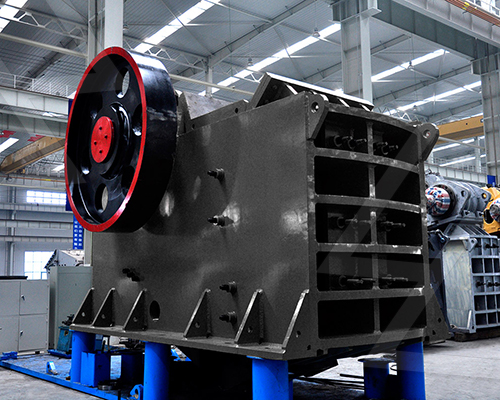
The toggle seat is one of the most highly stressed components in a jaw crusher. Sitting between the toggle plate and the moving jaw (or the frame), it transfers enormous crushing forces and absorbs shock loads thousands of times per day. Choosing the wrong steel grade leads to premature wear, cracking, and costly downtime. This article explains which types of steel are used for jaw crusher toggle seats, how they compare, and how to select the right material for your application.
What Does a Toggle Seat Do?
The toggle seat (also called the toggle block seat or toggle plate seat) is the contact surface that holds the toggle plate in position. During operation, it must:
- Withstand high compressive and impact loads
- Resist wear from the toggle plate’s movement and vibration
- Maintain its geometry to keep the crusher’s closed-side setting (CSS) stable
- Absorb shock when uncrushable material passes through the chamber
Because of these demands, the steel must combine high hardness, good toughness, and excellent wear resistance — properties that are often in tension with one another.
Common Types of Steel for Toggle Seats
1. High Manganese Steel (Hadfield Steel, e.g., Mn13 / ZGMn13)
High manganese steel is the most widely used material for jaw crusher wear parts, including toggle seats in many standard designs.
Key properties:
- Manganese content: 11–14%
- Initial hardness: ~200 HB
- Work-hardening: surface hardness can exceed 500 HB under impact
- Exceptional toughness and impact resistance
Advantages:
- Excellent resistance to shock and impact
- Self-hardening under load
- Good for primary crushing with large, hard feed material
Limitations:
- Lower initial hardness means wear in low-impact applications
- Can deform if loads are insufficient to trigger work hardening
Best for: Primary jaw crushers handling hard, abrasive rock where impact loads dominate.
2. High Chrome Steel (Chrome-Molybdenum Steel)
High chrome alloys (typically 12–28% Cr) are chosen when abrasive wear is the primary concern.
Key properties:
- Hardness: 45–65 HRC after heat treatment
- Excellent abrasion resistance
- Moderate toughness
Advantages:
- Superior wear life in abrasive, high-throughput applications
- Maintains dimensional stability longer than manganese
- Good performance in secondary crushing
Limitations:
- More brittle than manganese steel
- Higher cost
- Can crack under severe impact if not properly supported
Best for: Applications with high abrasion and moderate impact, such as recycling or secondary crushing.
3. Alloy Steel (Cr-Mo or Ni-Cr-Mo Grades, e.g., 4140, 4340)
Some toggle seats are machined from through-hardened alloy steels rather than cast wear alloys.
Key properties:
- Hardness: 30–45 HRC (adjustable via heat treatment)
- High yield strength and fatigue resistance
- Excellent machinability before hardening
Advantages:
- Precise dimensions and tolerances
- Good balance of strength and toughness
- Repairable and replaceable with predictable performance
Limitations:
- Lower wear resistance than chrome or manganese alloys
- Requires proper heat treatment
Best for: Toggle seats designed as structural, load-bearing blocks rather than sacrificial wear plates.
4. Carbon Steel with Hardfacing
In some cost-sensitive or repair scenarios, a carbon steel base is overlaid with a hardfacing weld.
Advantages:
- Low initial cost
- Repairable in the field
- Customizable hardness
Limitations:
- Inconsistent quality
- Shorter service life
- Not ideal for high-capacity operations
Comparison Table
| Steel Type | Hardness | Toughness | Wear Resistance | Typical Use |
|---|---|---|---|---|
| High Manganese (Mn13) | 200–500 HB | Excellent | Good | Primary crushing, high impact |
| High Chrome | 45–65 HRC | Moderate | Excellent | Abrasive feed, secondary crushing |
| Alloy Steel (4140/4340) | 30–45 HRC | Good | Moderate | Structural toggle seats |
| Carbon Steel + Hardfacing | Varies | Fair | Fair | Repairs, low-volume operations |
How to Choose the Right Steel
Consider these factors when selecting the steel for your toggle seat:
- Feed material hardness and abrasiveness — Abrasive rock favors high chrome; hard, blocky rock favors manganese.
- Impact intensity — High-impact primary crushers need toughness; low-impact applications can use harder, more wear-resistant alloys.
- Throughput and duty cycle — High-volume operations justify premium alloys through longer wear life.
- OEM specifications — Always check the manufacturer’s recommendation; mismatched materials can void warranties or damage the toggle plate.
- Cost per ton crushed — Evaluate total cost of ownership, not just purchase price.
Signs You Need to Replace the Toggle Seat
- Visible cracks or deformation
- Uneven wear patterns
- Loosening of the toggle plate
- Changes in CSS that cannot be adjusted
- Excessive noise or vibration during operation
Maintenance Tips
- Inspect toggle seats during every scheduled jaw crusher maintenance interval
- Keep the toggle plate and seats properly lubricated where applicable
- Replace seats in pairs when possible to maintain even loading
- Use OEM or equivalent-grade steel to avoid premature failure
Frequently Asked Questions
Q: Is manganese steel always the best choice for a toggle seat?
A: Not always. Manganese excels in high-impact primary crushing, but high chrome steel often lasts longer in abrasive, lower-impact applications.
Q: Can I weld-repair a toggle seat?
A: It depends on the material. High manganese steel requires special welding procedures; high chrome steel is generally not weld-repairable. Alloy steel seats can sometimes be repaired, but replacement is usually more reliable.
Q: How long should a toggle seat last?
A: Service life varies widely with feed material and duty cycle — from a few months in aggressive applications to over a year in mild ones.
Conclusion
The right steel for a jaw crusher toggle seat depends on the balance between impact toughness and abrasion resistance required by your operation. High manganese steel remains the standard for high-impact primary crushing, while high chrome steel offers superior wear life in abrasive applications. Alloy steels serve structural roles where precision and strength matter most. By matching the steel grade to your feed material and operating conditions, you can extend service life, reduce downtime, and lower cost per ton.
For specific recommendations, consult your crusher manufacturer or a wear parts specialist with experience in your industry.
- > High-Efficiency Mobile Crushing and Screening Equipment: A 500 TPH Solution for Australia
- > Vibrating Jaw Crusher: A Powerful Solution for Russia’s Mining Industry
- > Application of Vibrating Screens in Civil Construction
- > Single-Cylinder Cone Crusher in Iron Ore Processing
- > The Application of Cone Crushers in Iron Ore Crushing
- > Application of Crawler Mobile Crusher in Zambia Copper Mines
- > How to Choose the Right Jaw Crusher for Efficient Mineral Processing in Africa?
- > Efficiency and Applications of Small Rock Bauxite Jaw Crushers in Indonesia


Online


Message