
The mining industry in Indonesia frequently encounters a significant challenge: processing high-moisture ores that are often mixed with clay and sticky materials. These ores can cause severe clogging in crushing equipment, leading to costly downtime and reduced efficiency. However, the jaw crusher, with its robust design and specific adaptations, remains a primary and reliable solution for this demanding task. This article explores how to effectively utilize jaw crushers for crushing high-moisture ores in the Indonesian context.
1. The Challenge: Why High-Moisture Ores Cause Problems
High-moisture, clay-rich ores present unique difficulties in primary crushing:
- Bridging and Choking: The material can form arches in the feed hopper and stick to the walls of the crushing chamber, preventing a consistent flow of ore.
- Clogging of the Discharge Opening: Fine, wet particles compact and block the crusher’s discharge opening, halting production.
- Reduced Throughput and Increased Wear: Inefficient flow and frequent stoppages for cleaning lower overall productivity and can increase wear on components due to uneven loading.
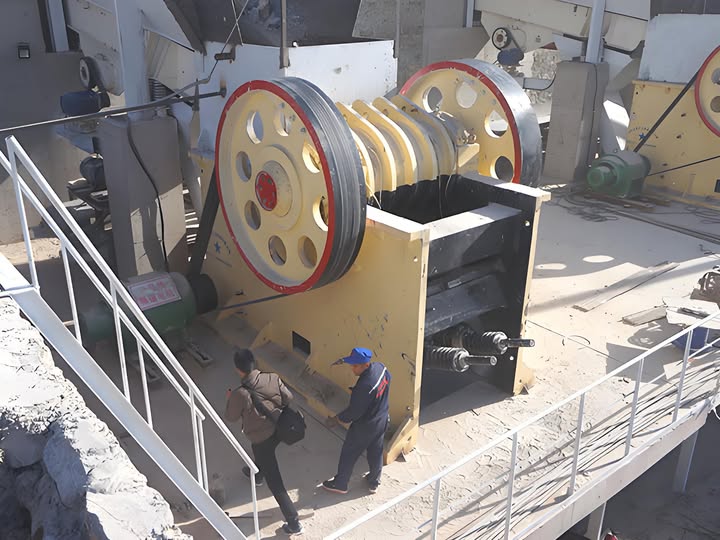
2. Key Design Features of Jaw Crushers for Sticky Ores
Selecting a jaw crusher with the right design features is crucial for success in Indonesia:
- Deep Crushing Chamber: A deep, steep chamber promotes gravity flow, helping to pull the sticky material downward and through the crusher, reducing the chance of packing.
- Large Discharge Opening: An easily adjustable, large discharge opening allows for the efficient expulsion of crushed material, even when it’s slightly compacted.
- Smooth Jaw Plates: Unlike corrugated plates used for hard, dry rock, smooth jaw plates are highly recommended for sticky ores. They minimize the surface area for material to adhere to, significantly reducing buildup.
- Powerful Eccentric Shaft and Bearings: A robust drive system ensures the crusher maintains consistent power through tough, variable feed conditions without stalling.
3. Operational Strategies to Prevent Clogging
Beyond machine design, operational practices are paramount:
- Pre-Screening (Scalping): The single most effective solution is to use a grizzly screen or a scalper before the jaw crusher. This removes the fine, wet fraction that is most likely to cause clogging, allowing only the manageable, larger rocks into the crusher.
- Controlled and Uniform Feeding: Avoid overfilling the crusher. Use a feeder to ensure a steady, regulated flow of material that matches the crusher’s capacity, preventing choke-feeding.
- Regular and Scheduled Cleaning: Implement a strict maintenance schedule for cleaning the feed hopper and crushing chamber to prevent the progressive accumulation of sticky material.
4. Economic Advantages for Indonesian Mines
Implementing the right jaw crusher solution offers clear economic benefits:
- Maximized Uptime: Reduced clogging translates directly to fewer unplanned stoppages, increasing the crusher’s availability and the mine’s overall production.
- Lower Operating Costs: Efficient operation with minimal interruptions reduces labor for cleaning and maintenance, lowering the cost per ton of processed ore.
- Improved ROI: A reliable primary crushing circuit is the foundation of an efficient processing plant, ensuring a faster return on investment for the entire operation.
Conclusion
While high-moisture ores in Indonesia pose a significant challenge, they are not insurmountable. By choosing a jaw crusher with appropriate design features like a deep chamber and smooth plates, and by implementing smart operational strategies such as pre-screening and controlled feeding, mining operations can achieve efficient, continuous, and profitable primary crushing. Investing in this tailored approach ensures that the first critical stage of mineral processing is a source of strength, not a bottleneck.
- > The Application of Jaw Crushers in Gold Mining Operations
- > How to Choose Jaw Crusher for Primary Crushing in Mining Plant
- > How Track-Mounted Mobile Crushers Enhance Flexibility in Aggregate Plants
- > PY Series High-Efficiency Spring Cone Crusher: Enhancing Crushing Efficiency and Durability
- > Copper Ore Crusher for Sale in Mozambique: High-Efficiency Mining Solutions
- > The Core Role of the Jaw Crusher as Primary Crushing Equipment
- > Jaw Crusher Troubleshooting: Common Faults and Effective Solutions
- > Single Cylinder Hydraulic Cone Crusher for Hard Gold Ore in Africa


Online


Message