
Mobile impact crushers are renowned for their versatility and efficiency on diverse job sites. A common question among contractors and quarry operators is: “What materials are suitable for mobile impact crushers?” This powerful equipment is designed to process a wide array of materials, making it a highly adaptable solution for the crushing and recycling industries. This article breaks down the primary material types that these crushers handle with excellence.
The Ideal Material Profile for Impact Crushing
Impact crushers work by hurling material against hard surfaces or aprons using high-speed rotors with blow bars. This crushing action is most effective on materials that are:
Medium to hard, but not extremely abrasive.
Brittle, meaning they fracture easily upon impact.
Thanks to this principle, mobile impact crushers excel at producing a well-shaped, cubical end product.
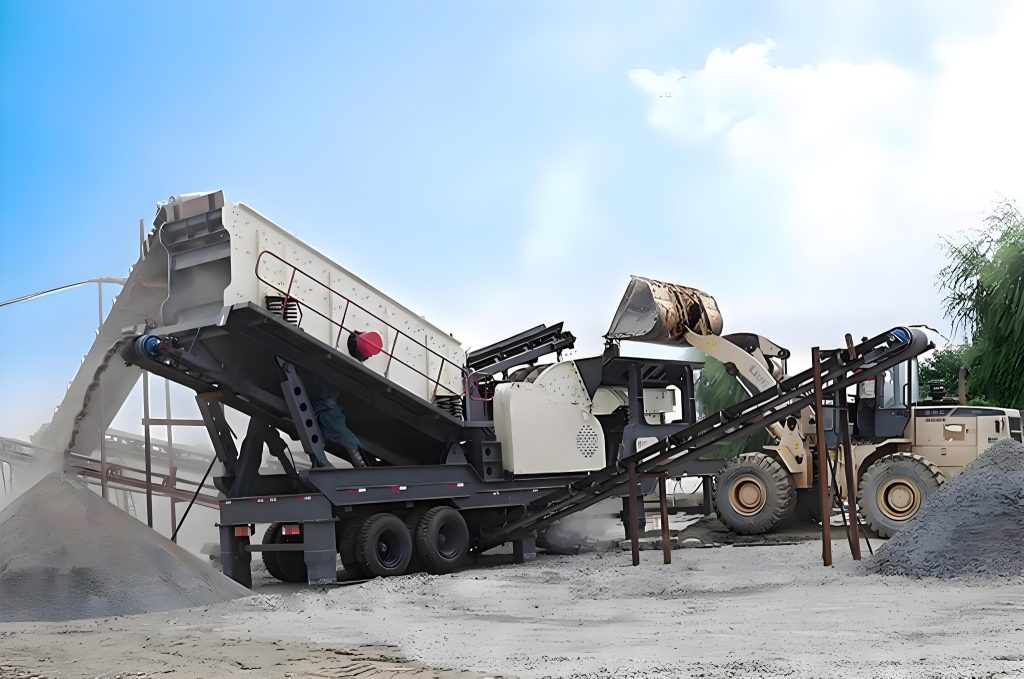
Key Material Types for Mobile Impact Crushers
1. Limestone and Other Medium-Hard Sedimentary Rocks
This is the classic application for impact crushers. Limestone is relatively soft and non-abrasive, allowing the crusher to achieve high reduction ratios and produce a high-quality product ideal for concrete and asphalt aggregates.
2. Recycled Concrete and Construction & Demolition (C&D) Waste
Mobile impact crushers are the go-to solution for concrete recycling. They efficiently break down concrete slabs, rubble, and other C&D debris into valuable recycled aggregate. The built-in magnetic separator often removes rebar automatically, streamlining the process.
3. Asphalt and Asphalt Milling
Similar to concrete, reclaimed asphalt pavement (RAP) is perfectly suited for mobile impact crushing. The crusher can process large chunks of asphalt into a uniform, reusable material for new road base or asphalt production.
4. Sandstone and Non-Abrasive Igneous Rocks
While extremely hard and abrasive rocks like granite and basalt are better suited for cone crushers, mobile impact crushers can still process them, especially if they are not the primary feed material. However, wear costs will be higher.
Materials to Approach with Caution
While versatile, mobile impact crushers are not universal crushers. Some materials can cause excessive wear or damage:
Highly Abrasive Materials: Continuous processing of very hard, silica-rich rocks (like some quartzite or trap rock) will rapidly wear down blow bars and liners, increasing operational costs.
Metals: While they can handle embedded rebar in concrete, pure metal streams (like scrap metal) are not suitable and can cause severe damage.
Very Hard Rock: For dedicated, high-tonnage crushing of hard granite or basalt, a mobile jaw and cone crusher combination is often more efficient and economical in the long run.
The Ultimate Advantage: On-Site Versatility
The true power of a mobile impact crusher lies in its mobility combined with this material versatility. A single machine can be used to:
Process a stockpile of limestone at a quarry.
Move to a demolition site to recycle concrete.
Crush asphalt millings directly on a road construction project.
This flexibility maximizes equipment utilization and return on investment.
Conclusion: A Versatile Tool for a Wide Range of Jobs
In summary, a mobile impact crusher is perfectly suited for crushing a wide range of materials, including limestone, recycled concrete, C&D waste, and asphalt. Its ability to produce a premium, cubical product and move between different material sources makes it an indispensable asset for modern crushing operations.
When selecting a crusher, always match the machine’s capabilities to your primary material. For most applications involving medium-hard rock and recycled materials, a mobile impact crusher is an excellent and highly productive choice.
- > Mobile Cone Crusher for Mining: The Ultimate Solution for Efficient Ore Crushing
- > Jaw Crusher for Crushing Copper Ore in Indonesia
- > How Effective Are Mobile Impact Crushers for Crushing Concrete Blocks?
- > Impact Crushers for Shaping Construction Aggregates
- > Which crushing machine is suitable for wet and sticky materials
- > Performance of Hydraulic Cone Crushers in Gold Ore Processing
- > Construction Waste Mobile Impact Crusher for Recycled Aggregate Production
- > Core Advantages of Mobile Impact Crushers in On-Site Rock Crushing


Online


Message