
In the world of mining and construction, one of the most frequent questions asked by project managers and quarry operators is: “Are mobile crushers powerful enough to handle large, raw stone?”
The simple answer is yes. However, the effectiveness of a mobile crusher in processing large rocks depends on the type of machine, its specifications, and the crushing stage. This article dives deep into the capabilities of mobile crushing units when faced with boulders and oversized feed materials.
Understanding “Large” in the Context of Crushing
Before selecting a crusher, we must define what “large” means. In crushing terms, we refer to the feed opening and the feed size.
- Max Feed Size: This is the largest piece of material a crusher can accept without causing blockages or damage.
- Primary vs. Secondary: A machine designed for primary crushing is built to handle massive incoming material, while secondary crushers are designed for smaller, already-processed rock.
Mobile crushers, particularly those in the primary jaw crusher category, are engineered specifically to tackle the toughest, largest raw stones straight from the blast site or excavator.
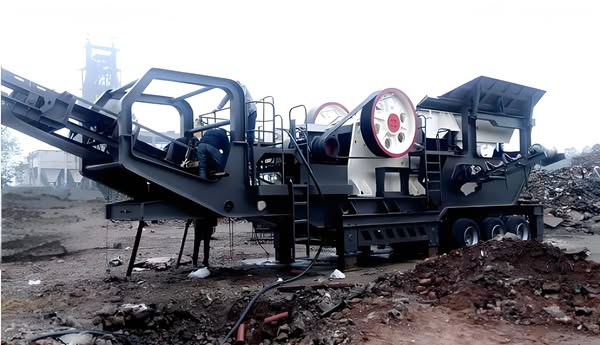
The Ideal Mobile Crushers for Large Raw Stone
Not all mobile crushers are created equal. Here is how the different types perform against large feed materials:
1. Mobile Jaw Crushers: The Primary Workhorse
When dealing with massive boulders (e.g., granite, limestone, or concrete rubble), the mobile jaw crusher is the industry standard.
- How it Works: A movable jaw plate presses the rock against a stationary plate, using immense compressive force to break it down.
- Handling Large Stone: Jaw crushers have a large feed opening (measured in inches or millimeters) specifically designed to accept bulky material. They are not sensitive to the shape of the rock, making them perfect for the first stage of reduction.
- Best For: Hard, abrasive rock and very large feed sizes.
2. Mobile Impact Crushers: Size Matters
Impact crushers are excellent for producing a cubical product, but they have limitations with extreme size.
- How it Works: They use high-speed rotors with hammers to hurl the rock against impact plates.
- Handling Large Stone: While powerful, they generally require a smaller feed size than jaws. If the raw stone is too large, it can cause excessive wear on the blow bars or jam the rotor. However, modern heavy-duty impact crushers are increasingly capable of handling medium-to-large stone in soft-to-medium rock applications (like limestone).
- Best For: Medium stone, recycling, and materials with lower abrasion.
3. Mobile Grizzly Feeders: The Unsung Hero
It is important to note that a mobile crusher setup for large stone typically includes a vibrating grizzly feeder.
- Function: This component sits before the crusher. It receives the large dump of raw stone, separates the fines (dirt and small rocks) to bypass the crusher, and feeds the big rocks steadily into the crushing chamber.
- Benefit: This prevents clogging and ensures the crusher only focuses on the material it was designed to break.
Key Specifications to Look For
To determine if a specific mobile crusher can handle your raw stone, check these critical data points:
- Feed Opening (Inlet Size): If your largest rock is 800mm wide, you need a crusher with an inlet width significantly larger than that (e.g., 1000mm+) to avoid bridging (where rocks form an arch and block the entrance).
- Closed Side Setting (CSS): This determines the output size. For primary crushers, you want a wide CSS to allow the crushed material to flow freely.
- Engine Power: Crushing large rock requires immense torque. Look for high horsepower ratings to ensure the machine doesn’t stall when hitting hard seams.
The “Bridging” Challenge
The biggest risk when feeding large raw stone into a mobile crusher is bridging. This occurs when two or more large rocks jam together at the entry point, forming a stable arch that stops the flow.
Modern mobile crushers combat this with features like:
- Hydraulic Reverse: The ability to reverse the crushing motion to dislodge blockages.
- Remote Control: Operators can use remote controls to manage the excavator feeding the crusher, ensuring a steady, controlled flow rather than dumping a massive pile at once.
Benefits of Using Mobile Crushers for Raw Stone On-Site
If your operation involves raw stone (e.g., in a quarry, mining site, or large excavation), using a mobile unit offers distinct advantages over a static plant:
- Reduced Haulage Costs: The crusher moves to the face of the quarry or the edge of the excavation. Instead of hauling massive boulders miles to a stationary plant, you feed them directly into the mobile unit.
- Immediate Usability: Large raw stone is often useless on-site. A mobile primary crusher turns that waste rock into valuable base material or aggregate ready for secondary processing.
- Flexibility: If the rock source moves, the tracked crusher moves with it.
Conclusion
So, is a mobile crusher suitable for crushing large raw stone? Absolutely—provided you select the right type.
For anything massive, hard, or abrasive, a mobile jaw crusher equipped with a heavy-duty feeder is the only viable choice. For medium-sized stone in less abrasive applications, a large impact crusher may suffice.
By matching the crusher’s feed opening to your rock size and utilizing modern features to prevent bridging, mobile crushers offer a powerful, flexible, and cost-effective solution for transforming raw boulders into valuable aggregate.
- > Cone Crusher vs. Impact Crusher in Quarry Operations: A Key Equipment Comparison
- > How to Efficiently Crush High-Moisture Indonesian Coal with Impact Crushers
- > The Role of Mobile Jaw Crushers in Sand and Aggregate Production
- > Choosing the Right Crusher for Crushing Copper Ore with a 2mm Vibrating Screen
- > Application of Jaw Crushers in Magnetite Ore Beneficiation Processing
- > PE Jaw Crusher Application in Aggregate Production
- > Portable Dolomite Cone Crusher in Indonesia: A Flexible Solution for Efficient Crushing
- > Vibrating Feeders in Chile: Enhancing Material Handling Efficiency in Mining and Construction


Online


Message