
In the aggregate production industry, efficiency, reliability, and cost-effectiveness are paramount. At the heart of most sand and gravel plants, you will find a rugged, dependable piece of equipment performing the first critical step in the size reduction process: the jaw crusher. Renowned for its simplicity and brute force, the jaw crusher serves as the indispensable primary workhorse. This article explores the most common and vital applications of jaw crushers within sand and gravel plants, highlighting why they remain the preferred choice for initial size reduction.
1. Primary Crushing: The First and Most Critical Stage
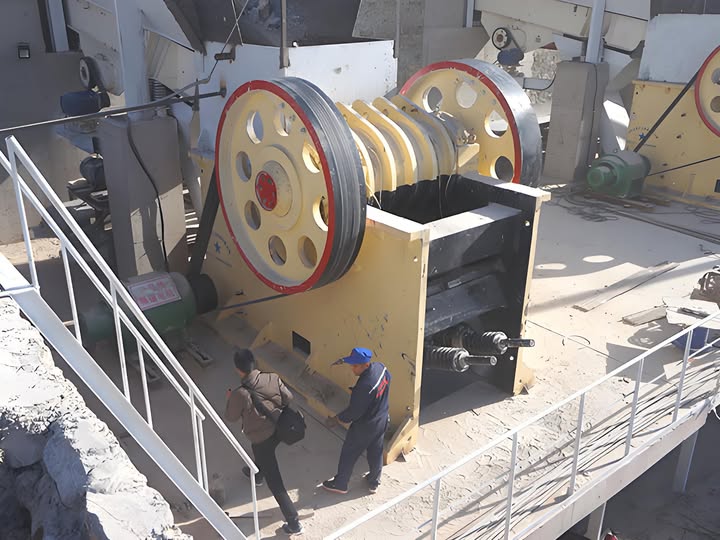
The primary application of a jaw crusher is exactly what its name implies: primary crushing. This is the initial stage where large, raw feed material from the quarry face or pit is first reduced in size.
- Processing Run-of-Quarry (ROQ) Material: Jaw crushers are designed to accept massive, irregularly shaped boulders and rocks directly from the blast site or natural deposit. Their robust construction allows them to handle the variable size and hardness of this raw feed.
- Creating Manageable Feed for Downstream Processes: The primary goal is to reduce the oversized material (often up to 1-1.5 meters in diameter) down to a conveyable size, typically under 200-250 mm. This creates a consistent feed for the secondary crushing stage, which is usually handled by cone or impact crushers.
2. Handling Oversize Rock and Demolition Concrete
Sand and gravel plants, especially those involved in recycling, frequently encounter challenging feed materials.
- Oversize Rock from Screens: Grizzly screens or scalpming screens before the jaw crusher often divert the largest rocks directly into the jaw for primary reduction.
- Recycled Concrete Aggregate (RCA) Production: Jaw crushers are excellent for the initial breaking of large chunks of demolished concrete, breaking them down to a size where metal can be removed and the material can be further processed by secondary crushers.
3. The Foundation of Multi-Stage Crushing Circuits
A jaw crusher is rarely a standalone unit in a modern, high-volume plant. Its primary role is to set the stage for an efficient multi-stage process.
- Feeding Secondary and Tertiary Crushers: By establishing a controlled top-size product, the jaw crusher ensures that downstream cone or impact crushers operate at optimal efficiency, producing the final, spec-grade sand and gravel products.
- Enabling Efficient Screening: The consistently sized material from the jaw crusher is easier to screen effectively, allowing for the removal of fine material or the diversion of already-sized product to stockpiles.
4. Key Advantages That Cement Their Role in Gravel Plants
Jaw crushers are chosen for these applications due to a combination of inherent advantages:
- Durability and Simple Design: With fewer moving parts than many other crusher types, jaw crushers are incredibly robust and reliable. Their simple mechanics translate to easier maintenance and longer operational life, even in abrasive conditions.
- High Capacity and Cost-Effectiveness: They offer a favorable cost-per-ton ratio for primary crushing, providing high throughput at a relatively low operational cost.
- Versatility in Feed Material: They can process a wide range of materials, from hard and abrasive granite to softer limestone, making them suitable for diverse geological settings.
- Proven Reliability: The technology is mature and well-understood, minimizing operational risks and ensuring consistent plant uptime.
Conclusion
The jaw crusher is far more than just an entry point in a sand and gravel plant; it is the foundational cornerstone of the entire crushing circuit. Its common applications—performing reliable primary reduction, handling the toughest oversize material, and feeding optimized product to downstream processes—make it an irreplaceable asset.
For plant managers and owners, selecting the right jaw crusher (considering size, capacity, and design) is one of the most critical decisions for ensuring long-term productivity and profitability. Its role in creating a stable, efficient flow of material underpins the success of every subsequent stage, solidifying its status as the essential first step in transforming raw rock into valuable construction aggregates.
- > Extensive Use of Jaw Crushers in the Mining and Quarrying Industry
- > The Application of Crawler Mobile Crushing Stations in Limestone Crushing
- > Solving High Cone Crusher Maintenance Frequency in Copper Ore Crushing
- > Application of Impact Crushers in Secondary Crushing and Shaping in Construction Aggregate Production Lines
- > 250TPH Granite Crushing Plant Layout: Multi-Stage Circuit Architecture for High-Abrasion Aggregates
- > The Versatility of Cone Crushers: Material Processing Range and Applications
- > Can a Mobile Impact Crusher Produce Final Specification Aggregates On-Site?
- > The Role of Vibrating Screens in the Mining Industry


Online


Message