
Setting up a cost-effective and efficient 50 TPH (Tonnes Per Hour) stone crushing plant requires careful equipment selection to balance performance, capital investment, and long-term operating costs. This configuration is ideal for small to medium-sized quarries, construction projects, and contractors needing a consistent supply of high-quality aggregates. This article provides a professional equipment configuration recommendation for a 50 TPH crushing line.
Plant Overview & Design Philosophy
The goal is to create a simple, reliable, and functional plant that can produce a range of products, such as 0-5mm sand, 5-10mm, 10-20mm, and 20-31.5mm aggregates. The recommended design is a two-stage crushing circuit with a closed-loop system for efficiency and product control.
Core Equipment Configuration
Here is a breakdown of the essential machinery for a stable and productive 50 TPH plant:
1. Vibrating Feeder
- Model Recommendation: GZD-960×3800 or ZSW-380×95
- Role: To ensure a steady and controlled feed of raw material (river pebbles, granite, limestone, etc.) from the hopper to the primary crusher. This prevents crusher “starvation” or overload, which is critical for efficiency and longevity.
2. Primary Jaw Crusher
- Model Recommendation: PE-400×600 Jaw Crusher
- Role: This is the workhorse for the first stage of size reduction. The PE-400×600 is perfectly sized to accept material up to ~340mm and reduce it to a output of 40-100mm. It is renowned for its simplicity, robustness, and low operating costs.
3. Secondary Impact Crusher or Cone Crusher
- Choice A (for less abrasive rock like limestone): Impact Crusher
- Model Recommendation: PF-1010 or PF-1210 Impact Crusher
- Advantage: Produces a highly cubical end product and is generally more cost-effective. Ideal for producing concrete and asphalt aggregates where particle shape is paramount.
- Choice B (for hard, abrasive rock like granite/basalt): Cone Crusher
- Model Recommendation: PSGB-1320 or similar single-cylinder hydraulic cone crusher.
- Advantage: Offers superior wear resistance and reliability when processing hard and abrasive materials, though the product shape may be slightly less cubic than an impact crusher’s.
4. Vibrating Screen
- Model Recommendation: 3YK-1237 or 3YK-1548
- Role: This is the brain of the closed-circuit system. The screen separates the crushed material from the secondary crusher into the required final product sizes. The oversized material is sent back to the secondary crusher for further reduction, ensuring all material meets specification.
5. Belt Conveyors
- Role: A network of belt conveyors (typically B500 or B650 width) is used to connect all the equipment—from the feeder to the crushers, from the crushers to the screen, and from the screen to the final product stockpiles. They are the arteries of the plant.
Optional but Recommended Equipment
- Hopper: A feed hopper with grizzly bars can be used for a wheel loader to dump material, and the grizzly will pre-screen out fine soil and small particles.
- Sand Washer: If clean, high-quality sand is a required product, a wheel sand washer (e.g., XS-2610) should be added to remove dust and impurities.
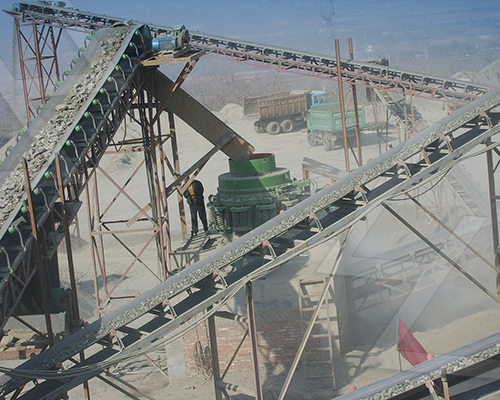
Process Flow Description
- Feeding: Raw stone is dumped into the hopper. The vibrating feeder draws the material and provides a consistent feed to the jaw crusher.
- Primary Crushing: The jaw crusher breaks down the large stones into smaller, fist-sized pieces (approx. <100mm).
- Conveying to Secondary Stage: A belt conveyor transports the primary crushed material to the vibrating screen.
- Screening & Secondary Crushing: The screen separates the material. The correctly sized product is sent to stockpile conveyors. The oversized material is directed to the secondary crusher (Impact or Cone). The crushed output from the secondary crusher is returned to the same screen via a conveyor, creating a closed circuit.
- Final Product Stockpiling: The screened final products are conveyed to their respective stockpiles.
Key Advantages of This Configuration
- Compact & Logical Layout: The flow is straightforward, minimizing space requirements and complexity.
- High Efficiency: The closed-circuit design with the screen ensures no energy is wasted on crushing already-sized product.
- Excellent Product Control: The vibrating screen allows for precise classification of aggregates into multiple, saleable fractions.
- Cost-Effectiveness: The selected models offer a great balance of performance and affordability for a 50 TPH target.
- Reliability: Using well-established crusher and screen models ensures easy maintenance and parts availability.
Conclusion
A well-planned 50 TPH stone crushing plant built around a robust jaw crusher, an efficient secondary crusher (chosen based on material hardness), and a reliable vibrating screen in a closed-circuit layout is a highly viable investment. This configuration guarantees a consistent output of high-quality aggregates, making it a perfect solution for meeting the demands of local construction projects and establishing a strong foothold in the regional aggregate market.
- > Common Issues with Vibrating Screen Bodies and Their Solutions
- > Impact Crusher for Quartz Sand Processing
- > How Track-Mounted Mobile Crushers Enhance Flexibility in Aggregate Plants
- > Cone Crushers for Aggregate Crushing: The Essential Tool for High-Quality Production
- > Vibrating Feeders Tailored for Crusher Sizes: Enhancing Efficiency in Material Handling
- > Basalt Rock Crushers in New Zealand: A Vital Tool for Construction and Mining
- > Should an Impact Crusher or a Cone Crusher be used for crushing river pebbles into sand?
- > Efficient Material Processing with Russian Mobile Jaw Crushers


Online


Message