
In our recent mass balance audits across hard-rock operations, the primary stage is where 70% of downstream bottlenecks originate. We repeatedly see site managers ignoring the volumetric expansion of rock as it exits the primary jaw, causing catastrophic choke-feeding in the secondary cones. The physical reality of your feed block dimensions and the crystalline structure of the ore mandate a strict analytical approach. Selecting the wrong primary unit doesn’t just lower tonnage; it generates a compounding mechanical deficit that shatters your capital payback velocity.
Analyzing Mohs Hardness vs. Toggle Plate Mechanics
High-silica ores exceeding 6 on the Mohs scale require precision kinematic designs to prevent toggle plate buckling and premature liner fatigue.
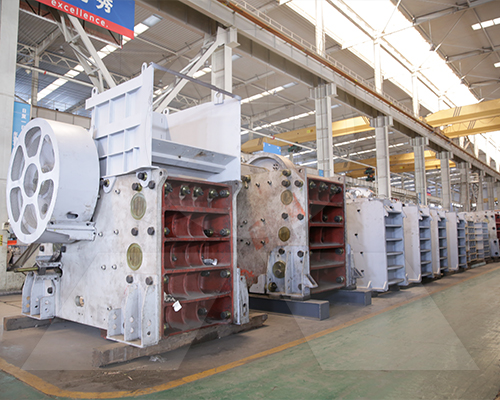
When processing abrasive granite or basalt, the structural integrity of the jaw frame dictates operational viability. The PE series relies on traditional welded frames, which perform adequately for medium-hard materials like limestone. Subjecting a PE frame to 200 MPa compressive strength continuously introduces microscopic stress fractures along the weld seams. You can physically hear the harsh, irregular metallic groans when a PE unit is struggling with oversized, high-hardness feed.
The C6X series eliminates this specific failure path. It utilizes a modular, non-welded frame secured by high-strength pins and bolted construction. This allows the frame to absorb the violent shockwaves generated during the crushing of extreme-hardness materials without transferring the kinetic penalty to a rigid weld. The C6X kinematics are optimized for a deeper crushing cavity, forcing a more aggressive nip angle that captures hard rock instantly rather than allowing it to boil and slip against the fixed jaw plate.
Maximum Feed Size and Nip Angle Dynamics
A mismatch between blasting yield sizes and the primary crusher’s mouth width forces operators to waste fuel on secondary blasting or hydraulic rock breakers.
The geometry of the feed hopper and the jaw’s intake opening form a rigid physical boundary. The standard PE900x1200 handles a maximum feed of 750 millimeters. If your drilling and blasting protocol yields 800-millimeter boulders, you are guaranteeing a bridge event over the crushing cavity. The tactile vibration of a blocked primary feeder shaking the structural steel of the operator cabin is a direct indicator of this dimensional failure.
Upgrading to the high-capacity primary C6X125 expands the maximum feed tolerance to 900 millimeters. This 150-millimeter delta fundamentally changes the upstream extraction economics. It allows for a wider blasting grid, lowering explosive costs. The machine swallows the rock whole, utilizing a 160-kilowatt motor to maintain eccentric shaft momentum through the peak resistance phase of the crushing stroke.
Synchronizing Primary Output with Secondary Cone Circuits
The discharge volume from the jaw must never exceed the volumetric acceptance rate of the secondary cone’s choke-feed configuration.
To eliminate upstream choke points, we construct a mass balance sheet. If your target is a continuous 350 tons per hour, your jaw crusher cannot peak at 350; it must comfortably average it while the closed-side setting (CSS) widens due to manganese wear. The PE900x1200 operates within a 220-450 tons per hour band, making it suitable for standard circuits. The C6X125 pushes 280-880 tons per hour, providing the critical surge redundancy needed for massive multi-stage hard rock circuits.
To visualize the correct process flow, we have engineered the following circuit matrix based on 2026 deployment data.
| Process Stage | Recommended Model | Capacity (tons per hour) | Max Feed (millimeters) | Power (kilowatts) |
|---|---|---|---|---|
| Primary (Standard) | PE900x1200 | 220-450 | 750 | 132 |
| Primary (Heavy-Duty) | C6X125 | 280-880 | 900 | 160 |
| Secondary (Sync Match) | HST315 | 230-650 | 240 | 315 |
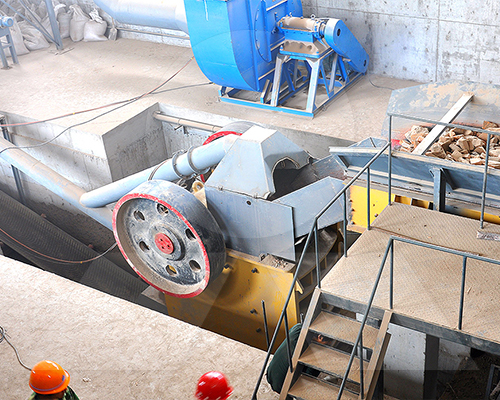
Field Wear Benchmarks: Synchronizing C6X125 with Abrasive Granite
- Power (kilowatts): 160
- Recommended Model: C6X125
- Max Feed (millimeters): 900
- Capacity (tons per hour): 280-880
- Process Alignment: Primary Hard Rock
Technical Index: LH-HOW TO CHOOSE JAW CRUSHER FOR PRIMARY CRUSHING IN MINING PLANT-April/2026-Ref-#49201
Solution Architect’s Log: Eliminating Upstream Choke Points in Hard Rock Facilities
Why does the PE900x1200 struggle with capacity drops when processing high-moisture granite? Observing the crushing cavity during monsoons, wet fines act as a sticky industrial paste that packs the spaces between the deep corrugations of the fixed jaw plate, reducing the effective volume and causing material slip instead of brittle fracture. How does the C6X motor mount design differ from older plant setups? Unlike legacy concrete foundations that crack under 160-kilowatt dynamic loads, the C6X integrates the motor directly onto the crusher frame, eliminating V-belt tension discrepancies caused by ground settlement. What happens if I force 800-millimeter rock into a PE900x1200? Do not exceed the physical geometry of the nip angle; the rock will ride high in the chamber, placing extreme lateral stress on the upper bearings and risking catastrophic failure of the eccentric shaft. Why is the secondary cone constantly running empty when paired with an aging primary jaw? Data logged from recent plant audits proves that as the primary jaw’s manganese liners wear down by 15%, the actual discharge volume drops non-linearly, starving a 315-kilowatt secondary cone and ruining your production-to-cost ratio.
Enforcing Mass Balance in Primary Circuits
Failing to calculate the precise volumetric displacement between your primary jaw’s 900-millimeter intake and the secondary cone’s choke-feed requirement guarantees an immediate bottleneck that will hemorrhage energy costs and seize your downstream bearings next month. Align your primary kinematics with the actual Mohs hardness of your reserve.
Stop Guessing on Primary Mass Balance
“Submit your exact blast yield dimensions and Mohs hardness data to synchronize your entire flow.” — From the Desk of your Lead Solution Architect
- > HPT Hydraulic Cone Crusher for High Hardness Stone Crushing
- > Ultrafine Processing of Tailings Slag with Cone Crushers
- > The Role of Crawler Mobile Crushing Stations in Road Construction
- > VSI Vertical Shaft Impact Crusher for Particle Shape Optimization in Concrete Aggregates
- > High-Performance Jaw Crushers for Stone Production Lines
- > Impact Crushers for Crushing and Screening Granite and Iron Ore
- > The Unmatched Convenience of Mobile Jaw Crushers for Mountain Road Construction
- > Cone Crushers for Sand Production: Enhancing Efficiency and Quality


Online


Message