
In the world of aggregate production and mineral processing, the primary crushing stage is the critical first step where large, run-of-quarry (ROM) material is initially reduced in size. For decades, the jaw crusher has been the default, ubiquitous choice for this role, synonymous with robustness and reliability. This prevalence often leads to the assumption that it is an indispensable requirement. However, with evolving technology and diverse project needs, it’s essential to ask: Is a jaw crusher truly mandatory for primary crushing, or are there effective alternatives? This article objectively examines the factors that made jaw crushers the standard, explores modern competitive technologies, and provides a framework for making the optimal choice for your specific operation.
1. The Traditional Dominance of the Jaw Crusher: Why It Became the Standard
The jaw crusher’s historical and continued popularity is based on undeniable strengths perfectly suited to primary crushing’s harsh demands.
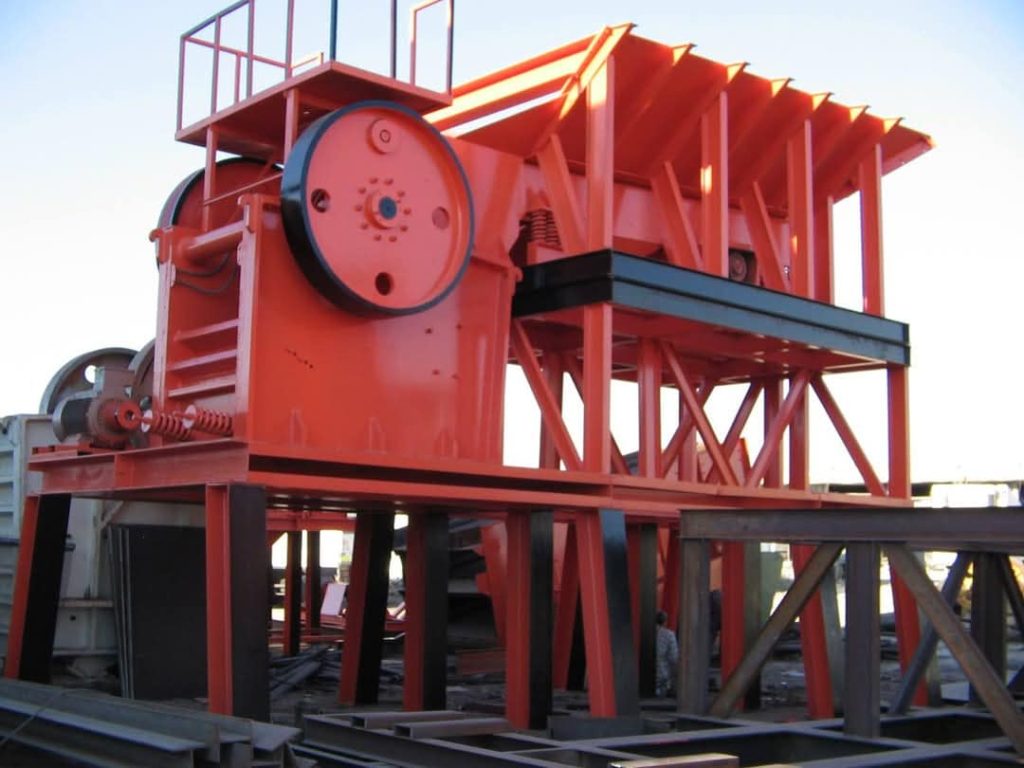
- Simplicity & Robustness: Its straightforward mechanical design—a fixed jaw and a moving jaw—has fewer complex components than some alternatives. This translates to high reliability, ease of maintenance, and a proven ability to withstand shock loads from oversized feed.
- Versatility in Feed Acceptance: It can handle a wide variety of materials, from hard and abrasive granite to softer limestone, and is notably more tolerant of damp, clayey, or sticky feed than cone or impact crushers at this stage. This makes it highly adaptable to varying site conditions.
- Lower Capital Cost (CAPEX): For a given feed size and capacity, a jaw crusher typically has a lower initial purchase price than a comparable gyratory crusher, making it attractive for many medium-sized operations.
- Ease of Installation & Mobility: It requires less vertical height and a simpler foundation than a gyratory crusher. Mobile jaw crushers are also the standard for portable primary crushing units.
2. The Key Decision Factors: When a Jaw Crusher is the Clear Choice
A jaw crusher is often the best and most logical option when:
- Production Capacity is Moderate: For most quarries and mines with hourly requirements up to ~1,000 – 1,500 tph, jaw crushers offer an ideal balance of performance and cost.
- The Operation is Not Continuous 24/7: Its simpler maintenance is a significant advantage for operations with scheduled downtime.
- Feed Contains Moisture or Clay: Its design is less prone to packing and clogging from sticky materials.
- Mobility is a Priority: For contract crushing or multi-site projects, the mobile jaw crusher is the undisputed leader in primary portable crushing.
- Capital Budget is a Primary Constraint: The lower initial investment can be a decisive factor.
3. Exploring the Alternatives: Viable Competitors in Primary Crushing
While dominant, the jaw crusher is not without competition. Two main alternatives challenge its position in specific high-end or specialized applications.
A. The Gyratory Crusher
- The High-Capacity Specialist: For very high-tonnage, continuous operations (typically > 1,000 tph, often much higher), the gyratory crusher is the superior choice. It handles larger feed sizes and offers a higher throughput in a single machine.
- Higher Efficiency & Lower Cost/Ton at Scale: Its continuous crushing action and ability to be fed from multiple sides lead to better energy efficiency and a lower operating cost per ton in massive, stationary installations (e.g., large copper or iron ore mines).
- Trade-offs: Higher CAPEX, more complex installation requiring a deep chamber, and maintenance that is more specialized and time-intensive.
B. The Primary Impact Crusher
- The Shape & Recycling Expert: For primary crushing of non-abrasive, low-silica materials like limestone or for dedicated construction and demolition (C&D) recycling plants, a primary horizontal shaft impactor (HSI) is a compelling choice.
- Superior Product Shape: It produces a more cubical product directly from the primary stage, which can simplify the downstream circuit.
- Excellent for Recycling: It excels at processing reinforced concrete, efficiently liberating rebar and producing a clean aggregate.
- Critical Limitation: It is not suitable for hard, abrasive rocks (granite, basalt) due to prohibitively high wear costs on blow bars and aprons.
Conclusion: It’s About Strategic Fit, Not Mandate
So, is a jaw crusher mandatory for the primary crushing stage? The clear answer is no. It is not a universal mandate but remains the most common and versatile workhorse for a broad spectrum of applications.
- > Optimizing Raw Material Grinding Size and Feed Capacity in Ball Mills
- > Core Advantages of Mobile Impact Crushers in On-Site Rock Crushing
- > Which Impact Crusher Model Is Best for Granite Crushing?
- > Utilizing Ball Mills for Limestone Crushing: Efficiency and Applications
- > Using Jaw Crushers to Crush High-Moisture Ores in Indonesia
- > High-Capacity PC1200*1200 Hammer Crusher: A Key Player in Stone Production Lines
- > Portable Jaw Crushers for Quarry Operations in South Africa: Key Features and Benefits
- > Impact Crushers: What Materials Are They Best Suited For?


Online


Message