
Based on our recent site audits in the Copperbelt and Luapula provinces, the biggest threat to capital payback velocity isn’t the upfront equipment price of the primary jaw, but the hidden 30-day delay spent pouring concrete foundations[cite: 13, 94]. The physical reality of setting up a remote quarry dictates that civil engineering logistics bleed expenditure per shift before a single rock is crushed. Pushing 150MPa manganese through a stationary setup demands intensive site preparation that drains initial investment funds.
Bypassing Concrete Foundations in Remote African Quarries
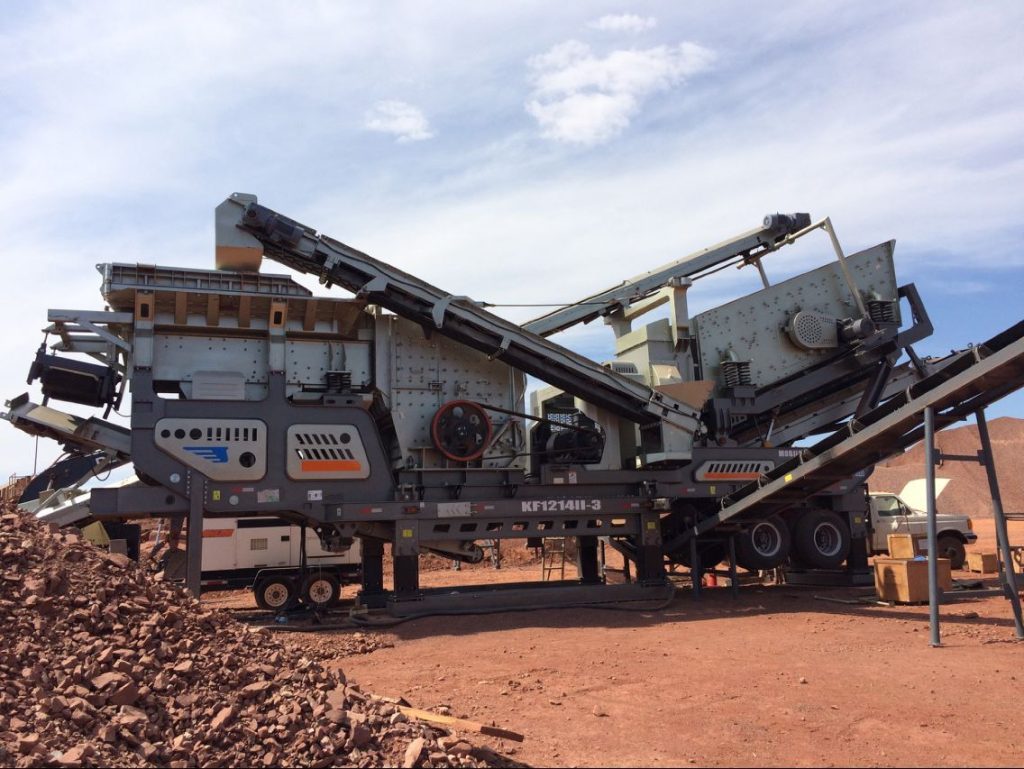
Deploying the NK series mobile crushing plant eliminates 30 days of foundational curing time, achieving immediate material throughput.
The engineering reality of processing manganese in remote sectors centers on geological isolation. Traditional stationary plants require extensive ground excavation, steel rebar reinforcement, and tons of poured concrete. The NK series replaces this antiquated requirement with a high-strength pneumatic tire chassis and hydraulic stabilization legs[cite: 13, 17]. Operators simply compact the soil, park the unit, and initiate the crushing sequence. We frequently observe the high-frequency metallic ping of abrasive manganese hitting the manganese jaw liners within 48 hours of equipment arrival[cite: 191].
Relying on diesel-electric dual power ensures the 160 kW main motor avoids the severe voltage drops common in regional power grids. This continuous power supply prevents the primary eccentric shaft from stalling mid-crush. Eliminating stationary infrastructure instantly cuts expenditure per shift.
Synchronized Manganese Processing Matrix
Matching the primary jaw throughput to the secondary impactor ensures a unified material flow and prevents conveyor bottlenecks.
To handle the abrasive nature of Zambian manganese ore at 200 tons per hour, we have engineered the following circuit to maximize production-to-cost ratio[cite: 130]. This matrix eliminates redundant transfer points and syncs the multi-stage circuit[cite: 58].
| Process Stage | Recommended Model | Capacity (tons per hour) | Max Feed (millimeters) | Mounting Type |
|---|---|---|---|---|
| Primary Crushing | NK73 Mobile Jaw Crusher | 150-250 | 600 | Pneumatic/Tire-mounted |
| Secondary Crushing | NK1213 Mobile Impact Crusher | 150-200 | 300 | Pneumatic/Tire-mounted |
High silica content within the ore aggressively attacks standard wear parts. By configuring the high-capacity primary jaw crusher to handle 600 millimeter boulders, the system neutralizes the initial impact forces. The subsequent material feeds directly into the impactor for shaping.
Combating High-Abrasion Wear Cycles
Utilizing high-manganese steel toggle plates and blow bars drastically extends the asset amortization cycle under extreme load.
The physics of fracturing 150MPa manganese do not care about your production schedule[cite: 195]. When wet laterite fines mix with the hard ore during the rainy season, the material turns into a sticky industrial paste that bridges the feed hopper[cite: 193]. The NK series combats this with a variable-speed vibrating grizzly feeder. Adjusting the vibration frequency forces the damp fines through the grizzly bars, preventing main cavity choking.
A cheap rotor is just scrap metal waiting to happen[cite: 195]. The secondary impactor relies on heavy-duty chromium blow bars to sustain kinetic impact against the abrasive feed. Monitor the heat-discoloration on the main shaft bearings; operating past 85 degrees Celsius indicates critical lubrication breakdown.
200tph Manganese Circuit: Mobilization & Power Draw Thresholds
- Max Feed Capacity: 600 millimeters
- Main Drive Power: 160 kilowatts
- Installation Delay: 0 Days (Zero Foundation)
- Primary Outflow Target: 150 millimeters
- Throughput Variance: 150-250 tons per hour
Technical Index: LH-MOBILE MANGANESE ORE CRUSHING PLANT IN ZAMBIA-April/2026-Ref-#94021
Efficiency Evangelist’s Log: Maximizing NK Series Viability in Remote Zones
Why does the primary motor amperage spike erratically when processing wet manganese? Observing the feed hopper during monsoon season reveals sticky laterite blinding the grizzly bars. This forces fine, damp paste into the crushing cavity, forcing the 160 kilowatt motor to overcome unnatural friction instead of brittle fracture. How does zero-foundation engineering actually alter the capital payback velocity? Historically, laying concrete in the Copperbelt requires weeks of material transport and curing. The pneumatic-mounted chassis allows instant operation, converting 30 days of sunk labor costs into 30 days of active 200 tons per hour revenue generation[cite: 13]. What is the immediate risk of ignoring blow bar wear limits on the NK1213? Do not ignore the clearance parameters. Running worn blow bars allows uncrushed 200 millimeter manganese chunks to strike the rotor body directly, guaranteeing catastrophic dynamic imbalance and immediate structural failure. Can the integrated dual-power system handle regional voltage fluctuations? Data logged from recent remote operations shows local grids dropping below 380V frequently. The onboard diesel generator syncs with the electrical system, ensuring the required torque is maintained to fracture 150MPa ore without stalling.
Securing Production-to-Cost Ratio in High-Volume Operations
Relying on stationary infrastructure for temporary manganese deposits artificially inflates the initial investment, whereas deploying a zero-foundation NK series unit locks the expenditure per shift tightly to direct mechanical output[cite: 13]. Operating a 160 kilowatt primary jaw without concrete anchoring proves that physical mobility directly governs capital payback velocity in 2026[cite: 89, 94]. Ignore the structural advantage of pneumatic mobilization, and watch your initial investment dissolve into 30 days of non-productive civil engineering delays next month.
Accelerate Your Quarry Setup Timeline
“Stop burning capital on concrete. Deploy immediately.” — From the Desk of your Field Technical Director
- > Performance Evaluation of Cone Crushers in Secondary Crushing
- > Durable Hydraulic Spring Cone Crusher for Mining Applications
- > Transportation and Installation Considerations for Mobile Crushers
- > The Economics of Impact Crushers in Recycled Aggregate Production
- > Recommended Models of Mobile Crushers for Construction Waste Recycling
- > The Role of Impact Crushers in Iron Ore Mining Operations
- > Jaw Crusher Processing Technology for Open-Pit Gold Mining in Indonesia
- > Which Jaw Crusher Model is Suitable for Processing 300mm Raw Stones?


Online


Message