
Based on recent site audits in abrasive granite circuits, the biggest threat to profitability isn’t the upfront equipment price, but the hidden wear and sudden downtime. Operators feeding high-silica rock into the wrong crushing chamber quickly discover the physics don’t care about their production schedule. We continually track wear patterns across global sites handling extreme Mohs hardness levels. You cannot out-power abrasive silica. You must engineer around it.
The Engineering Reality of Granite’s Mohs Hardness
Granite will turn standard impact blow-bars into scrap metal within 48 hours.
High quartz content creates a microscopic grinding paste inside the crushing chamber. When moisture mixes with granite fines, it turns into a sticky industrial paste that aggressively degrades internal steel components. Feeding this material into an impact crusher guarantees massive expenditure per shift. The high-frequency metallic ‘ping’ of granite hitting a manganese liner tells you immediately that the rock is fighting back. You need equipment built to absorb and redirect that kinetic energy.
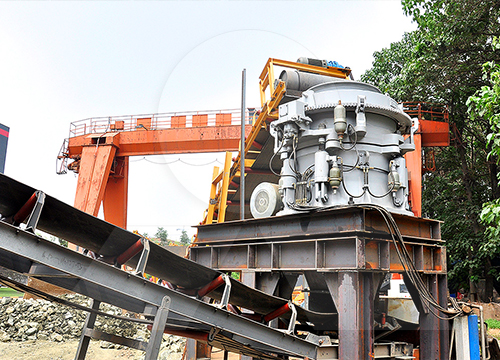
Cone crushers survive this environment because they restrict the physical space the rock occupies while applying immense hydraulic force. The eccentric shaft dictates a tight orbital path. The crushing force is distributed evenly across the high-manganese steel mantle and concave. This constant, squeezing pressure shatters the crystalline structure of granite without relying on high-velocity impact.
Defeating Silica Wear with Laminated Crushing
Forcing rock-on-rock fracture drastically extends the lifespan of expensive wear parts.
The laminated crushing principle is the only mechanical defense against high-abrasion ore. Instead of a steel rotor striking individual rocks, the cone crusher creates a dense bed of material inside the cavity. The compression force squeezes the rocks against each other. The granite breaks itself. This significantly reduces the direct abrasive contact on the internal steel liners.
Operating an HPT300 multi-cylinder cone crusher at a fully choke-fed state optimizes this process. When the feed hopper is kept full, the material density ensures maximum inter-particle crushing. Running a cone crusher empty is an amateur mistake. Starve-feeding increases the speed of material dropping through the chamber, accelerating wear on the lower concave and destroying your production-to-cost ratio.
Tramp Iron Survival in HPT300 Circuits
Hydraulic release cylinders prevent millions in broken mainframes when uncrushable steel enters the chamber.
A bucket tooth snapping off an excavator is a statistical certainty in any large-scale quarry. When a 5-kilogram block of hardened steel enters a rigid crushing chamber, the mechanical stress must go somewhere. Without hydraulic relief, the main shaft bends or the frame cracks. The smell of scorched grease on a seized bearing is the immediate aftermath of an unprotected secondary granite crushing stage.
The hydraulic system acts as an instant mechanical fuse. When tramp iron spikes the internal pressure, the hydraulic accumulators immediately trigger. The main shaft drops, the cavity opens, and the steel passes through safely. The system then automatically returns to its precise closed side setting (CSS). Manual clearing of a jammed chamber takes a full shift. Hydraulic clearing takes seconds.
Field Wear Benchmarks: Synchronizing HPT300 with Abrasive Granite
- Motor Power Draw: 250 kilowatts
- Maximum Raw Feed: 230 millimeters
- Tramp Protection: Hydraulic Accumulator System
- Throughput Capacity: 110-440 tons per hour
- Crushing Cavity: Multi-Cylinder (C1-F2 configuration)
Technical Index: LH-GRANITECONE-April/2026-Ref-#48291
Chief Mechanic’s Log: High-Density Granite Diagnostics
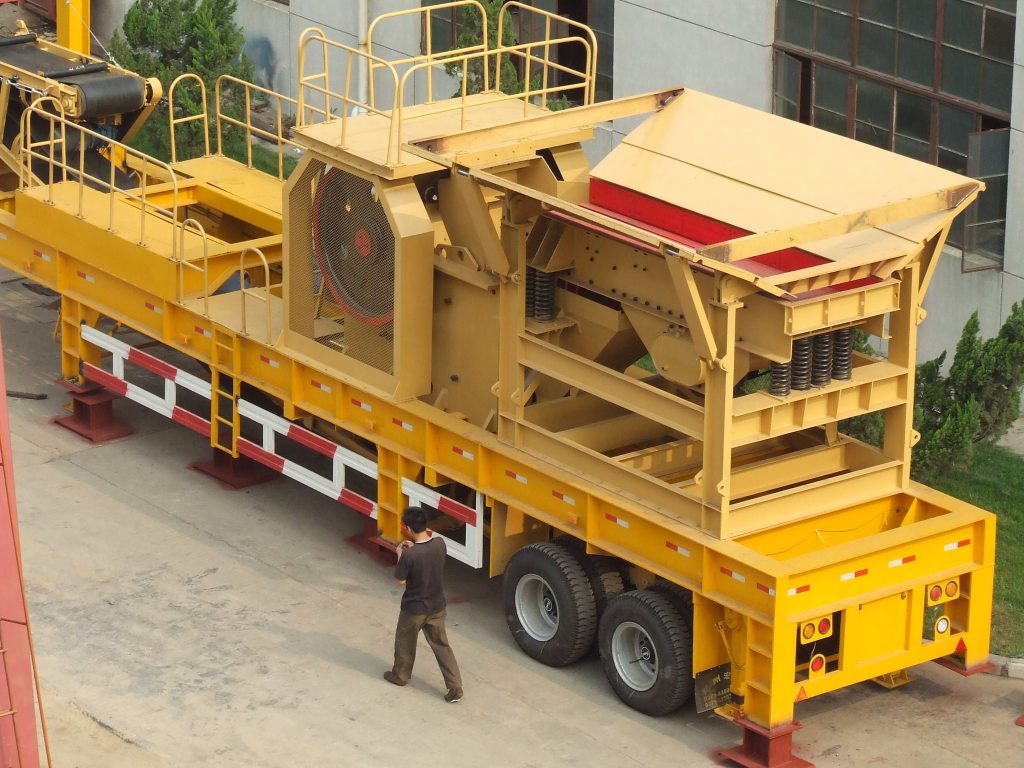
Why does the mantle wear unevenly during the first 100 hours of granite crushing? Observing the lower section of the mantle, premature wear usually points to a starve-fed chamber. Ensure the feed is continuous and centralized. Segregated feed forces larger 200mm rocks to one side, pushing the eccentric shaft off balance and accelerating localized metal degradation. How do oil temperature spikes correlate with CSS calibration? Looking at maintenance logs from 40°C ambient sites, oil temps above 55°C often mean the CSS is set tighter than the material’s compressive strength allows. When attempting to force a 15mm output on 200MPa granite, the friction generates immense thermal load on the bronze bushings. What is the actual risk of ignoring accumulator pressure checks? Failure to maintain the nitrogen charge in the accumulators removes your tramp iron protection. The next piece of steel that enters the chamber will transfer its kinetic energy directly into the 250 kW motor coupling or the mainframe, snapping the shaft. Can the NK300H mobile plant match stationary unit longevity on hard rock? Data from recent 110-440 tph mobile deployments shows equal lifespan. The NK300H utilizes the exact same HPT300 core host. The critical variable is ensuring the 283 kW dual-power chassis is perfectly leveled on solid ground to prevent harmonic vibration tearing the subframe.
Arresting Silica Abrasion in High-Volume Granite Circuits
Deploying the right metallurgy and cavity design creates an impenetrable barrier against operational hemorrhage. The 110-440 tph throughput capacity of the HPT series means absolutely nothing if the machine cannot physically survive the abrasive onslaught of raw granite. The laminated crushing mechanics and hydraulic relief systems ensure your 250 kW motor is translating power into finished aggregate, not destroying internal bearings. Ignore the reality of Mohs hardness, and you will be replacing a cracked mainframe by next month.
Stop Guessing on Manganese Liner Wear Cycles
“We map extreme hardness variables to precise mechanical configurations.” — From the Desk of your Field Technical Director
- > Impact Crusher Working Principle: A Simple Guide to How It Works
- > How Rock Hardness in Different Regions Impacts Crusher Selection
- > Application of Fixed Cone Crushers in Metal Ore Crushing
- > Gravel and Sand Crushing Plant for Construction Quarries in Morocco
- > The Application of Cone Crushers in Mining
- > Common Issues and Solutions for Impact Crushers: A Comprehensive FAQ
- > Suitability of Mobile Crushing Plants in Mining Operations
- > Impact Crushers for Gold Mining in the Middle East


Online


Message