
Based on our recent site audits in restricted-footprint quarries, the biggest threat to capital payback velocity isn’t the primary crusher itself, but the chaotic material flow choking the transition points. We consistently see operators push the primary unit beyond its volumetric limits without matching the downstream capacity. This imbalance results in erratic amperage spikes and structural fatigue across the entire site. Designing a compact circuit requires aggressive geometry and unforgiving quality balance.
Synchronizing the Primary Stage Discharge
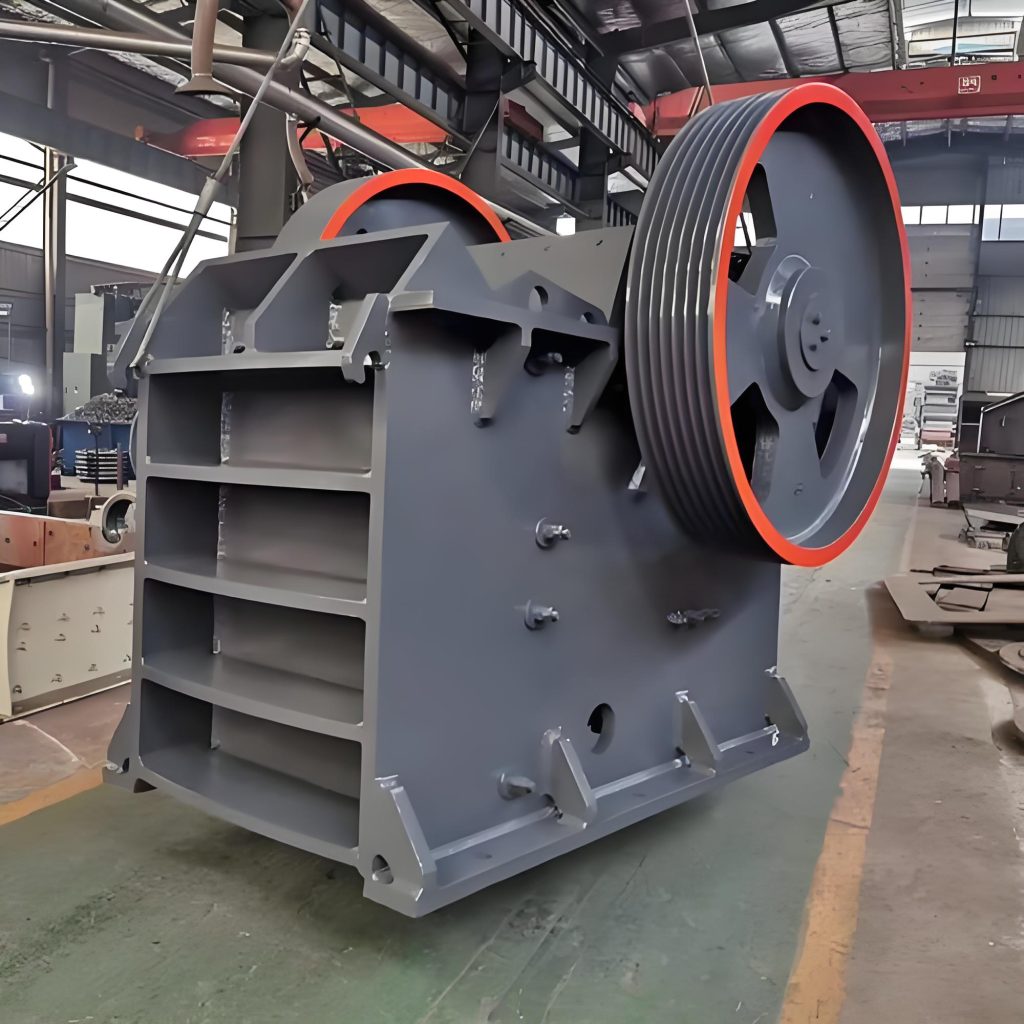
Operating at a 30kW motor load, the primary stage demands a strict 350mm maximum feed to prevent bridging and ensure a steady 15-60 tph output.
The physical geometry of the crushing cavity dictates the upstream preparation. When operators ignore the 350mm threshold, the high-frequency metallic ping of oversize granite locking against the stationary jaw plate becomes audible across the site. This mechanical bridging instantly drops throughput to zero. The 6.5-ton structural mass of the crusher absorbs the kinetic shock, but the eccentric shaft bearings suffer extreme localized stress. Proper upstream feeder calibration eliminates this bottleneck. You must align the feed rate precisely with the closed side setting (CSS) to maintain a continuous material ribbon.
Downstream Flow Dynamics and Layout
Pushing primary discharge directly into a screen without buffer capacity causes blinding and erratic secondary crusher loads.
To handle the abrasive nature of crushed stone at up to 60 tons per hour, we have engineered the following circuit to maximize spatial efficiency. Small mining operations cannot afford sprawling conveyor networks. Compressing the footprint requires aggressive material routing and perfectly synchronized throughput vectors.
| Process Stage | Recommended Model | Capacity (tons per hour) | Power (kilowatts) | Max Feed (millimeters) |
|---|---|---|---|---|
| Primary Crushing | PE400~600 | 15-60 | 30 | 350 |
| Secondary Crushing | PF1010 Impact Crusher | 50-90 | 75 | 200 |
| Grading & Sorting | 3YZS1237 Vibrating Screen | 10-80 | 11 | – |
| Material Transfer | B-Width-500 Belt Conveyor | 45-90 | 4-5.5 | – |
Conveyor Geometry and Footprint Compression
Compressing a 50tph circuit into a 30-meter linear layout requires aggressive 18-degree conveyor inclines and centralized power distribution.
We regularly observe small pits wasting valuable real estate on shallow belt angles. Elevating the multi-stage crushing circuit transition belts to their maximum safe incline reduces the overall longitudinal footprint by up to 25%. The B-Width-500 belt conveyors must maintain sufficient tension to prevent rollback of the 15-60 tph load. The sharp smell of scorched rubber from a slipping drive pulley is the first indicator of inadequate tensioning under high moisture conditions. Maintain minimal transfer point drop heights to reduce dust generation and preserve the belt surface against abrasive aggregate impact.
50tph Compact Circuit: Amperage & Spatial Thresholds
- Secondary Impactor Power: 75 kW
- Main Machine Weight: 6.5 Tons
- Conveyor Belt Width: 500 millimeters
- Primary Input Constraint: 350 millimeters
- Design Throughput Capacity: 15-60 tons per hour
- Primary Jaw Motor Rating: 30 kW
Technical Index: LH-400X600JAWCRUSHERPLANTFORSMALLMININGOPERATIONS-April/2026-Ref-#81034
Architect’s Log: Resolving Choke-Feed Dynamics in Confined Pits
Why does the 30kW primary motor trip during initial startup? Starting the circuit with material resting in the crushing cavity instantly overloads the eccentric shaft. Clear the chamber completely before engaging the electrical drive, ensuring the motor reaches full RPM before the first rock enters. How does 200MPa granite alter the secondary equipment configuration? Our site data confirms that feeding highly abrasive granite into the PF1010 impactor accelerates blow bar wear exponentially. Switch to a small multi-cylinder cone crusher if the silica content exceeds 15% to maintain your production-to-cost ratio. What prevents the vibrating screen from blinding with wet fines? The vibration felt through the catwalks of the 3YZS1237 screen must remain consistent. Installing polyurethane screen meshes and adjusting the eccentric block amplitude forces wet, sticky material to stratify rather than bridge the apertures. Can the PE400x600 handle continuous 60 tph surges? Data proves that sustained operation at maximum theoretical capacity causes thermal expansion in the toggle plate seats. Calibrate your vibrating feeder to deliver a consistent 45 tph average to ensure long-term structural survival.
Enforcing Material Flow in Compact Quarries
Ignoring the 350mm maximum feed threshold will result in catastrophic toggle plate failure next month, permanently halting your operation and destroying the asset amortization cycle. The physical synchronization between the 15-60 tph primary discharge and the downstream secondary impactor dictates your financial survival in a confined footprint.
Stop Guessing on Equipment Synchronization
“Secure your 50tph layout before spatial constraints choke your aggregate output.” — From the Desk of your Solution Architect
- > Comprehensive Guide to Choosing the Right Jaw Crusher Model
- > Application of Impact Crushers in Secondary Crushing and Shaping in Construction Aggregate Production Lines
- > Advantages of Using 900×620 Jaw Crusher in South Africa’s Mining Industry
- > Vibrating Screens in Peru: Key Applications and Benefits for the Mining Industry
- > HPT Hydraulic Cone Crusher for High Hardness Stone Crushing
- > The Role of Impact Crushers in Iron Ore Mining Operations
- > What Materials Are Suitable for a Small Hammer Crusher?
- > The Application of Cone Crushers in Mining


Online


Message