
In our recent field audits of tier-one highway infrastructure projects, we observed a 15% aggregate rejection rate directly tied to excessive flakiness and elongation. Site managers often blame the mineralogy of the basalt or granite, but the actual failure point lies in the mechanical geometry of their single-stage crushing setups. When operating a 300-ton-per-hour circuit, the physical force applied to the stone dictates its structural integrity. You cannot squeeze high-grade concrete aggregates out of a poorly configured crushing cavity. The high-frequency metallic ‘ping’ of flat stones bypassing the discharge opening is a clear auditory signal that your capital payback velocity is bleeding out through rejected material.
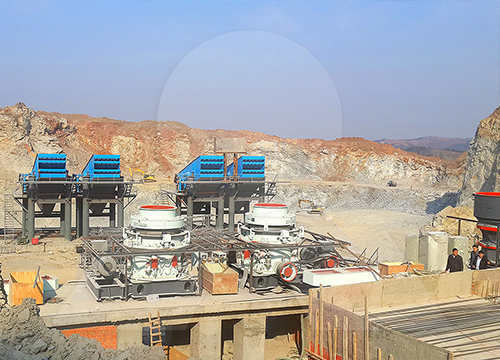
Engineering the Cubical Standard: Overcoming Flakiness Indexes
Laminated crushing geometry enforces a strict volumetric breakdown of hard rock, actively suppressing the generation of elongated particles before they reach the shaping stage.
The pursuit of an 8% flakiness limit requires moving away from brute-force impact in the secondary crushing phase. We engineer circuits using the HPT Multi-cylinder Hydraulic Cone Crusher specifically to leverage laminated crushing principles. When stone enters the cavity, the eccentric shaft drives the mantle towards the concave, creating a high-pressure zone where multiple layers of rock compress against each other. This rock-on-rock internal friction forces the material to fracture along its natural cleavage planes. The HPT300 operates with a 250 kW motor, delivering immense crushing force while maintaining a steady hydraulic pressure threshold.
If you feed 21-230mm raw stone into a standard compression crusher with an improper nip angle, the sheer mechanical stress creates invisible micro-fractures deep within the aggregate core. The HPT series mitigates this by maintaining a choke-fed condition. A choke-fed cone ensures the cavity is completely full, which stabilizes the motor load and prevents the erratic amperage spikes that indicate uneven wear on the manganese liners. You can feel the steady, resonant vibration through the steel-toed boots on the operator platform when the cavity achieves perfect mass balance. We specify this multi-stage granite crushing circuit configuration to guarantee the secondary output is pre-conditioned for final shaping, drastically lowering the expenditure per shift associated with recirculating oversized loads.
Final Stage Shaping: The Physics of Particle Collision
High-velocity kinetic energy transfer within a deep-cavity rotor eliminates tension weaknesses, transforming fractured stone into structurally sound cubical aggregates.
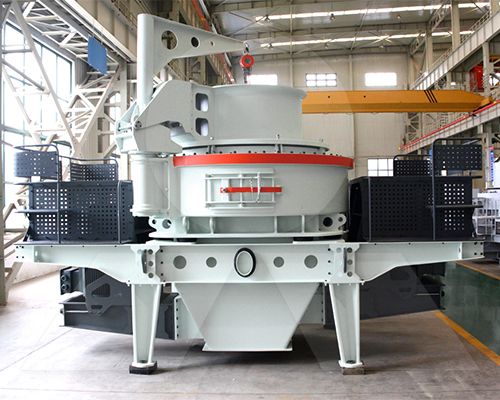
Secondary crushing reduces volume; tertiary shaping guarantees compliance. The VSI6X Sand Making Machine represents the definitive answer for strict concrete and asphalt specifications. Operating on a “stone-hitting-stone” kinetic model, the VSI6X1150 accelerates material up to 80 meters per second. The dual 200 kW motors provide the necessary torque to propel the 45mm feed against an established material bed lining the crushing chamber. This specific collision dynamic strips away the sharp, elongated edges of the stone.
Micro-fractures introduced during primary jaw crushing—where the heavy swing jaw and toggle plate exert massive localized pressure—are fully shattered in the VSI chamber. If a particle has an internal structural flaw, the kinetic impact will break it, ensuring only flawless, solid cubical aggregates exit the discharge chute. The four-opening impeller design of the VSI6X series increases the material throughput to a massive 344-583 tons per hour capacity range, preventing the tertiary stage from becoming a production bottleneck. Ignoring the wear condition of the internal distributor plates or the upper wear plates will immediately degrade the shaping efficiency, turning a precision instrument into a high-maintenance liability.
Circuit Synchronization: The Dynamic Equipment Matrix
Perfecting aggregate geometry requires precise throughput matching across all crushing stages to eliminate idle running and material bridging.
To process abrasive silica or hard granite without generating excessive dust or flat material, the entire plant must function as a single biological system. We have engineered the following circuit matrix to balance the mechanical load, ensuring the high-capacity secondary cone crusher feeds the shaping equipment at a perfectly matched tonnage.
| Process Stage | Recommended Model | Capacity (tons per hour) | Power (kilowatts) | Max Feed (mm) |
|---|---|---|---|---|
| Secondary Laminated Crushing | HPT300 | 120-380 | 250 | 21-230 |
| Tertiary Kinetic Shaping | VSI6X1150 | 344-583 | 2×200 | 45 |
Granite Matrix Benchmarks: Synchronizing VSI6X1150 with HPT300 Tolerances
- Secondary Power Draw: 250 kilowatts (HPT300)
- Tertiary Feed Constraint: 45 millimeters
- Shaping Throughput Range: 344-583 tons per hour
- Secondary Feed Tolerance: 21-230 millimeters
- Shaping Power Draw: 2×200 kilowatts (VSI6X1150)
- Secondary Throughput Range: 120-380 tons per hour
Technical Index: LH-WHICH CRUSHER PRODUCES THE HIGHEST QUALITY AGGREGATES?-April/2026-Ref-#82914
Site Architect’s Log: Eliminating Elongated Particles in 45mm Feed Streams
Why does the VSI6X rotor emit a grinding vibration when processing damp, pre-screened basalt? The wet fines are turning into a sticky industrial paste inside the feed hopper. This damp material bridges across the distributor cone, causing an uneven flow into the high-speed rotor. When 2×200 kW motors are driving an unbalanced 344-583 tons per hour load, the asymmetrical kinetic force translates directly into main shaft vibration, risking immediate bearing failure. How does a wide discharge setting on the jaw crusher destroy our final aggregate quality? Older circuits often widen the primary gap to chase higher tonnage. This floods the HPT300 with material exceeding its 230 mm maximum feed limit. The secondary cone is forced to operate outside its optimal laminated crushing zone, generating massive slabs of flat stone that choke the downstream VSI6X cavity. What is the operational penalty of running the HPT300 below 60% capacity? Operating below choke-fed conditions completely neutralizes the laminated crushing effect. Without a dense material bed generating 250 kW of internal friction, the mantle simply shears individual rocks against the concave, producing needle-like fragments and drastically reducing the production-to-cost ratio of the entire grading system. Can altering the rotor velocity in the VSI6X correct a failing flakiness index? Kinetic energy dictates fracture mechanics. If your final aggregate is retaining micro-cracks from the primary stage, increasing the rotor speed forces higher-velocity collisions against the material lining. This shatters the weak elongation planes instantly, converting substandard 45mm feed into premium, cubical concrete aggregate.
Enforcing Structural Compliance in High-Volume Granite Circuits
Mastering the physical geometry of aggregate production requires strict synchronization between the 250 kW compressive force of the secondary stage and the kinetic impact of the shaping rotor. A failure to choke-feed the HPT300 destroys the laminated friction zone, passing elongated, mechanically compromised slabs directly into the tertiary stage. Next month, continuing to push oversized, single-pass feed through an unbalanced circuit will result in catastrophic structural rejection by your prime contractors, bleeding your operational viability dry. Establish a closed-circuit balance today, or watch your production-to-cost ratio collapse under the weight of unsellable material.
Lock Down Your Aggregate Flakiness Thresholds
“Stop feeding compromised stone into your shaping phase.” — From the Desk of your Plant Solution Architect
- > High-Performance Impact Crushers for Venezuela’s Mining Industry
- > How to Process Clay-Rich River Gravel with a Jaw Crusher: Effective Solutions
- > Price Range and Influencing Factors of Mobile Impact Crushers for Mining
- > Advantages of the Integrated Operation of Mobile Crushers
- > Advantages of Vertical Shaft Impact (VSI) Crushers in Manufactured Sand Production Lines
- > How to Choose the Right Front-End Crushing Equipment for Your Sand-Making Line
- > Jaw Crushers for Bauxite Mines: Efficiency and Reliability in the Mining Industry
- > Copper Mining Process: Complete Equipment Guide and Solutions


Online


Message