
In the multi-stage process of mineral processing and aggregate production, the secondary crushing stage is critical for shaping the final product and preparing material for further refinement. Among the equipment options for this stage, the cone crusher stands as a dominant and highly efficient solution. This article provides a detailed performance evaluation of cone crushers in secondary crushing, examining key metrics that define their value and effectiveness in modern operations.
1. Crushing Efficiency and Reduction Ratio
Performance in Secondary Crushing: Cone crushers excel in providing a high reduction ratio, typically between 6:1 and 8:1, in a single pass. This is a core strength in secondary crushing, where the goal is to efficiently reduce the size of material coming from the primary jaw crusher (often 150-250mm) down to a manageable size for tertiary crushing or screening (e.g., 20-50mm).
- Evaluation: Their interparticle comminution action—where rocks are crushed against each other—leads to superior energy efficiency compared to other compression-style crushers. This results in more tons of product per unit of energy consumed.
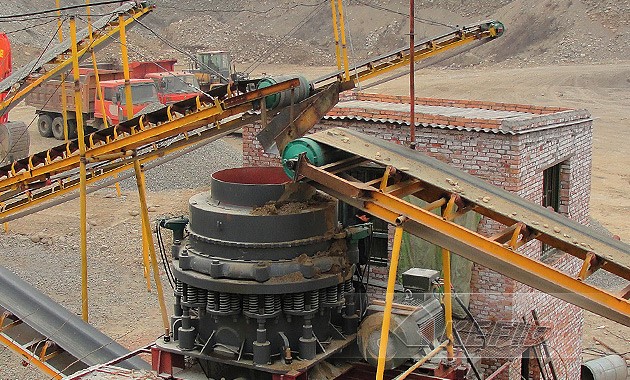
2. Product Quality and Particle Shape
Performance in Secondary Crushing: One of the most significant advantages of a cone crusher is its ability to produce a consistent, high-quality product.
- Evaluation: The cubical-shaped output is a direct result of the crushing chamber design and the layered compression process. This is paramount in secondary crushing, as the product shape is largely set here. A well-shaped, cubical aggregate enhances the strength of concrete and asphalt, provides better compaction, and is highly valued in the market. The ability to control the Closed Side Setting (CSS) precisely allows for tight tolerances on product size distribution.
3. Operational Costs and Reliability
Performance in Secondary Crushing: While the initial capital investment might be higher than some alternatives, the long-term operational costs are a key performance metric.
- Evaluation:
- Wear Parts Longevity: Cone crusher mantles and concaves are designed for long service life, especially when processing abrasive materials. This reduces the frequency of shutdowns for liner changes.
- Energy Consumption: Modern hydraulic cone crushers are engineered for optimal energy efficiency, directly lowering operating costs.
- Reliability: Their robust construction and hydraulic overload protection systems ensure high availability and minimal unplanned downtime, which is crucial for maintaining continuous production flow in a secondary stage.
4. Versatility and Material Suitability
Performance in Secondary Crushing: A performance evaluation must consider the range of materials a cone crusher can handle.
- Evaluation: Cone crushers are exceptionally well-suited for processing hard, abrasive materials like granite, basalt, and iron ore—common feedstocks in secondary crushing. Their performance on softer materials like limestone is also excellent. However, for sticky or clay-bound materials, they may be less effective than an impact crusher, which could be a consideration based on the specific application.
5. Automation and Control
Performance in Secondary Crushing: Modern cone crushers are often equipped with advanced automation systems, which significantly enhance their performance.
- Evaluation: Systems like ASRi (Automatic Setting Regulation) constantly monitor and adjust the crusher in real-time to maintain optimal performance. This automation ensures a consistent product, maximizes throughput, protects the crusher from damage, and allows for remote monitoring and operation, reducing the need for constant manual intervention.
Performance Comparison at a Glance
| Performance Metric | Evaluation in Secondary Crushing |
|---|---|
| Reduction Ratio | Excellent (High) |
| Product Shape | Superior (Cubical) |
| Operating Cost | Low (Long-term) |
| Reliability | Very High |
| Material Hardness | Ideal for Hard & Abrasive Rock |
| Automation | Highly Advanced |
Conclusion
The performance evaluation of cone crushers in secondary crushing confirms their status as a premier choice for this critical stage. They deliver an unbeatable combination of high reduction efficiency, exceptional product quality, and long-term operational economy. Their robustness and adaptability to automation make them a reliable and intelligent investment for any operation focused on maximizing the value of its output. When the goal is consistent, high-volume production of quality aggregate from hard rock, the cone crusher’s performance in the secondary role is virtually unmatched.
- > Extensive Use of Jaw Crushers in the Mining and Quarrying Industry
- > Copper Mining Process: Complete Equipment Guide and Solutions
- > Sustainable Urban Renewal: Mobile Construction Waste Crushing Solutions for Cuba
- > High-Efficiency Jaw Crusher for 500 Tons Per Hour: Applications and Benefits
- > Introduction to Iron Ore Beneficiation Process: 70 Tons per Hour Mobile Impact Crushing Plant
- > Can Mobile Crushers Handle Large Raw Stone? A Complete Guide to Primary Crushing
- > Jaw Crusher in South African Quarries: Key to Efficient Stone Crushing
- > VSI Vertical Shaft Impact Crusher for Particle Shape Optimization in Concrete Aggregates


Online


Message