
Mobile impact crushers have revolutionized aggregate production and recycling by bringing the crushing process directly to the material source. Unlike stationary plants, these units are not merely an impact crusher placed on a trailer; they are highly integrated, self-contained processing systems engineered for rapid setup, operational efficiency, and transportability. Understanding their holistic structural design is key to appreciating their capabilities. This article delves into the defining structural features of a modern mobile impact crusher, breaking down its core components and their integrated functionality.
1. The Foundation: Robust Chassis and Mobility System
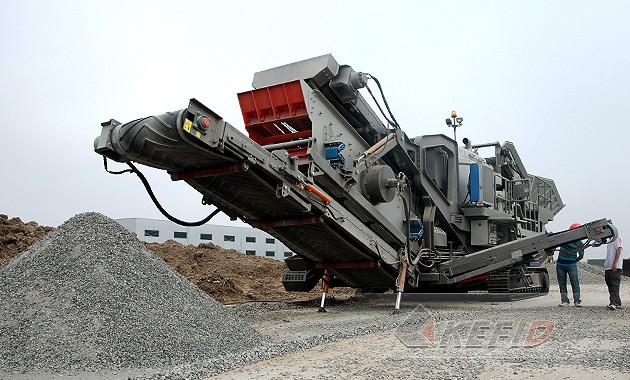
The entire plant is built upon a heavy-duty, unitary steel frame chassis. This is the backbone that supports all components and withstands dynamic crushing forces.
- Key Feature: The chassis incorporates a integrated trailer system with a standard kingpin, allowing the entire unit to be towed by a prime mover (tractor truck) on public roads. For on-site movement, many models feature either hydraulic or mechanical driven crawlers, providing excellent ground pressure distribution and maneuverability on rough terrain without the need for additional transport equipment.
2. The Heart: Impact Crusher Unit
Mounted centrally on the chassis is the core component—the impact crusher itself, designed for easy access and service.
- Rotor Assembly: The robust, heavy-duty rotor is the central kinetic element. It is engineered for high inertia to maintain crushing momentum, featuring durable disc design and locking mechanisms for the hammers (blow bars). Some advanced models offer multiple rotor geometries for different applications.
- Impact Elements: The hydraulically adjustable impact aprons (or grinding paths) allow precise control over product size and shape. Their adjustment can often be performed quickly and safely from the ground or via remote control.
- Drive System: Powered either by the plant’s direct diesel engine or an electric motor via hydraulic couplings or direct V-belt drives, ensuring high torque transmission to the rotor.
3. Feeding and Pre-Screening System
Efficient feeding is critical for optimal crusher performance.
- Integrated Vibrating Grizzly Feeder (VGF): Mounted at the plant’s infeed end, the VGF performs two crucial functions: regulating a steady, controlled material flow to the crusher and pre-screening/scalping of fine particles. This removes undersize material from the crushing circuit, boosting capacity and reducing wear.
- Feed Hopper: Designed with high walls and often a wide opening to facilitate loading from wheel loaders or excavators.
4. Material Flow and Conveying System
A network of conveyors is seamlessly integrated into the chassis structure, defining the plant’s material flow logic.
- Main Discharge Conveyor: A high-capacity, hydraulically foldable conveyor that carries the final crushed product away from the crusher. It features adjustable height and radial slew, allowing for precise stockpiling.
- Bypass/Pre-Screen Conveyor: In models with a pre-screen, this conveyor directs pre-screened fines directly to the final product or a side pile, optimizing the process.
- Closed-Circuit Return Conveyor (for Recirculating Models): The most significant structural feature of a closed-circuit mobile impactor is the recirculating system. This includes an integrated screen (usually a large, high-performance single or double-deck screen) mounted on the same chassis and a return conveyor that feeds oversized material back into the crusher feed. This creates a continuous loop for producing precisely sized, high-quality end products in a single pass.
5. Power and Control System
- Power Source: Typically features a powerful, Tier 4 Final/Stage V compliant diesel engine that drives both the hydraulic system and, via clutches, the crusher and screens. Alternatively, models may offer an “electric drive” option for connection to an external power grid, significantly reducing fuel costs and noise.
- Hydraulic System: A centralized hydraulic power pack operates all moving functions: raising/lowering the feeder, folding conveyors, adjusting aprons, opening the crusher housing for maintenance, and driving the crawlers (if equipped).
- Intelligent Control System: The plant is operated from a central, sound-insulated control panel, often with the capability for remote-control operation via radio. This system monitors crusher speed, feed rates, conveyor functions, and engine parameters, ensuring safe and efficient operation.
6. Serviceability and Safety Features
Design prioritizes ease of maintenance and operator safety.
- Easy Access: Wide walkways, strategically placed ladders, and large service platforms provide safe access to the crusher, engine, and screen for inspection and maintenance.
- Quick-Wear Part Change: The crusher housing is designed with hydraulically opening rear sections or pivoting frames, allowing quick and safe replacement of blow bars and apron liners without extensive dismantling.
- Dust Suppression and Noise Abatement: Integrated dust suppression spray systems and sound-dampening enclosures around critical components are standard features.
Conclusion
The mobile impact crusher is a masterpiece of integrated engineering, where every structural component—from the heavy-duty chassis and powerful impactor to the intelligent conveying and screening systems—is designed to work in unison. Its compact yet comprehensive structure delivers unmatched flexibility, rapid setup and teardown, and the ability to produce high-specification material directly at the job site. This holistic design philosophy translates into tangible benefits: reduced material handling costs, the ability to process diverse materials (from virgin rock to C&D waste), and a significantly lower operational footprint. For contractors and aggregate producers requiring maximum versatility and on-site efficiency, the structural intelligence of a mobile impact crusher is the ultimate enabling technology.
- > Impact Crushers for Gold Mining in the Middle East
- > Cone Crusher in Metal Ore Beneficiation Production Line
- > Equipment Configuration Recommendations for a 50 TPH Stone Crushing Plant
- > Can a Mobile Impact Crusher Produce Final Specification Aggregates On-Site?
- > Key Reasons Behind Low Output in Jaw Crushers and How to Address Them
- > Cone Crushers: The Core of Brazil’s Iron Ore Crushing Lines
- > Impact Crushers for Shaping Construction Aggregates
- > Durable Hydraulic Spring Cone Crusher for Mining Applications


Online


Message