
In the world of aggregate production, demolition recycling, and construction projects, efficiency is paramount. The ability to process raw material and produce usable end products directly at the job site represents a significant logistical and financial advantage. This leads to a critical question for contractors and plant managers: Is a mobile impact crusher suitable for producing finished, specification-grade aggregates on-site? The definitive answer is yes, absolutely—and it’s one of its core strengths when equipped and operated correctly.
The Key to On-Site Final Product: The Closed-Circuit Design
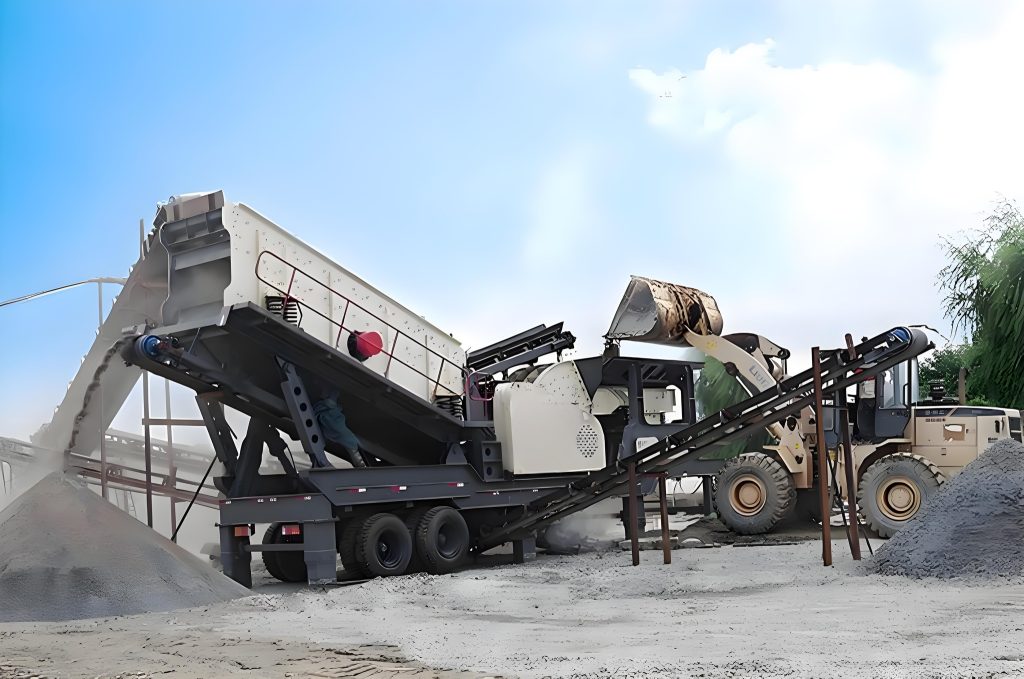
Not all mobile crushers are created equal for this task. The capability to produce final product directly hinges on one essential feature: a closed-circuit design. A closed-circuit mobile impact crusher integrates the impact crusher itself with a high-capacity onboard vibrating screen and a return conveyor.
- The Process: Material is fed into the crusher and broken. It is then conveyed to the integrated screen.
- The Screening: The screen separates the crushed material into specific size fractions. Oversized material that does not pass through the screen apertures is sent via the return conveyor (closed circuit) back into the crusher for further reduction.
- The Result: Properly sized material is stockpiled as finished product. This loop continues, allowing precise control over the final grain size without leaving the machine.
Advantages of Direct On-Site Production with a Mobile Impact Crusher
1. Unmatched Logistical Efficiency and Cost Savings
This is the most compelling benefit. By producing final aggregates on-site, you eliminate multiple cost centers:
- Transporting raw feed to a fixed plant.
- Hauling processed material back to the job site.
- Reduced fuel, trucking hours, and associated carbon emissions.
The crusher comes to the mountain, processes it, and the product is ready for immediate use.
2. Superior Product Shape for Critical Applications
Impact crushers excel at producing high-quality, cubical end products. The principle of impact breaking creates aggregates with excellent interlocking properties, which is vital for base materials, concrete aggregate, and asphalt mixes. Producing this shape on-site ensures quality control from start to finish.
3. Flexibility to Meet Changing Specifications
With adjustable rotor speed, impact apron settings, and often interchangeable screen meshes, a closed-circuit impactor can be quickly reconfigured to produce different final products. From road base to concrete stone to sand, one machine can adapt to the project’s daily needs.
4. Ideal for Recycling Projects
For demolition sites, producing clean, sized recycled concrete aggregate (RCA) or asphalt millings directly on the spot is a game-changer. The material can be reused immediately as sub-base, closing the recycling loop instantly and profitably.
Crucial Considerations for Success
While suitable, achieving consistent on-spec product requires attention to several factors:
1. Feed Material Characteristics:
- Abrasive vs. Non-abrasive: Impact crushers are most efficient and cost-effective with low to medium abrasiveness materials (e.g., limestone, recycled concrete, asphalt). For highly abrasive feed (like some granites), wear part consumption can be high, affecting uptime and cost-per-ton.
- Presence of Fines: If the raw feed already contains a high percentage of target-size fines, it can “choke” the crusher or reduce effective screening capacity. A pre-screen (grizzly or separate scalper) is highly recommended.
2. The Importance of Screening Capacity:
The screen is the component that defines the final product. The screen must be correctly sized and configured for the application. The screening stage often becomes the bottleneck, not the crushing stage. Ensuring adequate screen surface area and the right deck configuration (e.g., top deck for scalp, bottom deck for precise sizing) is critical.
3. Operational Expertise:
An operator must understand how to “tune” the machine—balancing feed rate, crusher settings, and conveyor speeds to optimize the closed circuit for the desired output and quality.
Mobile Impact Crusher vs. Mobile Jaw/Cone Combo
- Mobile Jaw + Cone Plant: Traditionally favored for hard, abrasive rock to produce precisely sized aggregates. It often involves two crushing stages and is excellent for consistent, high-volume production of multiple spec products.
- Mobile Impact Crusher (Closed-Circuit): Often a single-stage solution for producing one or two spec products from less abrasive materials. It offers simplicity, excellent product shape, and is typically faster to set up and relocate.
Conclusion: A Powerful, On-Demand Solution
The modern closed-circuit mobile impact crusher is not only suitable for producing final specification aggregates on-site—it is one of the most efficient and profitable tools for doing so in a wide range of applications. It turns transportation costs into profit, provides exceptional product shape, and offers unparalleled flexibility for projects involving natural stone or recycled materials.
Its suitability peaks where the material is compatible (low/medium abrasiveness) and where the logistical advantages of on-site processing deliver the highest return on investment. For contractors and aggregate producers looking to maximize efficiency and control, it represents a direct path from raw pile to finished product, all within the footprint of a single, mobile production plant.
- > Impact Crusher for Processing Dolomite and Tantalite in Mining Plants
- > Application of Cone Crusher in Secondary and Tertiary Crushing in Metal Ore Beneficiation Process
- > High-Demand Mining Ball Mill Widely Used in Cement Production Lines
- > Efficient Spiral Sand Washer for Gravel, Rock, and Ore
- > Which Crusher to Use for Manufactured Sand Production? A Complete Guide
- > Mobile Vibrating Screens for Sand Processing in Malaysia
- > The Growing Use of Mobile Crushers in Africa
- > Is a Jaw Crusher Mandatory for the Primary Crushing Stage?


Online


Message