
Selecting the right secondary crushing equipment is a critical decision that directly impacts the productivity, product quality, and profitability of a quarry. The cone crusher and the impact crusher are the two dominant technologies for this stage, but they operate on fundamentally different principles and are suited for different applications. Understanding the difference between a cone crusher and an impact crusher is essential for making an optimal choice for your specific quarrying needs.
Fundamental Difference: Compression vs. Impact
This is the core distinction that defines their operation and best-use cases.
- Cone Crusher: Utilizes compressive force. The material is squeezed and crushed between a gyrating mantle and a stationary concave (bowl liner). This is a continuous, gradual process.
- Impact Crusher: Utilizes impact force. The material is struck by rapidly rotating blow bars (hammers) and thrown against impact aprons, where it shatters. This is a high-velocity, single-event process.
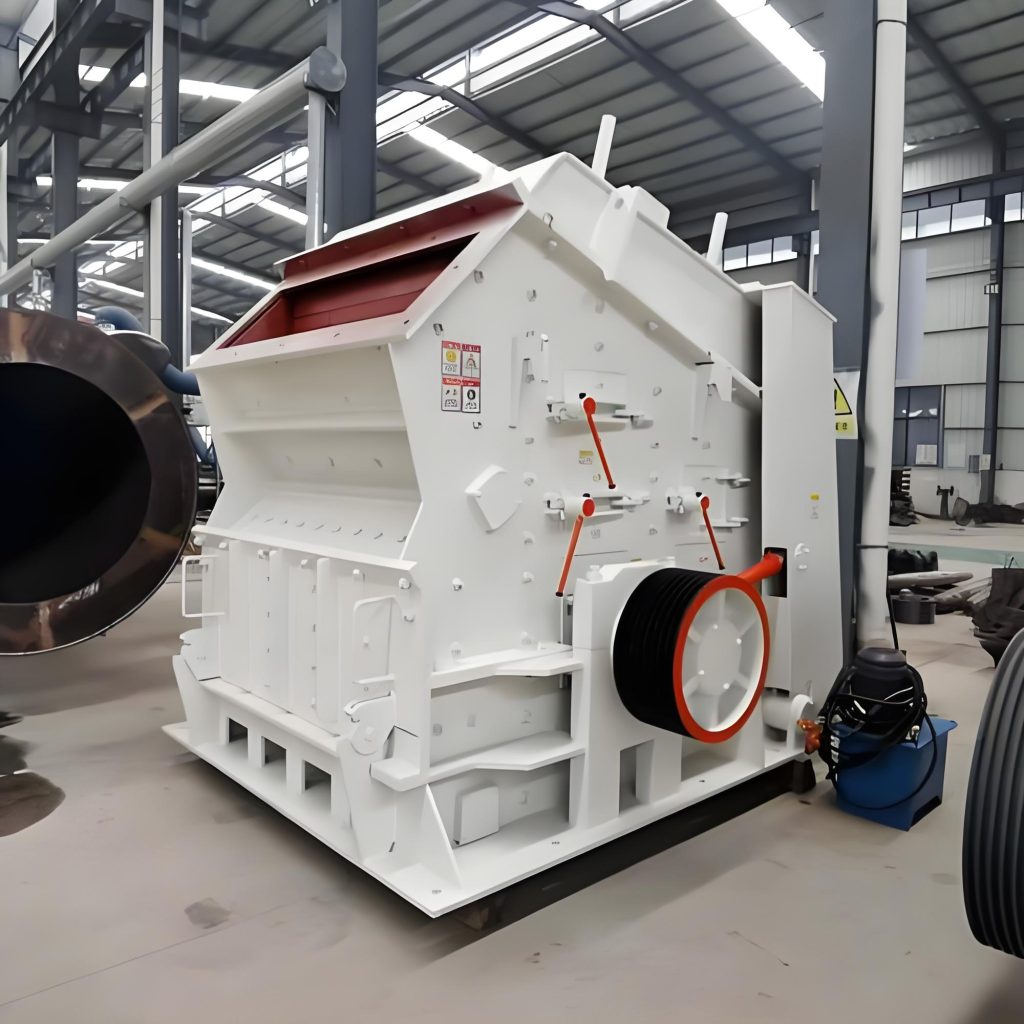
Detailed Breakdown of Differences
1. Suitable Materials and Applications
- Cone Crusher: The undisputed champion for processing hard, abrasive materials like granite, basalt, and quartzite. Its robust construction and compressive action are designed to withstand extreme wear. It is the go-to machine for producing high-quality aggregate for asphalt and concrete where shape is important but not the absolute top priority.
- Impact Crusher: Excels at crushing softer, less abrasive materials like limestone, dolomite, and recycled concrete/asphalt. Its ability to produce a highly cubical product makes it ideal for applications where particle shape is critical, such as in high-quality concrete and asphalt chip production. It is also superior for recycling applications.
2. Final Product Shape and Gradation
- Cone Crusher: Tends to produce a more angular and slightly flaky product. While modern cone crushers have improved shape significantly, they typically cannot match the consistent cubicity of an impact crusher on softer rock.
- Impact Crusher: Is the clear winner in producing a well-defined, cubical end product. The violent impact fractures the rock along its natural cleavage planes, resulting in fewer elongated or flaky particles.
3. Operating and Maintenance Costs
- Cone Crusher: For its intended hard-rock application, the cone crusher has a lower cost per ton. The manganese wear liners (mantle and concave) are massive and wear slowly. However, maintenance can be more complex and require specialized knowledge.
- Impact Crusher: In abrasive applications, the wear cost is significantly higher. Blow bars and impact aprons need frequent replacement. While the replacement itself is often quicker and easier than changing cone liners, the frequency drives up the operational cost when processing the wrong material.
4. Flexibility and Control
- Cone Crusher: Offers precise control over the product size through the hydraulic adjustment of the closed-side setting (CSS). However, changing the product gradation significantly often requires a physical change of the crushing chamber liners.
- Impact Crusher: Offers excellent flexibility. The product size can be easily adjusted by changing the rotor speed or the gap between the blow bars and aprons. Some models also allow for a primary and secondary crushing stage within the same machine.
Conclusion: How to Choose for Your Quarry
The choice is not about which machine is “better,” but which is right for your specific material and business goals.
Choose a Cone Crusher if:
- Your primary material is hard and abrasive (e.g., granite, basalt).
- Your priority is low operating cost and high throughput in a hard-rock application.
- Product shape is important, but you can accept a slightly more angular product.
Choose an Impact Crusher if:
- Your primary material is soft to medium-hard (e.g., limestone, recycled concrete).
- Superior, cubical product shape is your top priority for premium aggregate sales.
- You need high flexibility and plan to process a variety of materials, including recycling.
In many modern, high-output quarries, the optimal solution is a combination: a cone crusher for the hard, abrasive rock to produce base materials efficiently, and an impact crusher to further refine a portion of the product into high-value, cubical chips and sand.
- > Common Issues When Operating a Ball Mill in Stone Quarrying
- > Usage and Maintenance of Impact Crushers
- > Advantages of Impact Sand Making Machines in Construction Aggregates
- > The Role of Crawler Mobile Crushing Stations in Road Construction
- > Advantages of Impact Crushers in Limestone Mining
- > The Impact of Quartz on Crushing Equipment
- > Cross-Country Capability: How Track-Mounted Crushers Conquer Rough Terrain
- > High-Efficiency 1000 TPH Mobile Limestone Crusher in South Africa


Online


Message