
In the world of construction, demolition, and recycling, concrete is ubiquitous. From demolished buildings to old pavements, the need to process this hard, reinforced material is constant. For contractors and recycling yards seeking efficiency and on-site processing, mobile impact crushers have emerged as a premier solution. But a critical question remains: How effective are they specifically for crushing concrete blocks? The answer is: exceptionally effective, making them a transformative tool for modern concrete recycling.
Why Mobile Impact Crushers Are Ideal for Concrete
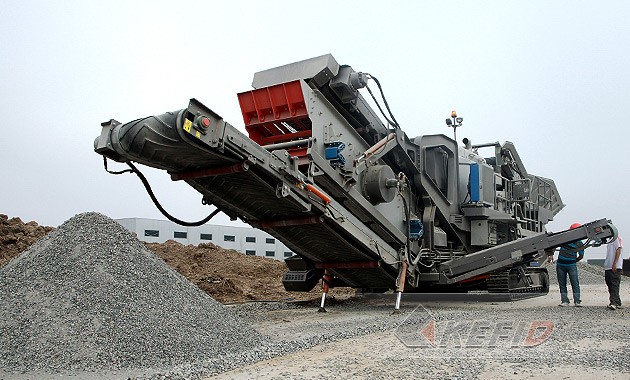
The effectiveness stems from the powerful combination of the impact crushing principle and the inherent mobility of the plant.
1. The Impact Crushing Advantage: Creating the Ideal Aggregate
Unlike jaw crushers that use compression or cone crushers that utilize a squeezing action, impact crushers use high-speed rotors and hammers/blow bars to shatter concrete by impact. This method offers distinct benefits for concrete:
- Excellent Cubic-Shaped Output: The impact fracture tends to break concrete along its natural cleavage lines, producing final aggregate with a clean, cubical shape. This is highly desirable for recycled concrete aggregate (RCA) used as a base material for new roads, backfill, or even as aggregate in new concrete, as it compacts well and provides good structural interlock.
- Effective Liberation of Rebar: As the concrete is shattered, embedded steel rebar is efficiently separated and broken free. Most mobile impact crushers are equipped with sturdy over-band magnets that automatically extract and discharge the rebar onto a separate pile, significantly simplifying the sorting process.
- Adjustable Gradation: By simply adjusting the speed of the rotor or the distance between the rotor and the impact aprons (in some models), operators can quickly change the final product size. This flexibility allows a single machine to produce everything from large base material to finer grades, all from the same pile of concrete blocks.
2. The Mobility Advantage: Processing at the Source
This is where the “mobile” aspect fundamentally changes the economics of concrete recycling.
- Eliminate Transport Costs: The most significant cost in demolition projects is often hauling heavy, bulky concrete debris to a fixed crushing plant and then transporting the processed aggregate back to the site. A mobile impact crusher is driven directly to the demolition site, crushing the material on-location. This slashes freight costs, fuel consumption, and carbon emissions.
- Immediate Reuse of Material: Crushed concrete can be stockpiled and reused right on the same project as sub-base or fill material, creating a closed-loop, sustainable operation.
- Flexibility Across Multiple Sites: Contractors can move the crusher from one job site to another with minimal setup time, maximizing its utilization and return on investment.
The Crushing Process and Expected Results
A typical workflow with a mobile impact crusher for concrete involves:
- Pre-Sorting: Larger concrete slabs and blocks are fed into the crusher’s hopper, often via an excavator. Light contaminants like wood or plastic should be minimized beforehand.
- Primary Crushing: The powerful impact rotor breaks down the large blocks.
- Separation & Screening: The crushed material passes onto a built-in vibrating screen (present in most closed-circuit mobile impactors). Oversize material is recirculated back into the crusher (closed-circuit operation), while correctly sized material is discharged onto stockpiling conveyors. The magnet pulls off ferrous metal.
- Final Product: The output is a pile of clean, sized recycled concrete aggregate and a separate pile of scrap metal.
Practical Effectiveness Metrics:
- High Reduction Ratio: Can process large blocks (e.g., 500mm) down to a specified final size (e.g., 25mm) in a single machine.
- Production Capacity: Modern units can process between 100 to over 500 tons per hour, depending on the model and concrete conditions.
- End-Product Quality: Produces a well-graded, cubicle aggregate that meets specifications for many secondary construction applications (e.g., Type 1 or Type 2 sub-base).
Important Considerations for Optimal Performance
To maximize effectiveness, operators must consider:
- Pre-Crushing & Feeding Size: Very large, thick reinforced concrete walls might benefit from pre-breaking with a hydraulic pulverizer or breaker to a manageable size for the crusher’s feed opening.
- Reinforcement Content: While impact crushers handle rebar well, extremely dense, heavily reinforced sections (like foundation piers) can be challenging and cause more wear on the blow bars.
- Wear Parts Management: Concrete is abrasive. The blow bars (hammers) and impact aprons will wear and require regular inspection and replacement. Choosing the right metallurgy for these wear parts is crucial for cost-effective operation.
- Dust Control: Effective dust suppression systems (water sprays) are essential to comply with environmental regulations and ensure a safe working environment.
Conclusion: A Highly Effective and Strategic Solution
The evidence is clear: Mobile impact crushers are extremely effective for crushing concrete blocks. They are not just effective in terms of breaking the material down, but they do so in a way that produces a valuable, marketable product while offering unparalleled logistical and economic benefits through on-site processing.
For demolition contractors, recycling companies, and road builders, investing in a mobile impact crushing plant translates to direct cost savings, new revenue streams from selling RCA, a stronger environmental profile, and a significant competitive advantage. It turns a waste disposal problem into an efficient, in-situ resource recovery operation.
- > Extensive Use of Jaw Crushers in the Mining and Quarrying Industry
- > A Deep Dive into the HST Hydraulic Cone Crusher
- > Efficient Handling of Gravel and Crushed Stone: The Role of Cone Crushers
- > Cone Crusher for Kaolin Processing in Nigeria: Enhancing Efficiency and Productivity
- > Adaptability of Jaw Crushers to High-Moisture Content Materials
- > Comparison Between Impact Crushers and Cone Crushers: Key Differences and Applications
- > Which Construction Projects are Mobile Impact Crushers Best Suited For?
- > The Role of Vibrating Screens in the Mining Industry


Online


Message