
Any site operator who has run a quarry during the heavy monsoon season knows the exact gut-wrenching feeling of watching a secondary jaw or cone crusher choke to a dead stop. When raw stone comes out of the pit saturated with sticky clay, it ceases to behave like mineral aggregate. Instead, it transforms into a viscous, unyielding industrial paste that bridges the feed hopper, blindfolds screen media within twenty minutes, and packs the crushing chambers until the drive belts squeal and slip.
Dealing with clay-contaminated stone requires throwing out theoretical lab formulas and implementing aggressive, high-energy mechanical intervention right at the primary circuit. If you try to run high-moisture clay through a standard setup without modifying your screening dynamics and feeding mechanics, you are effectively choosing to spend your day with a pry bar and a pressure washer, watching your daily running costs skyrocket while production drops to zero.
The Blinded Screen Dilemma: Breaking the Cohesive Paste with S5X Dynamics
The first point of failure in any circuit handling clay-contaminated rock is always the vibrating screen. Traditional circular motion screens lack the raw acceleration required to break the surface tension of sticky clay. The material simply sheets over the deck, turning your polyurethane screen panels into a smooth, slick slide that carries valuable stone straight into the waste reject pile or forces wet fines directly into the secondary crusher.
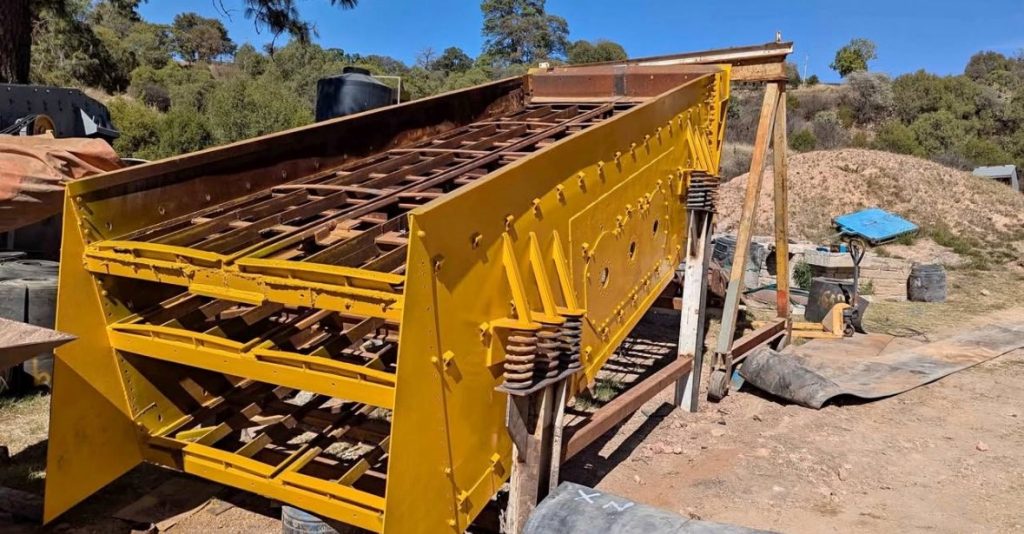
To eliminate polyurethane screen blinding, you must radically alter the G-force and stroke dynamics of the deck. This is where the aggressive force configuration of the S5X series vibrating screen becomes mandatory. By utilizing a hyper-strong exciter block that generates a localized elliptical throw pattern, the screen deck delivers intense vertical impact combined with high horizontal acceleration. This rapid directional shift shears the sticky industrial paste away from the polyurethane screen openings before it can cure or bridge across the slots.
Additionally, the physical configuration of the screen panels must be optimized for sticky feeds:
- Self-Cleaning Wire vs. Heavy Polyurethane: While thick polyurethane screen panels provide exceptional wear resistance for dry abrasive rocks, they can struggle with moisture-laden clay due to their thermal properties. In extreme sticky zones, implementing specialized self-cleaning, independent-wire screen configurations on the top or middle deck provides the micro-vibrations necessary to reject clay buildup.
- Increased Stroke Amplitude: Adjusting the eccentric counterweights on the S5X drive assembly to its maximum stroke setting forces the heavy, clay-caked stone to bounce violently rather than slide. This high-amplitude impact shatters the muddy crust off the clean stone matrix, prepping the rock for the primary crushing chamber.
Regulating the Surge: F5X Continuous Feeding to Prevent Crusher Choking
If the material survives the screening stage, the next critical vulnerability is the throat of the primary crusher. Slugging a jaw or impact crusher with massive dumps of sticky material from a haul truck guarantees an instant choke. The clay packs tightly between the moving jaw plates, filling the cavities and preventing the mechanical stroke from transferring energy into rock fractures. The initial investment in heavy-duty machinery is wasted if the feed stream is not strictly metered.
The solution lies in transforming a chaotic dump cycle into a regulated, continuous feeding stream. The F5X series vibrating feeder handles this by utilizing a rugged, dual-shaft exciter system that maintains a rock-solid linear feed rhythm, regardless of the dead weight inside the hopper. When a truck dumps a wet, muddy load, the F5X feeder resists the dampening effect of the sticky material paste, maintaining its stroke to steadily push the contaminated rock forward. How does continuous feeding eliminate feed hopper bridging? When clay-contaminated material is left stationary, it consolidates, forming a solid arch or bridge across the discharge throat of the hopper. The continuous, high-frequency linear vibration of the F5X series feeder prevents the sticky paste from settling or developing cohesive strength, ensuring the material remains in a fluid, moving state toward the crusher opening.
Furthermore, managing the feed stream requires a deliberate bypass strategy. The grizzly bar section of the F5X feeder should be adjusted to allow natural mud and highly contaminated sub-70mm material to drop out of the stream before it ever touches the crusher jaw. This pre-screening bypass routes the sticky mud away from the main crushing cavity, protecting your liners and keeping the cost per ton of aggregate firmly optimized by ensuring the machine only expends energy on crushable rock.
Operational Maintenance: Controlling Daily Running Costs in Sticky Pits
Managing clay-contaminated rock is a continuous battle against mechanical friction. Beyond choosing high-amplitude machinery like the S5X screen or the heavy-duty F5X feeder, site crews must adhere to rigorous maintenance protocols to avoid catastrophic unplanned downtime. Water suppression systems must be monitored closely; spraying the wrong zone can turn manageable damp clay into a liquid slurry that leaks into your conveyor bearings and drive assemblies, destroying your capital payback velocity. Keep the material moving, maximize your mechanical G-forces, and never allow wet fines to accumulate under the discharge chutes.
- > Portable Jaw Crushers for Quarry Operations in South Africa: Key Features and Benefits
- > Jaw Crusher Processing Technology for Open-Pit Gold Mining in Indonesia
- > Efficient Granite Crushing Solution: Using a Cone Crusher for Optimal Performance
- > The Role of Impact Crushers in Sand and Gravel Aggregate Production
- > Selection and Maintenance Guidelines for Cone Crusher Lubricating Oil
- > How Track-Mounted Mobile Crushers Enhance Flexibility in Aggregate Plants
- > Impact Crusher: An Efficient Solution for Coal Crushing Applications
- > Optimizing Raw Material Grinding Size and Feed Capacity in Ball Mills


Online


Message