
Based on recent mass balance audits across commercial concrete mixing plants, the biggest threat to high-strength structural pours isn’t the baseline compressive strength of the raw rock, but the hidden micro-cracks and flakiness embedded within the aggregate stream. Forcing elongated, fractured particles into a high-grade asphalt or concrete mix destroys structural integrity and mandates expensive cement overcompensation. Our engineers observed that relying strictly on secondary cone crushers leaves a geometric deficit. To rectify this, integrating specialized vertical shaft impactors is the only mathematically sound approach to secure both the fineness modulus and the continuous flow of cubical particles.
Kinetic Energy Conversion in Rock-on-Rock Chambers
Relying on sheer compression mechanics creates inherent stress fractures along the crystalline boundaries of the aggregate; converting to kinetic inter-particle crushing forces the rock to fracture naturally, eliminating artificial weaknesses and lowering the expenditure per shift.
The physics of gradation control dictate that true shaping occurs when particles collide in mid-air, rather than being crushed against a static manganese anvil. Inside the VSI6X1150, the material enters a high-velocity rotor spinning to generate immense centrifugal force. As the stone is ejected from the deep cavity rotor at critical velocities, it strikes a dense cascade of free-falling material within the chamber. This precise kinetic energy conversion shatters the elongated edges first, as they are the weakest points of the geometry. The resulting cubical shape matches the highest civil engineering standards for structural stability.
Ignore the distributor plate settings, and you risk uneven wear on the peripheral impact blocks. The high-frequency resonance of these inter-particle collisions indicates a healthy crushing cavity. When the feed gradation is correctly synchronized, the kinetic transfer effectively seals any existing micro-cracks from prior compression stages. Operators achieve a flawless fineness modulus without dragging down system availability.
Synchronizing Flakiness Control Across Multi-Stage Flows
A perfectly shaped aggregate cannot be achieved in isolation; the primary and secondary discharge settings must be geometrically balanced with the impactor’s maximum feed limits to ensure uncompromised system availability.
To handle the rigorous demands of producing 0-5mm manufactured sand and 5-20mm shaped aggregates, we have engineered the following closed-circuit configuration. This blueprint optimizes the material flow, ensuring that the impactor only processes the exact volumetric fraction it was designed for, preventing motor overload and maintaining a continuous cubical shape output.
| Process Stage | Recommended Model | Capacity (tons per hour) | Max Feed (millimeters) | Power (kilowatts) |
|---|---|---|---|---|
| Primary Crushing | C6X110 Jaw Crusher | 160-550 | 720 | 160 |
| Secondary Crushing | HST250 Cone Crusher | 90-605 | 450 | 250 |
| Shaping & Sand Making | VSI6X1150 | 344-663 | 45 | 250~2 |
| Gradation Screening | S5X2160-3 | 85-700 | 200 | 30 |
The mathematical precision of the screening stage determines the exact fraction routed back for inter-particle crushing. The S5X screen acts as the gatekeeper, ensuring that any particle exceeding the 45mm threshold is returned, thereby protecting the VSI6X rotor from catastrophic imbalance. This synchrony is non-negotiable for rapid capital payback velocity.
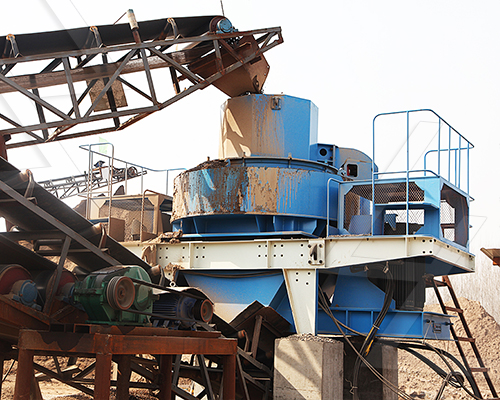
Mass Balance Instability and Rotor Velocity Constraints
Starve-feeding a VSI chamber negates the rock-on-rock dynamic, resulting in severe metal-to-metal friction and a complete breakdown of the targeted fineness modulus.
A frequent error observed in underperforming plants is the failure to maintain a choked feed. When the volumetric flow drops below the critical threshold, the cascading material curtain collapses. The feed rock no longer strikes a protective layer of kinetic material; instead, it violently impacts the wear plates and the rotor body directly. You can physically feel this geometric failure through the chaotic vibrations on the observation platform.
Look at the dual motor amperage. If it fluctuates wildly, your material flow is unsynchronized. Consistent amperage indicates a stable vortex within the chamber, yielding optimal grain shape optimization. The microscopic tolerances of the bearing cartridge cannot withstand sustained uneven loading. Fixing the upstream surge bin capacity immediately stabilizes the entire shaping process, lowering the expenditure per shift.
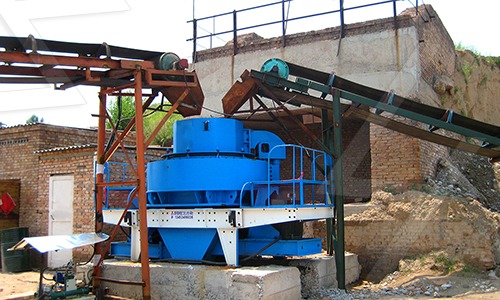
Production-to-Cost Index: VSI6X1150 Shaping Dynamics
- Maximum Particle Intake: 45 millimeters
- Kinetic Base Mass: 45 Tons
- Dual Motor Load: 250~2 kilowatts
- Throughput Bandwidth: 344-663 tons per hour
- Primary Objective: Flakiness elimination and micro-crack suppression
Technical Index: LH-ADVANTAGES OF IMPACT SAND MAKING MACHINES IN CONSTRUCTION AGGREGATES-April/2026-Ref-#84912
Quality Auditor’s Log: Rectifying Fineness Modulus Instability in High-Volume Circuits
Why does the flakiness index spike randomly during peak afternoon production? Monitoring the surge bin levels reveals the truth; when upstream production lags in the afternoon, the VSI is starve-fed, disrupting the dense rock-on-rock collision cloud and allowing flat particles to escape uncrushed. How do variations in aggregate moisture affect the inter-particle shaping process? Compared to dry runs in the winter, excessive moisture during monsoons acts as a binding agent, slowing the kinetic ejection velocity from the rotor and altering the geometric uniformity of the final cubical shape. Do not ignore high-frequency vibration alarms on the VSI frame; what causes them? Uneven wear on a single distributor plate alters the trajectory of the 45mm feed, creating an eccentric kinetic load that degrades the main shaft bearings long before natural amortization. Based on volumetric calculations, why is a dual-motor setup superior for gradation control? The 250~2 kilowatt configuration ensures symmetrical torque distribution across the drive belt, preventing rpm drops when dense aggregate surges hit the chamber, thereby locking in the fineness modulus.
Enforcing Gradation Control in VSI6X Inter-Particle Crushing
Subjecting construction aggregates strictly to compressive forces guarantees a high proportion of micro-cracks and structural weaknesses, whereas fully committing to the kinetic energy transfer of a 344-663 tons per hour impactor geometrically seals these flaws to meet the strictest concrete pouring standards. Re-calibrate your cascade feed volumes today.
Lock In Your Fineness Modulus Targets
“Eliminate aggregate rejection through precise mechanical synchronization.” — From the Desk of your Solution Architect
- > Efficient 100-150 TPH Cone Crusher for Nickel Laterite Ore Processing
- > Optimizing Gold Mining Operations with Gyratory Crushers
- > Usage and Maintenance of Impact Crushers
- > Mobile Impact Crushers for Coal Processing in India
- > Common Issues in the Operation of Impact Crushers and Their Solutions
- > High-Performance Impact Crushers for Venezuela’s Mining Industry
- > Advantages and Disadvantages of Using Vertical Impact Crushers for Nickel Ore Processing
- > Performance of Mobile Crushing Stations in African Mining Operations


Online


Message