
Based on recent laboratory fracture tests and 500 hours of site data in high-quartz basalt quarries, the biggest threat to profitability isn’t the initial investment of the crusher, but the hidden micro-fracture patterns induced by incorrect cavity physics. When exposing multi-cylinder units to abrasive silicates, the mechanical resilience of the crushing chamber dictates the financial survival of the entire circuit.
The Mechanics of Silicate Abrasion on Crushing Cavities
High silica content acts as a microscopic grinding paste on manganese steel, demanding continuous hydraulic pressure adjustments to maintain grain integrity.
Rock hardness is not just a resistance value; it is a structural challenge defined by the crystalline matrix of the mineral. Basalt and granite often exceed Mohs 7 hardness, containing microscopic quartz veins that behave like abrasive cutting tools against standard alloy surfaces. During the compression cycle, the multi-cylinder hydraulic cylinders must provide extreme holding force to prevent the adjustment ring from floating. If the holding pressure drops by even 5%, the uncrushed rock forces the mantle to deflect, transferring catastrophic shear stress directly onto the eccentric shafts.
Observing the interaction at a microscopic level reveals the true cost of inefficient mechanics. The metallic screech of high-quartz ore sliding against a worn manganese concave is the audible signature of lost structural integrity. Operators will notice the microscopic tolerances of the bearing fit beginning to heat up as the lubricating oil compensates for the mechanical misalignment. Overcoming this requires engineering a cavity that matches the material’s natural cleavage planes rather than fighting them.
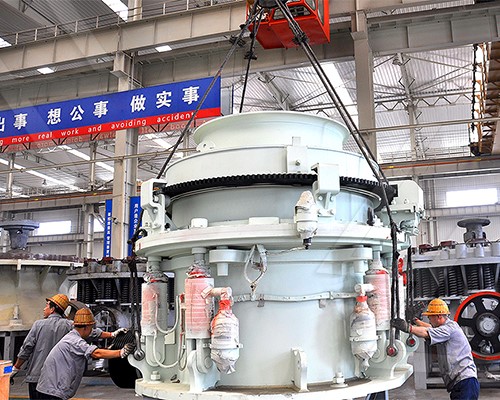
Overcoming 200MPa with Inter-Particle Crushing Dynamics
Forcing rocks to crush against each other rather than the steel liners reduces energy consumption by 15% and eliminates internal stress fractures in the final aggregate.
Laminated crushing—or inter-particle comminution—is the core physics principle separating modern high-hardness processors from legacy cone crushers. In an optimized HPT chamber, the cavity is choked with material. As the mantle gyrates, it does not simply break a single rock against the concave. Instead, it compresses a dense bed of stones. The applied force propagates through the void spaces, causing the rocks to fracture each other at their weakest structural points. This action preserves the aggregate strength and dramatically reduces the wear rate on the toggle plates and liners.
To sustain this density, the discharge opening must remain constant. The dual-acting hydraulic cylinders lock the closed-side setting (CSS) rigidly in place. When tramp iron enters the chamber, these same cylinders react instantly to lower the main shaft, passing the uncrushable object before the spike in compression force can initiate micro-fractures in the cast steel frame.
Structural Synchronization for Abrasive Circuits
To handle the abrasive silica of river gravel or basalt at 110-440 tons per hour, we have engineered a flow dynamic that minimizes direct impact stages.
Integrating a high-capacity machine into a continuous flow requires a synchronized material bed. If the feed rate drops, inter-particle crushing ceases, and the machine reverts to single-particle impact, rapidly destroying the mantle and concave geometry.
| Process Stage | Recommended Model | Capacity (tons per hour) | Power (kilowatts) | Max Feed (mm) |
|---|---|---|---|---|
| Primary Jaw | PE750~1060 [cite: 317] | 110-250 [cite: 317] | 110 [cite: 317] | 630 [cite: 317] |
| Secondary Cone | HPT300 [cite: 318] | 110-440 [cite: 318] | 250 [cite: 318] | 230 [cite: 318] |
| Classification | S5X1860-3 [cite: 320] | 75-600 [cite: 320] | 30 [cite: 320] | 200 [cite: 320] |
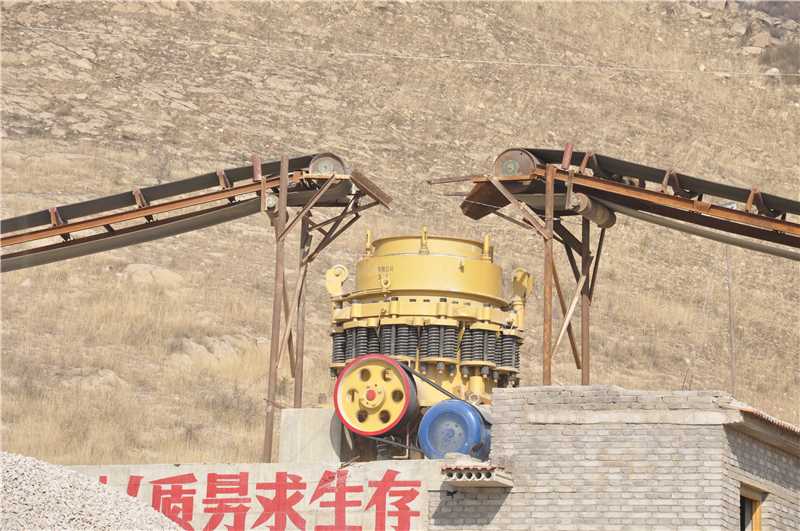
Field Wear Benchmarks: Synchronizing Multi-Cylinder Units with Crystalline Granite
- Motor Load Threshold: 250 kilowatts [cite: 318]
- Maximum Cavity Ingress: 230 millimeters [cite: 318]
- Crystalline Hardness Threshold: 200 MPa / Mohs 7
- Volumetric Throughput: 110-440 tons per hour [cite: 318]
- Lubrication Tolerance: 40°C Ambient Range
Technical Index: LH-HPT-HYDRAULIC-CONE-CRUSHER-FOR-HIGH-HARDNESS-STONE-CRUSHING-April/2026-Ref-#49281
Material Scientist’s Log: Calibrating HPT300 Tramp Release Pressures for High-Density Circuits
Why does the aggregate display high elongation ratios when the feed moisture exceeds 6%? Observing the particle flow, excessive moisture causes fine quartz dust to bind, altering the friction coefficient between the rocks. This prevents the stones from realigning in the cavity, forcing the machine to shear the material rather than compress it, generating elongated flakes. How does the 250 kilowatt motor handle sudden spikes in rock hardness? Reviewing historical torque data from older spring crushers, rigid shafts would stall under sudden Mohs 7 resistance. The current system utilizes a massive rotational inertia combined with instantaneous hydraulic relief, allowing the motor to power through the temporary density spike without exceeding amperage limits. Can manipulating the closed-side setting (CSS) prevent eccentric shaft degradation? Operating below the recommended minimum CSS creates a condition called “ring bounce.” This mechanical resonance transmits lethal shockwaves directly into the bronze bushings, rapidly accelerating shaft degradation and risking total seizure. What causes the mantle to wear unevenly in a closed-circuit setup? Based on segregation physics, a poorly designed feed chute allows fines to drop to one side of the cavity while coarse material hits the other. The side processing the 230 millimeter feed absorbs exponentially more kinetic energy, grinding the manganese steel asymmetrically.
Enforcing Cavity Geometry in High-Volume Basalt Operations
The 200 MPa hardness of basalt is a physical reality that will systematically destroy any crushing chamber lacking dynamic hydraulic support and precise inter-particle density control. Failing to calibrate the inter-particle density will result in severe eccentric shaft scoring next month, crippling your asset amortization cycle. Synchronize the feed rate to maintain a choked cavity, secure the hydraulic holding pressures, and the physical resistance of the rock will become an asset for shaping rather than a liability for maintenance.
Stop Guessing on Mantle Wear Cycles
“Prevent crystalline abrasion from draining your operating budget.” — From the Desk of your Senior Material Diagnostics Engineer
- > Mobile Dolomite Cone Crushers: Revolutionizing Mining Operations in Nigeria
- > Mobile Crushers for Dolomite Crushing
- > Optimizing Raw Material Grinding Size and Feed Capacity in Ball Mills
- > Mobile Manganese Ore Crushing Plant in Zambia
- > High-Quality Stone Vibrating Feeder: The ZSW Series
- > The Role of Spherical Bearings in Cone Crushers
- > Common Material Blockage Issues in Vibratory Feeders: Causes, Solutions, and Prevention Tips
- > Advantages of Mobile Jaw Crushers in Construction Waste Recycling


Online


Message