
Volcanic rock, encompassing materials like basalt, andesite, and rhyolite, presents a formidable challenge in the quarrying and aggregate industry. Known for its exceptional hardness, high abrasiveness, and often variable structure, processing this material demands equipment built for endurance and power. In this demanding arena, the jaw crusher stands as the undisputed workhorse for primary crushing. Its straightforward yet rugged design makes it exceptionally well-suited for the task. This article analyzes the key performance metrics, advantages, and operational considerations of using jaw crushers to process volcanic rock.
Understanding the Challenge: Characteristics of Volcanic Rock
Volcanic rock is not a uniform material, but it generally shares critical properties that impact crushing:
- High Compressive Strength: Often exceeding 200 MPa, and in some cases reaching over 300 MPa, demanding high crushing forces.
- High Abrasiveness: The high silica content in many volcanic rocks (especially basalt) leads to rapid wear on crushing surfaces.
- Dense and Non-Porous Structure: Offers minimal natural fracture planes, requiring significant energy input for fragmentation.
- Potential for Variability: Vesicular (porous) structures or variations in mineralogy can affect feed consistency.
A jaw crusher selected for softer materials will quickly prove inadequate. Therefore, performance evaluation must focus on robustness, wear management, and sustained capacity.
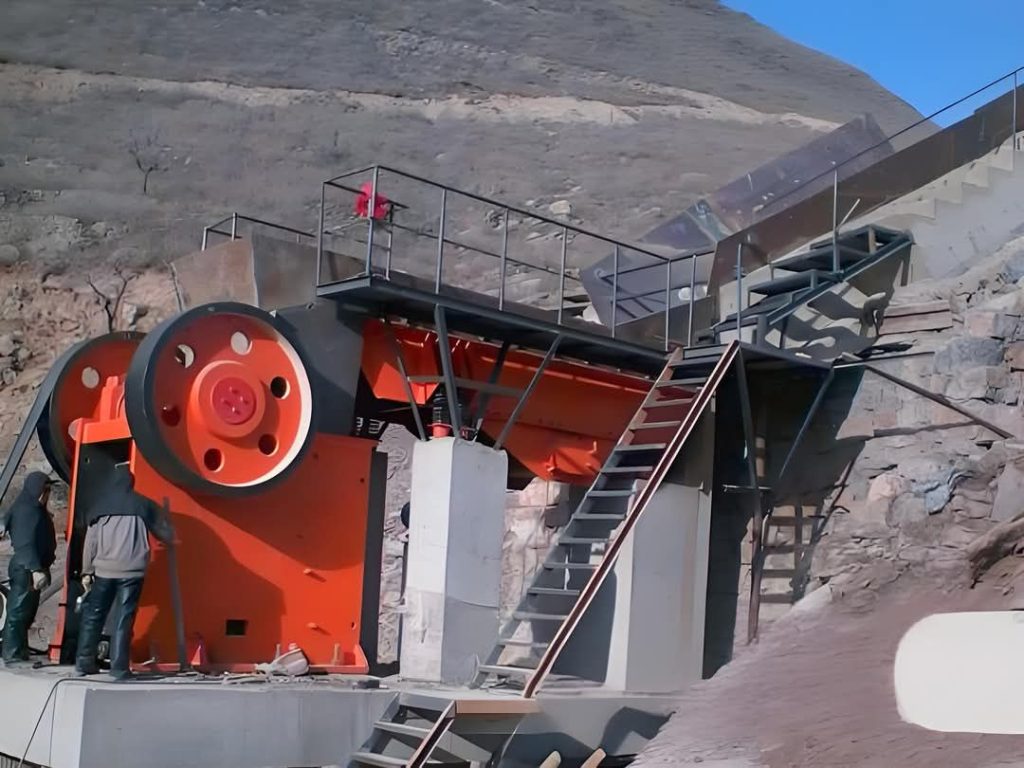
Key Performance Advantages of Jaw Crushers on Volcanic Rock
1. Superior Breaking Force and Reliability:
The core mechanism of a jaw crusher—a powerful, rigid eccentric shaft driving a moving jaw plate against a fixed one—delivers the immense linear compressive force required to initiate fracture in hard, dense volcanic rock. Its simple kinematics and robust construction (heavy-duty frame, large-diameter bearings) ensure reliable operation under continuous high-stress conditions with minimal risk of catastrophic failure.
2. Effective Handling of Abrasive Wear:
While wear is inevitable, jaw crushers are designed to manage it effectively in hard rock applications:
- Premium Wear Parts: Performance hinges on using high-grade, high-manganese steel jaw plates with optimized tooth profiles. These alloys work-harden under impact, extending service life.
- Reversible/Wear-Life Optimization: Many jaw plates can be rotated or repositioned to utilize multiple wear surfaces, maximizing part life before replacement.
- Simple Wear Part Replacement: The design allows for relatively straightforward replacement of jaw plates, minimizing downtime—a critical factor when processing abrasive materials.
3. High Reduction Ratio and Consistent Product Size:
A well-configured jaw crusher can achieve a primary reduction ratio of 6:1 to 8:1 in a single pass, effectively breaking large volcanic boulders (often up to 1-1.5m) down to a manageable size for secondary crushing (typically 150-250mm). The closed Side Setting (CSS) adjustment mechanism allows operators to precisely control the top size of the output product, ensuring consistency for the next stage of processing.
4. Unmatched Uptime and Low Operational Complexity:
The mechanical simplicity of jaw crushers translates to high availability. With fewer complex systems than alternative primary crushers, they offer:
- Ease of Maintenance: Routine checks and wear part changes are generally less complex.
- Lower Sensitivity to Feed Segregation: They handle slabby or irregularly shaped volcanic rock effectively.
- Proven Dependability: Known for years of continuous service in the toughest hard-rock quarries worldwide.
Optimizing Jaw Crusher Performance for Volcanic Rock
To maximize return on investment, specific operational practices are essential:
- Select the Right Model and Configuration: Opt for heavy-duty or “quarry-duty” series jaw crushers specifically engineered for hard, abrasive rock. Ensure the feed opening accommodates your maximum boulder size.
- Prioritize Proper Feed and Choking: Ensure even distribution across the entire jaw width to promote uniform wear. While not always choke-fed like a cone crusher, a consistently full crushing chamber optimizes nip angle efficiency and productivity.
- Implement a Proactive Wear Management Program: Regularly monitor jaw plate wear profiles and CSS. Track tons produced per plate set to predict maintenance intervals and plan downtime. Using the correct plate profile (e.g., deeper teeth for better grip) is crucial.
- Ensure Adequate Power and Rigid Foundation: Never underpower the crusher. A robust, vibration-absorbing foundation is vital to handle the intense forces generated.
Economic Considerations: Total Cost of Ownership
For volcanic rock processing, the economic analysis must look beyond the purchase price:
- Higher Initial Investment (CAPEX): A jaw crusher built for volcanic rock will cost more than a standard model but is a non-negotiable requirement for longevity.
- Optimized Operational Cost (OPEX): The key metric becomes cost per ton of crushed material. This is influenced by:
- Wear Part Life: Tons crushed between jaw plate changes.
- Energy Efficiency: Consistent operation at optimal capacity.
- Uptime/Availability: Minimized unscheduled stoppages.
- Product Value: Producing a well-shaped, consistently sized feed for secondary crushers enhances the overall plant efficiency and final product quality.
Conclusion: The Foundation for Efficient Hard Rock Processing
When tasked with the primary crushing of challenging volcanic rock, the jaw crusher delivers a performance profile defined by raw power, exceptional durability, and operational simplicity. Its ability to reliably apply massive compressive force, coupled with manageable wear part maintenance, makes it the most cost-effective and low-risk choice for establishing a stable and productive primary crushing stage.
Investing in a correctly specified, heavy-duty jaw crusher and adhering to best practices in feeding and wear management lays the most solid possible foundation for a profitable hard rock aggregate or mining operation, ensuring high availability and controlled processing costs from the very first step in the size reduction circuit.
Ready to optimize your primary crushing stage for volcanic rock? Contact our crushing experts to discuss your specific material characteristics and production goals for a tailored jaw crusher recommendation.
- > Sand Production Line Equipment Configuration
- > Common Issues with Vibrating Screen Bodies and Their Solutions
- > The Unmatched Convenience of Mobile Jaw Crushers for Mountain Road Construction
- > Mobile Jaw Crusher for Gold Mining in Chile: Enhancing Efficiency in Ore Processing
- > Utilizing Jaw Crushers in Gold Mining Operations
- > Mobile Cone Crusher for Mining: The Ultimate Solution for Efficient Ore Crushing
- > Applications and Advantages of Jaw Crushers in South American Mining Operations
- > Jaw Crushers for Bauxite Mines: Efficiency and Reliability in the Mining Industry


Online


Message