
In the vast ecosystem of mineral processing, aggregate production, and mining, every piece of equipment plays a specific part. However, the process must begin somewhere, and that starting point is invariably the primary crushing stage. Here, one machine stands as the undisputed foundation: the Jaw Crusher. Its role is not merely important; it is fundamental and core to the success and efficiency of the entire downstream operation. This article delves into why the jaw crusher is considered the cornerstone of primary crushing, exploring its indispensable functions and strategic value.
1. The Gateway: Defining the Primary Crushing Stage
The primary stage has one critical mission: to accept the raw, run-of-mine (ROM) or blasted quarry material—which can be massive, irregular blocks up to a meter or more in size—and perform the initial, coarse size reduction. This step transforms unmanageable feed into a product suitable for conveying and further processing in secondary crushers. The demands on this stage are immense: extreme reliability, tremendous breaking force, and the ability to handle unpredictable, often abrasive feed.
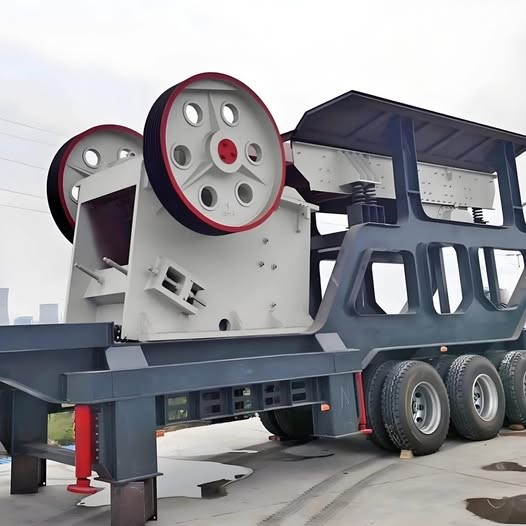
2. The Core Functions of the Jaw Crusher in Primary Crushing
a) Unmatched Robustness and High Breaking Force
The design of a jaw crusher is a lesson in mechanical simplicity and power. Its operation—a fixed jaw and a reciprocating moving jaw creating a “V” cavity—applies immense compressive force directly to the rock. This mechanical advantage allows it to fracture the hardest and most abrasive materials, such as granite, basalt, and iron ore, where other crusher types might struggle or incur exorbitant wear costs at this initial stage. Its robust, heavy-duty construction is built to withstand shock loads from large feed material.
b) Exceptional Versatility and Feed Acceptance
A jaw crusher is the ultimate “first receiver.” It can handle a wide variety of feed materials without prejudice, from hard rock to recycled concrete. Its large feed opening is designed to accommodate the biggest blocks from the quarry face. This ability to accept anything dumped into its maw makes it the most flexible and forgiving entry point for a processing plant.
c) Creating a Manageable and Defined Product for the Next Stage
The core objective is not to achieve the final product size, but to create a consistent, conveyable feed for secondary crushers. By setting the discharge opening (closed-side setting), operators define the maximum top size of the primary crushed product. This controlled output is crucial for optimizing the performance and feed of cone or impact crushers in the next stage.
d) Reliability and Operational Simplicity
In the critical primary position, uptime is paramount. Jaw crushers have fewer complex mechanisms compared to some other crushers. Their straightforward design translates to high mechanical availability, easier troubleshooting, and predictable maintenance schedules. The primary wear parts (jaw dies) are easily accessible and replaceable, minimizing downtime during change-outs.
3. The Strategic Impact: Why It’s the “Core” of the Crushing Circuit
The jaw crusher’s performance sets the tempo for the entire plant. Its core role has cascading effects:
- Determines Downstream Capacity: The tonnage output from the primary jaw crusher establishes the maximum potential throughput of the entire crushing circuit.
- Influences Overall Efficiency: A well-sized and properly set jaw crusher that effectively reduces feed size allows secondary and tertiary crushers to operate at their peak efficiency, optimizing energy consumption per ton of final product.
- Foundation for Product Quality: While final shaping occurs later, the initial fragmentation in the jaw influences the overall particle size distribution and the load on subsequent stages.
4. Jaw Crusher vs. Alternative Primary Options
While other options exist, they often confirm the jaw crusher’s core role:
- Gyratory Crushers: Excel in very high-capacity (typically > 1000 tph) mining operations. They are more complex and have a higher capital cost. For most quarry and aggregate applications, the jaw crusher offers the optimal balance of performance, cost, and flexibility.
- Primary Impact Crushers: Used for less abrasive, softer rock like limestone. They offer good reduction but generally cannot match the brute-force capability and wear resistance of a jaw crusher on hard, abrasive materials.
Conclusion: The Indispensable First Link in the Chain
More than just a piece of equipment, the jaw crusher functions as the indispensable first link in the comminution chain. Its core role as primary crushing equipment is built on a triad of strength, reliability, and adaptability. It is the workhorse that absorbs the initial shock of raw material, performs the heavy lifting of coarse reduction, and reliably feeds the rest of the plant.
Investing in the right jaw crusher—correctly sized and configured for the specific material and production goals—is therefore a strategic decision that lays the groundwork for a productive, efficient, and profitable crushing operation. It is not an exaggeration to state that the success of the entire downstream process is fundamentally anchored on the core performance of the primary jaw crusher.
- > How to Efficiently Crush High-Moisture Indonesian Coal with Impact Crushers
- > The Role of Impact Crushers in Iron Ore Mining Operations
- > The Role of Gyratory Crushers in Metallurgical Processes
- > How to Process Clay-Rich River Gravel with a Jaw Crusher: Effective Solutions
- > Common Material Blockage Issues in Vibratory Feeders: Causes, Solutions, and Prevention Tips
- > Impact Crusher: An Efficient Solution for Coal Crushing Applications
- > How to Maintain a Cone Crusher in High-Temperature Environments: Essential Tips for Optimal Performance
- > Why Jaw Crushers Are the Primary Choice for Crushing Large Ore Blocks: A Technical Analysis


Online


Message