
Based on our recent field audits across 500-ton-per-hour aggregate circuits, the most severe profit drain is rarely primary jaw failure. The invisible leak destroying capital payback velocity lies in a fractured mass balance between the secondary and tertiary loops. Operators constantly feed high-silica granite into circuits where the volumetric flow is entirely mismatched. The result is a choked screening station and a circulating load exceeding 40%.
Overcoming Circulating Load: The Physics of Inter-Particle Crushing
Secondary and tertiary bottlenecks evaporate when the crushing cavity remains choke-fed, maximizing inter-particle attrition rather than direct steel-to-rock impact.
Operating an HPT300 multi-cylinder cone crusher at a partial feed rate fundamentally alters its mechanical geometry. The physics of inter-particle crushing require a dense material bed. When the chamber is fully choked, the crushing force transfers through the rock layers. This action snaps the internal micro-fractures of the aggregate, driving down the flakiness index to below 8%. Running the chamber dry shifts the load entirely to the manganese mantle. You will immediately hear the high-frequency metallic ‘ping’ of granite striking unprotected steel, rather than the deep, muffled crunch of rock breaking rock.
The 250 kilowatts of installed power on the HPT300 are designed to compress a continuous material flow. Laminated crushing requires intense, sustained hydraulic pressure. If the primary jaw delivers surging, inconsistent feed sizes, the secondary cone cannot maintain the necessary cavity density. The circulating load violently swings. Screen decks become overwhelmed with oversized returns. The expenditure per shift skyrockets due to wasted electrical draw and accelerated toggle plate wear.
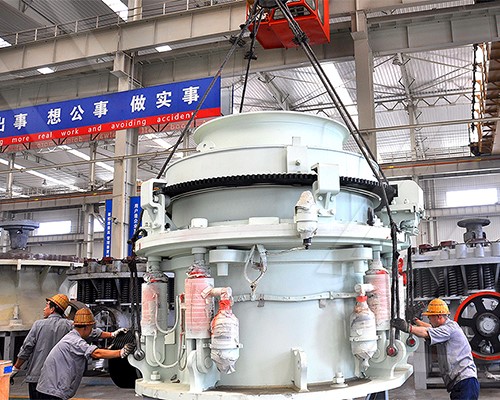
CSS Synchronization: Securing Mass Balance Across Stages
Misaligned Closed Side Settings between stages exponentially inflate circulating loads and degrade final grain shape.
You cannot isolate the secondary crusher from the tertiary. They operate as a single fluid dynamic system. Placing an HST250 single-cylinder cone crusher in the secondary position allows it to process a massive 450 millimeter maximum feed. Its primary job is bulk volume reduction. If the HST250’s Closed Side Setting (CSS) is set too tight, it throttles the entire 605 tons per hour capacity, starving the downstream equipment. The sharp scent of ozone from the 250 kilowatt motor under sustained stall conditions is your first physical warning.
Opening the HST250’s CSS slightly transfers the precision work to the tertiary HPT300 optimization stage. The HPT series excels at shape correction. By maintaining a strict 1:3 reduction ratio in the tertiary phase and utilizing continuous hydraulic CSS calibration, the production-to-cost ratio stabilizes. The multi-cylinder hydraulic system automatically compensates for liner wear. Manual adjustments introduce human error and hour-long production stops.
Synchronized Equipment Matrix: 500tph Aggregate Flow
To handle abrasive materials while maintaining strict flakiness control, we engineer circuits to balance volumetric throughput against installed power. The following matrix illustrates the exact equipment synchronization required for a stable 500tph mass balance.
| Process Stage | Recommended Model | Max Feed (millimeters) | Capacity (tons per hour) | Power (kilowatts) |
|---|---|---|---|---|
| Primary Breakdown | C6X110 Jaw Crusher | 720 | 160-550 | 160 |
| Secondary Reduction | HST250 Single-Cylinder Cone | 450 | 90-605 | 250 |
| Tertiary Shaping | HPT300 Multi-Cylinder Cone | 230 | 110-440 | 250 |
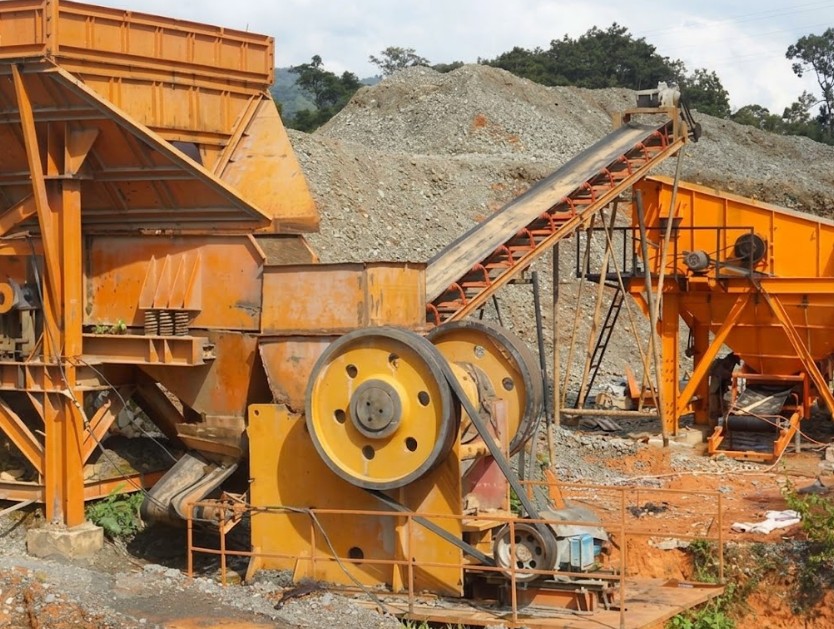
Field Wear Benchmarks: Synchronizing HPT300 with Abrasive Granite
- Secondary Power Draw: 250 kilowatts
- Primary Max Feed: 720 millimeters
- Tertiary Throughput Flexibility: 110-440 tons per hour
- Secondary Max Feed Threshold: 450 millimeters
- Circuit Capacity Target: 500 tons per hour
Technical Index: LH-THE CRITICAL ROLE OF CONE CRUSHERS IN MULTI-STAGE CRUSHING PROCESSES-April/2026-Ref-#48210
Architect’s Log: Eliminating Cavity Choke in High-Silica Circuits
Why does the circulating load spike when transitioning from dry to wet season? Moisture acts as an industrial binder on high-silica fines. The 230 millimeter maximum feed into the tertiary stage carries wet dust that bridges the feed hopper. This uneven distribution breaks the inter-particle crushing dynamic, forcing the machine to crush air and steel rather than rock. How do we prevent the HST250 from starving the tertiary stage? Calculate the exact volumetric void space of your screen decks. If the HST250’s CSS is set below 25 millimeters on hard granite, you are over-crushing at the secondary phase. Open the setting to 35 millimeters and allow the HPT300 to handle the precision shaping. Can we ignore daily CSS calibration if the final product looks acceptable? Manganese wear is invisible until the power draw spikes. Every millimeter of uncompensated liner wear drops your production-to-cost ratio by forcing the 250 kilowatt motor to work outside its optimal torque curve. Automated hydraulic adjustment prevents this exact fiscal bleed. What is the physical indicator of a broken mass balance? Listen to the transfer points. If the conveyors feeding the secondary stage run half-empty while the return belts are spilling over the idlers, your reduction ratios are inverted. The crushing forces are entirely out of sequence.
Enforcing Mass Balance in High-Volume Operations
A multi-stage crushing plant operates exactly like a high-pressure hydraulic circuit; a restriction in one zone causes catastrophic back-pressure everywhere else. Forcing an HPT300 to process erratic, uncalibrated feed from a poorly tuned secondary stage negates the benefits of its 250 kilowatt inter-particle crushing capability. If you fail to synchronize the CSS between your primary, secondary, and tertiary assets next month, the resulting 40% circulating load will violently accelerate liner degradation and destroy your cost per ton of aggregate.
Stop Guessing on Circuit Synchronization
“Eliminate the bottlenecks hiding in your secondary loops.” — From the Desk of your Solution Architect
- > Vertical Shaft Impact Crusher for Limestone Crushing in Venezuela
- > PE Jaw Crusher Application in Aggregate Production
- > Advantages of Using Impact Crushers in the Mining Industry
- > Mobile Impact Crusher for Construction Waste Recycling: An Efficient Solution
- > Common Issues in the Operation of Impact Crushers and Their Solutions
- > Core Advantages of Mobile Impact Crushers in On-Site Rock Crushing
- > Impact Crushers: What Materials Are They Best Suited For?
- > Types of Construction and Demolition Waste Suitable for Mobile Impact Crushers


Online


Message