
Sand and gravel aggregates are the foundation of the construction industry, serving as essential raw materials for concrete, asphalt, road construction, and building foundations. With the growing demand for high-quality aggregates and the increasing emphasis on sustainable production, impact crushers have become an indispensable piece of equipment in modern sand and gravel aggregate production lines. Their unique impact-based crushing principle, high efficiency, and ability to produce high-quality, cubical aggregates make them a key player in optimizing production workflows and meeting industry standards.
For aggregate producers, quarry operators, and construction companies, understanding the role of impact crushers in sand and gravel aggregate production is crucial to enhancing production efficiency, improving product quality, and reducing operational costs. In this article, we explore the core roles of impact crushers in aggregate production, their advantages over other crusher types, practical applications, and key considerations for maximizing their performance.
An Overview of Sand and Gravel Aggregate Production
Sand and gravel aggregate production is a multi-stage process that involves extracting raw materials (natural sand, gravel, or rock), crushing, screening, and shaping to produce aggregates of different sizes and grades. The key stages of the production process include:
- Raw material extraction: Mining natural sand and gravel from quarries, riverbeds, or rock deposits.
- Primary crushing: Breaking large raw materials into smaller, manageable pieces using primary crushers (e.g., jaw crushers).
- Secondary and tertiary crushing: Refining the crushed material into uniform, high-quality aggregates using secondary and tertiary crushers (e.g., impact crushers).
- Screening and classification: Separating aggregates into different grades based on size to meet specific construction requirements.
- Washing and shaping (optional): Removing impurities and improving the particle shape of aggregates for high-grade applications.
Among these stages, secondary and tertiary crushing are critical for determining the quality and usability of sand and gravel aggregates—and this is where impact crushers play a pivotal role.
Core Roles of Impact Crushers in Sand and Gravel Aggregate Production
Impact crushers serve multiple key roles in sand and gravel aggregate production, from refining crushed material to ensuring product quality and optimizing production efficiency. Below are their most important functions:
1. Secondary and Tertiary Crushing for Uniform Aggregates
The primary role of impact crushers in aggregate production is to perform secondary and tertiary crushing, converting coarsely crushed rock or gravel into uniform, well-graded aggregates. After primary crushing (typically done by jaw crushers), the material is often uneven in size and shape. Impact crushers use high-speed impact force to break these materials into smaller, more consistent particles, ensuring that the final aggregates meet the size requirements for different construction applications.
Unlike jaw crushers (which use compression to crush material and produce more flaky particles), impact crushers deliver cubical, uniform aggregates— a key requirement for high-quality concrete and asphalt production.
2. Shaping Aggregates for High-Quality Applications
The shape of sand and gravel aggregates directly impacts the performance of concrete and asphalt. Flaky or irregular aggregates reduce the strength and durability of construction materials, while cubical aggregates improve bonding and structural integrity. Impact crushers excel at shaping aggregates due to their unique crushing mechanism: high-speed rotating hammers strike the material, breaking it into cubical particles with smooth surfaces and uniform edges.
This shaping capability makes impact crushers ideal for producing high-grade aggregates used in ready-mix concrete, precast concrete, and high-performance asphalt—applications that demand strict quality standards.
3. Processing a Wide Range of Raw Materials
Sand and gravel aggregate production uses a variety of raw materials, including limestone, granite, basalt, river pebble, and dolomite. Impact crushers are highly versatile and can process all these materials efficiently, regardless of their hardness (up to Mohs hardness 6-7). This versatility allows aggregate producers to use locally available raw materials, reducing transportation costs and improving production flexibility.
For example, impact crushers can process soft materials (e.g., limestone) and hard, abrasive materials (e.g., granite) equally well, making them suitable for diverse quarry operations.
4. Enhancing Production Efficiency and Capacity
Impact crushers are designed for high efficiency and large production capacity, making them ideal for large-scale sand and gravel aggregate production lines. They have a simple structure with fewer moving parts, which reduces downtime and maintenance costs. Additionally, their high crushing ratio (up to 1:40) allows for fewer crushing stages, streamlining the production process and increasing overall output.
Modern impact crushers also feature adjustable discharge settings, allowing operators to quickly switch between different aggregate grades without stopping production—further improving efficiency and flexibility.
5. Supporting Sustainable Aggregate Production
With the global push for sustainable construction, impact crushers play a key role in promoting eco-friendly aggregate production. They can process recycled construction waste (e.g., concrete debris, asphalt chunks) into high-quality recycled aggregates, reducing the need for natural sand and gravel extraction. This not only conserves natural resources but also reduces landfill waste and carbon emissions associated with raw material extraction and transportation.
Furthermore, impact crushers have low energy consumption compared to other crusher types, making them a more sustainable choice for aggregate production.
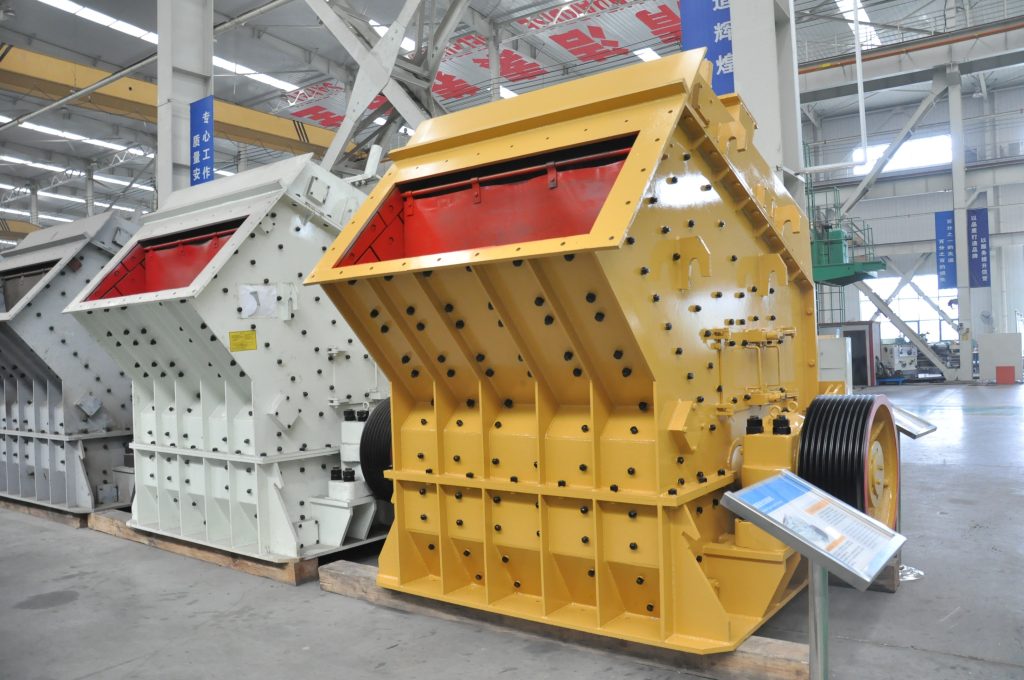
Why Impact Crushers Outperform Other Crushers in Aggregate Production
While other crushers (such as jaw crushers and cone crushers) are used in aggregate production, impact crushers offer unique advantages that make them superior for secondary and tertiary crushing:
- Superior Aggregate Shape: Impact crushers produce cubical aggregates with low flakiness, which is essential for high-quality construction materials. Jaw crushers produce more flaky particles, while cone crushers are better suited for hard, abrasive materials but less effective at shaping.
- High Versatility: Impact crushers can process a wider range of raw materials, from soft limestone to hard granite, making them more flexible for aggregate producers.
- Adjustable Output: The discharge gap of impact crushers is easily adjustable, allowing for quick changes in aggregate size—ideal for meeting diverse customer needs.
- Lower Maintenance Costs: Impact crushers have a simple structure with fewer moving parts, reducing maintenance time and costs compared to cone crushers (which have complex hydraulic systems).
- Mobile Capabilities: Many impact crushers are available as mobile units, which can be transported directly to quarries or construction sites. This eliminates the need for transporting raw materials to a fixed crushing plant, reducing transportation costs and environmental impact.
Practical Applications of Impact Crushers in Aggregate Production
Impact crushers are used in various sand and gravel aggregate production scenarios, including:
1. Quarry Aggregate Production
In large quarries, impact crushers are used as secondary or tertiary crushers to process raw materials (e.g., granite, basalt) into high-quality aggregates for construction projects. They work alongside jaw crushers (primary crushing) and screens to create a complete production line, delivering consistent, high-volume output.
2. Sand Making Production
Impact crushers are widely used in sand making production lines to produce artificial sand from rock or gravel. Artificial sand is an alternative to natural sand (which is becoming scarce due to over-extraction) and is used in concrete, mortar, and road construction. Impact crushers shape the rock into fine, uniform sand particles that meet industry standards.
3. Recycled Aggregate Production
As mentioned earlier, impact crushers process recycled construction waste into high-quality recycled aggregates. These aggregates are reused in road base, backfill, and low-grade concrete, promoting sustainable construction practices.
4. Mobile Aggregate Production
Mobile impact crushers are used for on-site aggregate production, such as at construction sites or remote quarries. They can crush raw materials on-site, reducing the need for transportation and allowing for quick deployment in different locations.
Tips to Maximize the Role of Impact Crushers in Aggregate Production
To ensure impact crushers perform optimally and fulfill their role in sand and gravel aggregate production, follow these practical tips:
- Choose the Right Model: Select an impact crusher with a capacity and feed size that matches your raw material and production needs. For large-scale quarries, choose a stationary model with high capacity; for on-site production, choose a mobile model.
- Optimize Feed Rate: Maintain a uniform feed rate to avoid overloading the crusher. Overfeeding can reduce efficiency and cause jams, while underfeeding wastes energy and reduces output.
- Adjust Discharge Settings: Set the discharge gap according to the desired aggregate size. Regularly check the output size and adjust as needed to ensure consistency.
- Regular Maintenance: Inspect and replace wear parts (such as blow bars and impact plates) regularly to ensure optimal performance. Keep the crusher lubricated and clean to prevent breakdowns and extend service life.
- Pre-Screen Raw Materials: Remove impurities (such as metal, wood, or large rocks) from raw materials before feeding them into the crusher. This prevents damage to the crusher and improves product quality.
Conclusion
- > Colombian-Made Mobile Impact Crusher
- > High-Performance Vibrating Feeders in Nigeria
- > Advantages of Mobile Jaw Crushers in Construction Waste Recycling
- > A Deep Dive into the HST Hydraulic Cone Crusher
- > Selection and Maintenance Guidelines for Cone Crusher Lubricating Oil
- > Advanced Crushing Solutions: Vertical Shaft Impact Crushers in South Africa
- > Efficient Copper Ore Processing with PF Impact Crusher
- > Application of Multi-cylinder Cone Crusher in Hard Rock Crushing


Online


Message