
In the world of mobile aggregate processing, two main chassis types dominate: track-mounted and tire-mounted (or wheeled) crushers. While track-mounted units are renowned for their off-road prowess, tire-mounted mobile crushing stations offer a distinct set of advantages that make them the superior choice for specific terrain and project conditions. Understanding which environments are best suited for these plants is crucial for maximizing efficiency and return on investment. This article explores the optimal terrains and applications where a tire-mounted mobile crushing station proves to be the most effective and economical solution.
1. The Core Advantage: Mobility and Road Transport Efficiency
The defining feature of tire-mounted plants is their design for efficient relocation between sites and ease of on-road movement.
- High-Speed Towing: The entire unit can be transported on public roads at standard highway speeds behind a semi-trailer truck. This drastically reduces mobilization and demobilization time and cost between different project locations compared to requiring low-loaders for tracked plants.
- Quick Setup: Once on site, they require minimal setup. After being positioned, the hydraulic supports (outriggers) are deployed for stability, and the plant is ready to operate.
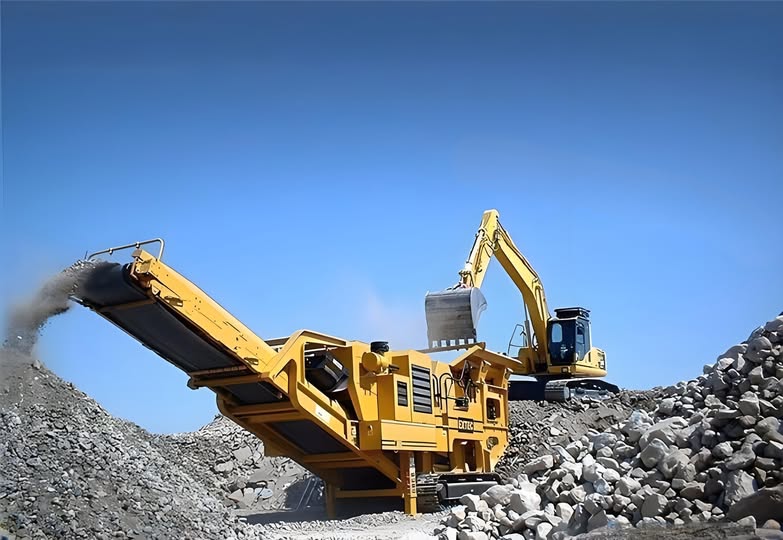
2. Ideal Terrains and Site Conditions
Tire-mounted crushers excel in environments where the ground is stable, relatively flat, and accessible.
1. Established Quarries and Gravel Pits with Processed Haul Roads
- Why they fit: These sites typically have well-maintained, compacted gravel or hard-packed dirt roads. The stable, level surface provides an excellent platform for the plant’s tires and outriggers.
- Benefit: The plant can be easily repositioned around the pit to follow the working face, minimizing truck haul distance for excavators.
2. Urban Demolition and Construction Sites
- Why they fit: Sites with prepared ground, such as concrete slabs, asphalt pads, or well-compacted fill. Accessibility via city roads is straightforward.
- Benefit: Excellent for on-site recycling of concrete, asphalt, and masonry waste into usable aggregate, avoiding costly landfill fees and material transport.
3. Large-Scale Infrastructure Projects (Roads, Airports)
- Why they fit: Long, linear projects with dedicated right-of-way and constructed work platforms. The plant can be moved along the project corridor as work progresses.
- Benefit: Produces base and sub-base materials directly where they are needed, dramatically cutting down on material logistics.
4. Industrial Sites and Recycling Centers
- Why they fit: Permanent or semi-permanent locations with prepared, solid ground. The focus is on processing volume rather than navigating difficult terrain.
- Benefit: Acts as a highly flexible, semi-stationary processing hub that can be reconfigured or moved if necessary.
3. Key Limitations: Terrain to Avoid
It is equally important to understand where tire-mounted plants are not suitable:
- Soft, Unstable, or Saturated Ground: Mud, sand, deep gravel, or clay will cause the unit to sink or become unstable, even with outriggers. This can lead to dangerous tilting and operation issues.
- Significant Slopes or Uneven Ground: The chassis requires a relatively level surface (typically <5% grade) for safe and stable operation. They are not designed for steep inclines.
- Extremely Rough or Rocky Terrain: Undulating ground with large rocks or deep ruts can damage tires, axles, and the chassis frame during movement.
- Remote Sites with No Road Access: If the site cannot be reached via a passable road, the plant cannot be deployed.
4. Comparative Analysis: Tires vs. Tracks
The choice often comes down to a direct comparison based on terrain:
| Feature / Terrain Type | Tire-Mounted Crusher | Track-Mounted Crusher |
|---|---|---|
| On-Road Transport Speed | Fast (Highway speeds) | Slow (Requires low-bed trailer) |
| Ground Pressure | Higher (Requires solid ground) | Very Low (Suitable for soft ground) |
| On-Site Maneuverability | Requires towing by truck or loader | Excellent (Self-propelled, 360° turn) |
| Ideal Terrain | Hard, flat, prepared surfaces | Soft, uneven, rough, sloped terrain |
| Setup Speed | Fast (Lower outriggers) | Fast (Hydraulic setup) |
| Primary Advantage | Inter-site mobility & cost | On-site accessibility & stability |
5. Practical Considerations for Optimal Use
To ensure success with a tire-mounted plant:
- Conduct a Thorough Site Assessment: Always evaluate ground conditions, accessibility, and required movement frequency before deployment.
- Prepare the Ground: If necessary, lay down a base of compacted gravel or road base to create a stable, level working platform.
- Plan for Movement: Have a suitable truck or heavy loader available on-site to reposition the plant as needed.
- Prioritize Safety: Always use outriggers to their full extent and ensure the plant is perfectly level before starting operation.
Conclusion
The tire-mounted mobile crushing station is not a one-size-fits-all solution, but a highly specialized tool optimized for specific terrain conditions. Its kingdom is the stable, accessible, and relatively flat worksite—be it an urban demolition project, a well-maintained quarry, or a linear infrastructure corridor.
Its decisive advantage lies in rapid, low-cost transportation between multiple suitable sites, offering unparalleled flexibility for contractors with several projects. When the ground conditions match its design parameters, it delivers an unbeatable combination of mobility, fast setup, and cost-effective production. The key is honest terrain assessment: if your project features solid ground and good access, a tire-mounted plant is likely the most productive and profitable choice.
- > Iron Sand Processing Crushing Plant: Key Steps, Equipment, and Benefits
- > The Popularity of Chinese Spring Cone Crushers in Africa
- > Why is the cone crusher the preferred choice for crushing granite?
- > Applications of Mobile Impact Crushers in Modern Industry
- > Mobile Impact Crushers in Argentina: A Key Solution for Efficient Material Processing
- > Advantages of Using Cone Crushers in Pakistan’s Mining Industry
- > Construction Waste Mobile Impact Crusher for Recycled Aggregate Production
- > How Rock Hardness in Different Regions Impacts Crusher Selection


Online


Message