
River pebble, known for its high hardness, smooth surface, and high silica content, is a high-quality raw material for producing manufactured sand. However, its abrasive nature poses a significant challenge for crushing equipment. Choosing the right crusher is paramount for achieving high sand yield, optimal particle shape, and low operational costs. This article compares the two most suitable crushers—the VSI crusher and the cone crusher—to determine which is more appropriate for your cobble sand-making operation.
1. The Ideal Choice: Vertical Shaft Impact (VSI) Crusher
For most cobble sand-making applications, the VSI crusher is the superior and most specialized choice. Its working principle is uniquely suited for shaping and granulating hard materials.
- Principle of “Rock-on-Rock” Crushing: The VSI crusher accelerates pebbles in a rotor and throws them against a rock-lined chamber where they collide with other pebbles. This action naturally breaks the stones along their natural cleavage lines.
- Superior Particle Shape: This is the biggest advantage. The “rock-on-rock” impact produces a high percentage of cubical, spherical particles with smooth surfaces. This shape is ideal for sand in concrete and asphalt, as it improves workability and strength.
- High Sand Yield and Gradation Control: VSI crushers are highly efficient at producing the desired sand sizes (0-5mm). By adjusting the rotor speed and feed rate, you can precisely control the final product’s gradation.
- Consideration: The trade-off is that the high-speed impact leads to wear on the rotor and anvils, making wear parts consumption a key operational cost.
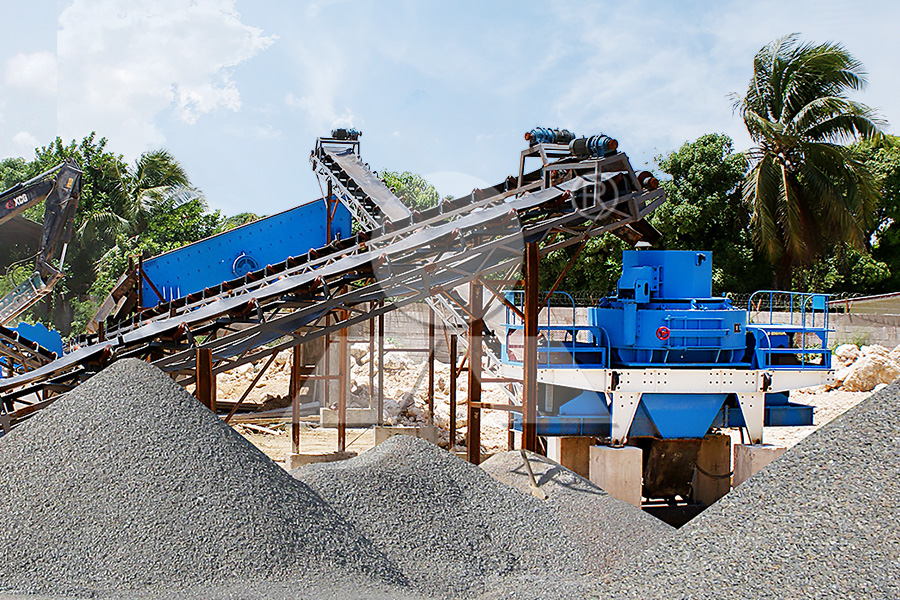
2. The Robust Contender: Cone Crusher
The cone crusher is a highly reliable and energy-efficient option, often used in the stage before the VSI crusher or as a standalone sand producer.
- Principle of Compressive Crushing: The cone crusher squeezes the river pebble between a mantle and a concave. This results in interparticle comminution, which is effective for breaking down hard rock.
- Excellent for Intermediate Crushing: A cone crusher is ideal for reducing large cobbles (e.g., 40-50mm) down to a smaller size (e.g., 0-20mm) that can then be fed to a VSI for final shaping. This protects the VSI from excessive wear.
- Lower Wear Costs: For the same hard and abrasive material, the wear cost per ton on a cone crusher’s mantles and concaves is generally lower than the wear on a VSI crusher’s rotor and anvils.
- Consideration: The product shape from a cone crusher is generally more angular and flaky compared to a VSI. While it produces sand, the grain shape is often less ideal for high-strength concrete applications.
3. Which One is More Suitable for You? A Comparative Guide
| Feature | VSI Crusher | Cone Crusher |
|---|---|---|
| Final Product Shape | Excellent (Cubical) | Good (Angular) |
| Sand Production Efficiency | High | Medium |
| Wear Parts Cost | Higher | Lower |
| Ideal Role | Final Shaping & Sand Making | Intermediate/Secondary Crushing |
| Energy Efficiency | Good for shaping | Excellent for size reduction |
Recommendation:
- Choose a VSI Crusher if: Your primary goal is to produce high-quality sand with an excellent shape for premium concrete or asphalt, and you are prepared to manage the associated wear costs.
- Choose a Cone Crusher if: Your priority is a robust, lower-wear solution for producing a range of aggregates, including sand, where perfect grain shape is not the absolute top priority. It is also the perfect partner to a VSI in a multi-stage setup.
The Optimal Solution: A Combined Circuit
For large-scale, high-efficiency cobble sand-making plants, the best solution is often a combination of both crushers.
- Jaw Crusher (Primary): Crushes large river pebbles.
- Cone Crusher (Secondary): Reduces the material to a size of 0-30mm, efficiently handling the bulk of the size reduction.
- VSI Crusher (Tertiary/Sand Making): Takes the cone crusher’s product and perfectly shapes it into high-quality, cubical sand.
This configuration leverages the strengths of each machine: the cone crusher’s efficiency and low wear for intermediate crushing, and the VSI crusher’s unparalleled shaping ability for the final product.
Conclusion
So, which crusher is more suitable for making sand from river pebble? For the highest quality sand, the VSI crusher is the undisputed champion. However, for a balance of low operating cost and good sand production, a cone crusher is a strong contender. The most effective and economical approach for large volumes is to use them together in a multi-stage crushing circuit. Evaluate your specific needs for product quality, production volume, and budget to make the right choice for your operation.
- > Puzzolana jaw movable stone crusher
- > Impact Crushers for Shaping Construction Aggregates
- > Application of Mobile Impact Crushers in Construction Waste Processing
- > Impact Crushers for Crushing and Screening Granite and Iron Ore
- > Efficient Copper Ore Processing with PF Impact Crusher
- > Single-Cylinder Cone Crusher in Iron Ore Processing
- > Durable Hydraulic Spring Cone Crusher for Mining Applications
- > Gravel Impact Crusher for Concrete Aggregates: Enhancing Construction Efficiency


Online


Message