
South Africa possesses one of the world’s most significant iron ore reserves, driving a robust mining sector that demands efficient and cost-effective processing solutions. In the critical stage of size reduction, the choice of crusher is paramount. While various options exist, the impact crusher stands out as a highly effective solution for processing South Africa’s often hard and abrasive iron ore. This article explores the specific advantages that make impact crushers a superior choice for many operations.
Why Impact Crushers Excel with South African Iron Ore
The unique principle of impact crushing—where rock is shattered by high-speed hammers (blow bars) against impact aprons—offers distinct benefits tailored to the challenges of iron ore.
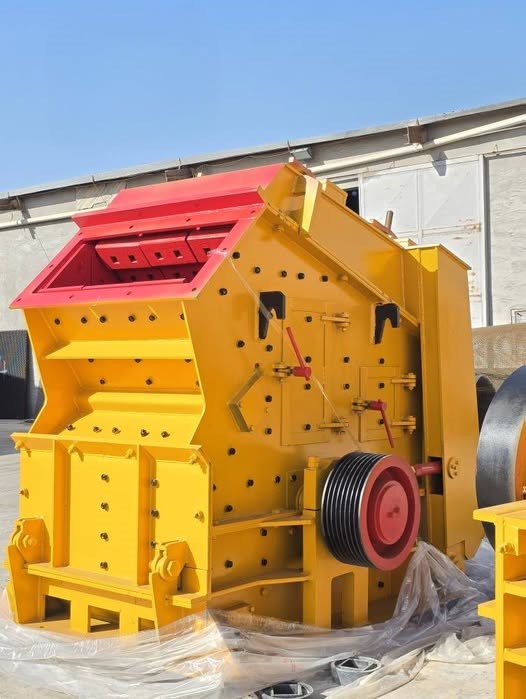
1. Superior Cubical Product Shape
This is the most significant advantage. Impact crushers produce a highly cubical end product with minimal flaky or elongated particles.
- Benefit for Iron Ore: A cubical shape is ideal for subsequent processing stages like pelletizing and sintering, as it improves permeability and reaction efficiency. It also provides better compaction for blast furnace feed.
2. High Reduction Ratio and Efficiency
Impact crushers can achieve a very high size reduction ratio in a single stage. This means large chunks of run-of-mine iron ore can be reduced to a desirable size more efficiently, potentially simplifying the entire crushing circuit and reducing the number of required machines.
3. Cost-Effective Operation and Maintenance
While blow bars are wear parts, the overall design of an impact crusher often leads to lower operating costs.
- Ease of Maintenance: Replacing blow bars and impact aprons is generally faster and simpler than replacing the mantles and concaves in a cone crusher, leading to reduced downtime.
- Energy Efficiency: For medium-hard ores, impact crushers can be more energy-efficient per ton of material processed compared to compression-style crushers.
4. Flexibility in Application and Adjustment
Impact crushers offer excellent control over the final product’s size and gradation. By simply adjusting the rotor speed and the gap between the blow bars and impact aprons, operators can fine-tune the output to meet specific market or process requirements without major mechanical changes.
5. Effective Handling of High-Silica Content
South African iron ores can sometimes have higher silica content, increasing abrasiveness. Modern impact crushers are equipped with robust rotors and can utilize highly wear-resistant alloys for their blow bars, making them durable enough to handle these challenging conditions effectively.
Ideal Use Cases in a South African Iron Ore Circuit
Impact crushers are exceptionally well-suited for:
- Secondary Crushing: Perfectly positioned after a primary jaw crusher to further reduce the ore and create a high-quality, cubical product.
- Tertiary Crushing: Used to produce the final, precise product sizes needed for the market.
- Processing Hematite and Magnetite: Effective on both of the primary types of iron ore found in South Africa.
Conclusion: A Strategic Choice for Modern Mines
For South African iron ore producers aiming to maximize efficiency, product quality, and profitability, the impact crusher presents a compelling case. Its ability to deliver a superior cubical product, combined with high reduction efficiency and relatively low operational costs, makes it a strategic asset in any modern processing plant. By investing in impact crushing technology, mines can optimize their entire downstream process, enhancing the value of their final iron ore product and strengthening their position in the global market.
- > The Application of Jaw Crushers for Coal Crushing in Indonesia
- > Kenya’s Mobile Crusher Market: Trends, Drivers, and Opportunities
- > Tracked Mobile Cone Crusher in Recycled Aggregate Production from Construction Waste
- > Efficient Copper Ore Processing with PF Impact Crusher
- > Jaw Crusher Troubleshooting: Common Faults and Effective Solutions
- > Adaptability of Jaw Crushers to High-Moisture Content Materials
- > The Application of Mobile Jaw Crushers for Limestone in South Africa
- > Vertical Shaft Impact Crusher: The Ultimate Guide to Benefits, Applications, and Working Principles


Online


Message