
Cone crushers are essential equipment in the granite aggregate production line, responsible for medium and fine crushing of hard materials like granite, basalt, and limestone. The liner, as a key wear part of the cone crusher, directly affects the crusher’s performance, production efficiency, product quality, and operational costs. Choosing the right cone crusher liners can extend equipment service life, reduce maintenance frequency, and ensure stable production of the entire aggregate production line. For quarry operators, aggregate producers, and equipment maintenance personnel, mastering the method of selecting the right cone crusher liners is crucial to optimizing production operations and reducing operational costs. This article details the key factors, selection steps, types of liners, and common mistakes to avoid when selecting cone crusher liners, helping you make informed decisions.
1. Understand the Core Role of Cone Crusher Liners
Before selecting cone crusher liners, it is necessary to clarify their core functions, which lays the foundation for accurate selection. The liner is installed on the mantle (moving cone) and concave (fixed cone) of the cone crusher, directly contacting the crushed materials. Its main roles include three aspects: first, protecting the mantle and concave from direct wear by hard materials, extending the service life of the crusher’s main components; second, guiding the material crushing process, ensuring that the materials are crushed evenly according to the designed particle size; third, affecting the production capacity and product particle shape—different liner designs can optimize the crushing efficiency and improve the particle shape of the finished aggregate.
Poorly selected liners will lead to frequent replacement, increased maintenance costs, reduced production efficiency, and even affect the particle size and quality of the finished aggregate. For example, liners with improper hardness will wear quickly, while liners with unreasonable structure will cause uneven crushing and excessive needle-flake content of the product. Therefore, selecting the right liners is a key link in ensuring the stable operation of the cone crusher.
2. Key Factors to Consider When Selecting Cone Crusher Liners
Selecting cone crusher liners requires comprehensive consideration of multiple factors, including material characteristics, crusher parameters, production requirements, and operational conditions. Only by integrating these factors can we select liners that match the actual production scenario.
2.1 Material Characteristics of the Crushed Ore
The hardness, abrasiveness, and moisture content of the crushed material (such as granite, basalt, or limestone) are the most important factors affecting liner selection. Granite, as a hard and highly abrasive material, requires liners with high hardness, wear resistance, and impact resistance. For example, liners made of high-manganese steel (Mn13, Mn18) or alloy steel are more suitable for crushing granite, as they can resist severe wear and impact.
If the material has high moisture content (more than 8%), it is easy to adhere to the liner, causing clogging and reducing crushing efficiency. In this case, liners with a smooth surface and reasonable structure (such as curved liners) should be selected to reduce material adhesion. In addition, the particle size of the feed material also needs to be considered—for large feed particles, liners with thicker thickness and stronger impact resistance should be selected to avoid liner damage caused by excessive impact.
2.2 Cone Crusher Model and Parameters
Different models of cone crushers have different structural sizes, crushing chambers, and production capacities, so the liners must match the crusher model. The liner’s size, shape, and installation method must be consistent with the mantle and concave of the crusher to ensure a tight fit and avoid vibration or damage during operation.
For example, a large-scale cone crusher (such as HPY300, PYY series) used in a 500 TPH granite aggregate production line requires liners with larger size and higher load-bearing capacity, while a small and medium-sized cone crusher is suitable for lighter and more compact liners. In addition, the crushing chamber type (standard, medium, short head) also affects liner selection—standard crushing chambers are suitable for coarse and medium crushing, requiring liners with a larger crushing angle, while short head crushing chambers are suitable for fine crushing, requiring liners with a smaller crushing angle to ensure uniform particle size.
2.3 Production Requirements and Product Specifications
Production capacity and product particle size requirements directly determine the type and design of the liner. If the production line requires high output (such as 300-500 TPH), liners with a large crushing area and smooth material flow should be selected to improve crushing efficiency. If the finished aggregate requires uniform particle size and low needle-flake content (such as for high-grade concrete and asphalt pavement), liners with a multi-layer crushing structure or shaping function should be selected.
For example, in the granite aggregate production line, if the target product is fine aggregate (5-10 mm) and manufactured sand (0-5 mm), the cone crusher needs to be equipped with liners that can achieve fine crushing and shaping, such as wave-shaped liners or tooth-shaped liners, which can optimize the particle shape and reduce the needle-flake content to less than 10%.
2.4 Operational Conditions and Maintenance Costs
Operational conditions (such as continuous operation time, feeding uniformity, and maintenance frequency) also need to be considered when selecting liners. For production lines that operate continuously for a long time (more than 16 hours a day), liners with high wear resistance and long service life should be selected to reduce replacement frequency and maintenance costs.
In addition, the maintenance difficulty and cost of the liner should be taken into account. Liners with simple installation and disassembly can reduce maintenance time and labor costs. For example, split-type liners are easier to replace than integral liners, which is suitable for production lines with high maintenance efficiency requirements. At the same time, the cost of the liner itself should be balanced with its service life—high-quality liners may have a higher initial cost, but their longer service life can reduce the total operational cost in the long run.
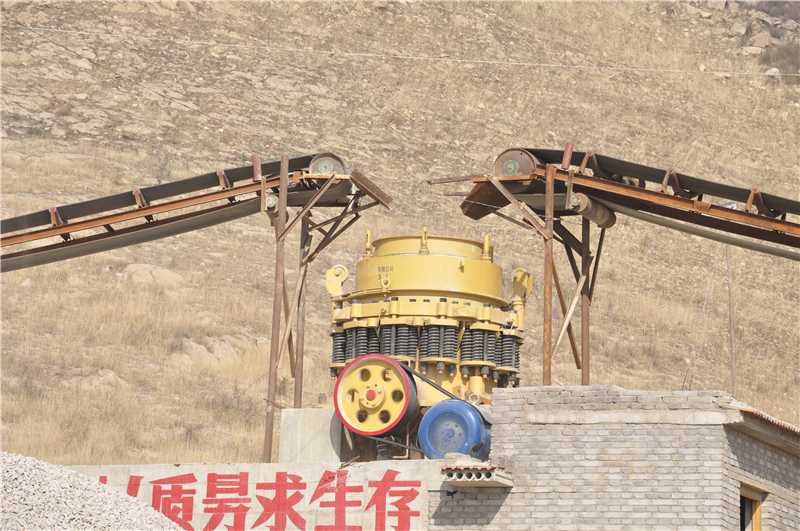
3. Common Types of Cone Crusher Liners and Their Applications
There are various types of cone crusher liners, each with different characteristics and application scenarios. Understanding the types of liners can help you select the most suitable one according to actual needs.
3.1 High-Manganese Steel Liners
High-manganese steel (Mn13, Mn18) liners are the most commonly used type in cone crushers, characterized by high toughness, impact resistance, and work hardening. When the liner is impacted by hard materials (such as granite), the surface will quickly harden, forming a wear-resistant layer, while the inner layer remains tough, avoiding liner fracture. High-manganese steel liners are suitable for crushing hard and abrasive materials, such as granite, basalt, and quartzite, and are widely used in large-scale aggregate production lines.
3.2 Alloy Steel Liners
Alloy steel liners are made of alloy materials (such as chromium, molybdenum, and nickel) added to steel, which have higher hardness and wear resistance than high-manganese steel liners. They are suitable for crushing extremely hard and highly abrasive materials, such as high-silicon granite and emery. Alloy steel liners have a longer service life than high-manganese steel liners, but their cost is higher, so they are suitable for production lines with high requirements for liner service life and low maintenance frequency.
3.3 Composite Liners
Composite liners combine the advantages of high-manganese steel and alloy steel— the surface is made of wear-resistant alloy material, and the inner layer is made of high-toughness high-manganese steel. This design not only ensures the wear resistance of the liner but also improves its impact resistance, avoiding fracture. Composite liners are suitable for complex working conditions, such as crushing materials with uneven hardness and high impact force, and are widely used in granite aggregate production lines with high production requirements.
3.4 Special-Shaped Liners
Special-shaped liners include wave-shaped liners, tooth-shaped liners, and curved liners, which are designed according to specific production needs. Wave-shaped liners can improve the material crushing efficiency and optimize the particle shape; tooth-shaped liners are suitable for coarse crushing of large particles, enhancing the crushing force; curved liners can reduce material adhesion and clogging, suitable for crushing materials with high moisture content.
4. Step-by-Step Guide to Selecting Cone Crusher Liners
To select the right cone crusher liners, you can follow the following step-by-step guide, ensuring that each link is scientific and reasonable, and avoiding blind selection.
Step 1: Clarify the Basic Information of the Production Line
First, clarify the key information of the production line, including the cone crusher model and parameters (such as crushing chamber type, production capacity, and feeding size), the type and characteristics of the crushed material (such as granite, hardness, and abrasiveness), and the production requirements (such as finished product particle size, output, and particle shape requirements). This information is the basis for selecting liners.
Step 2: Analyze the Wear Characteristics of the Liner
According to the material characteristics and operational conditions, analyze the wear mode of the liner (such as abrasive wear, impact wear, or adhesive wear). For example, crushing granite mainly causes abrasive wear and impact wear, so liners with high wear resistance and impact resistance should be selected. If the material has high moisture content, adhesive wear will occur, so liners with a smooth surface should be selected.
Step 3: Select the Liner Material and Type
Based on the analysis results, select the appropriate liner material and type. For example, for crushing granite, high-manganese steel liners or composite liners are preferred; for fine crushing and shaping, wave-shaped or tooth-shaped liners are suitable; for materials with high moisture content, curved liners are selected. At the same time, ensure that the liner size and installation method match the cone crusher model.
Step 4: Evaluate the Liner Performance and Cost
Evaluate the performance (wear resistance, impact resistance, service life) and cost of the selected liner, and balance the initial cost and long-term operational cost. High-quality liners may have a higher initial cost, but their longer service life and lower maintenance frequency can reduce the total cost. It is not advisable to choose low-cost, low-quality liners, which will lead to frequent replacement and increased production costs.
Step 5: Test and Adjust
After selecting the liner, install it on the cone crusher for a trial run. During the trial run, observe the liner’s wear condition, the crusher’s operation status, and the quality of the finished product. If there are problems (such as excessive wear, uneven crushing, or product unqualified), adjust the liner type or material in a timely manner until the optimal effect is achieved.
5. Common Mistakes to Avoid When Selecting Cone Crusher Liners
In the process of selecting cone crusher liners, many operators will make some mistakes, leading to improper selection and affecting production. Here are some common mistakes to avoid:
- Blindly pursuing low cost: Choosing low-quality liners with low cost will lead to frequent replacement, increased maintenance time and costs, and even affect the crusher’s service life. It is necessary to balance cost and performance.
- Ignoring material characteristics: Selecting the same type of liner for different materials (such as using liners suitable for limestone to crush granite) will lead to rapid liner wear and reduced production efficiency.
- Not matching the crusher model: Using liners that do not match the cone crusher model will cause poor fit, vibration during operation, and even damage the crusher’s mantle and concave.
- Neglecting the production requirements: Selecting liners without considering the finished product particle size and output requirements will lead to unqualified product quality and failure to meet production needs.
- Ignoring maintenance difficulty: Selecting liners that are difficult to install and disassemble will increase maintenance time and labor costs, affecting production efficiency.
6. Maintenance Tips for Cone Crusher Liners to Extend Service Life
Selecting the right liner is only the first step; proper maintenance can further extend the liner’s service life and reduce operational costs. Here are some practical maintenance tips:
- Ensure uniform feeding: Uniform feeding can avoid uneven wear of the liner and reduce impact damage. Use a vibrating feeder to feed materials evenly into the cone crusher.
- Remove impurities in time: Before feeding, remove metal impurities (such as iron blocks) and large unqualified materials to avoid damage to the liner.
- Regularly check the liner wear condition: Regularly inspect the liner’s wear degree, and replace it in time when the wear reaches the limit (usually when the liner thickness is less than 10-15 mm) to avoid damage to the mantle and concave.
- Lubricate the crusher regularly: Good lubrication can reduce the friction between the liner and the mantle/concave, extending the liner’s service life.
- Store liners properly: Store the spare liners in a dry, ventilated place to avoid rust and damage, ensuring their performance.
Conclusion
Selecting the right liners for cone crusher is a key link in ensuring the stable operation of the granite aggregate production line, improving production efficiency, and reducing operational costs. It requires comprehensive consideration of material characteristics, crusher parameters, production requirements, and operational conditions, and following the scientific selection steps to avoid common mistakes. At the same time, proper liner maintenance can further extend its service life and maximize the economic benefits of the production line.
Whether you are a quarry operator, aggregate producer, or equipment maintenance personnel, mastering the method of selecting cone crusher liners can help you optimize production operations, reduce maintenance costs, and ensure the stable and efficient operation of the cone crusher. With the continuous development of crushing technology, the types and performance of cone crusher liners are constantly improving, providing more choices for the selection of liners in the aggregate production industry.
- > Key Factors Affecting the Production Efficiency of Jaw Crushers
- > Application of Crawler Mobile Impact Crushers in Mountain Road Construction
- > Portable Cone Crushers in Costa Rica: A Key to Efficient Crushing Solutions
- > Can a Crawler Mobile Crushing Station Be Used for Construction Waste Recycling?
- > Impact Crusher for Processing Dolomite and Tantalite in Mining Plants
- > Optimization of Secondary Cone Crushing Process in Peruvian Copper Mines
- > How to Choose the Right Front-End Crushing Equipment for Your Sand-Making Line
- > How to Adjust Jaw Crusher Discharge Size to 0-50mm


Online


Message