
In our recent field tests [cite: 137] across abrasive river gravel circuits, the biggest threat to capital survival is not the upfront equipment price[cite: 94], but the hidden wear and erratic mass flow between stages. A poorly synchronized plant creates a chain reaction: the primary jaw overfeeds, the secondary cone operates half-empty, and the tertiary VSI starves. The engineering reality of processing high-silica ore requires absolute volumetric synchronization. You can hear the inefficiency on site—the high-frequency metallic ‘ping’ of granite and quartz hitting a manganese liner [cite: 191] when the crushing cavity lacks the necessary density for rock-on-rock attrition.
Synchronizing the High-Silica Three-Stage Circuit
Achieving a stable 0-5mm yield demands strict mass balance across the entire production line.
To handle the abrasive silica of river gravel at sustained tonnages, we have engineered the following circuit layout[cite: 167]. The material flow must be carefully graded from the primary jaw discharge to the secondary cone feed. When eccentric shafts drive the heavy swing jaws [cite: 158] of the primary crusher, the resulting output often contains irregular shapes. If this surge is dumped directly onto a vibrating screen without surge-bin buffering, the subsequent multi-cylinder hydraulic cone will suffer from uneven mantle and concave wear[cite: 158]. Continuous material flow eliminates “empty running,” ensuring the cone maintains a choke-fed state to utilize inter-particle comminution.
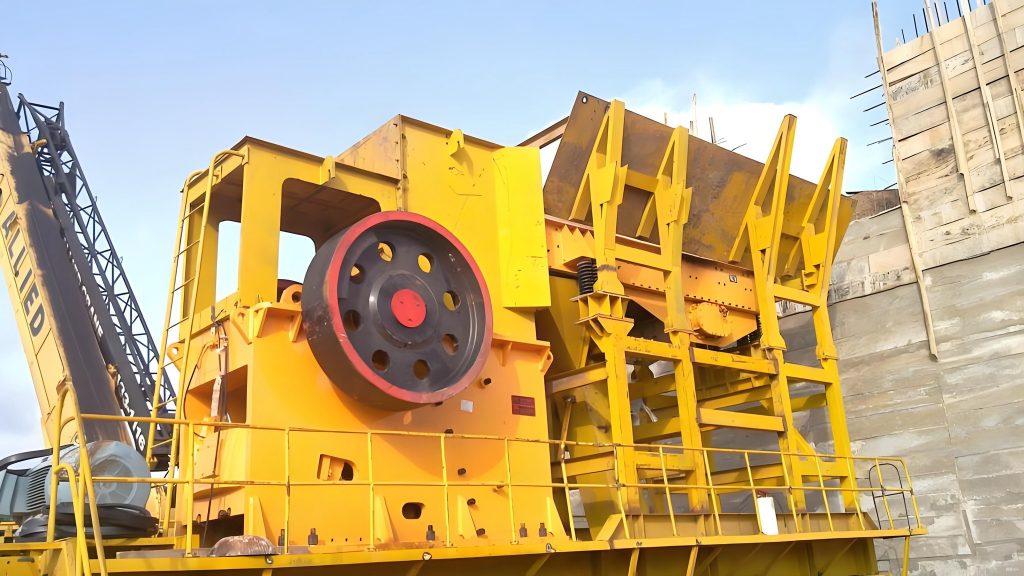
The Engineering Blueprint: Synchronized Equipment Matrix
A mismatched capacity rating between the primary and tertiary stages will instantly throttle the production-to-cost ratio[cite: 130].
We dictate exact volumetric capacities to ensure no machine waits for rock. The layout below outlines the exact specifications required to maintain a balanced feed and maximize the 0-5mm sand output.
| Process Stage | Recommended Model | Capacity (tons per hour) | Power (kilowatts) | Max Feed (millimeters) |
|---|---|---|---|---|
| Primary Crushing | C6X100 Jaw Crusher | 130-420 [cite: 317] | 110 [cite: 317] | 630 [cite: 317] |
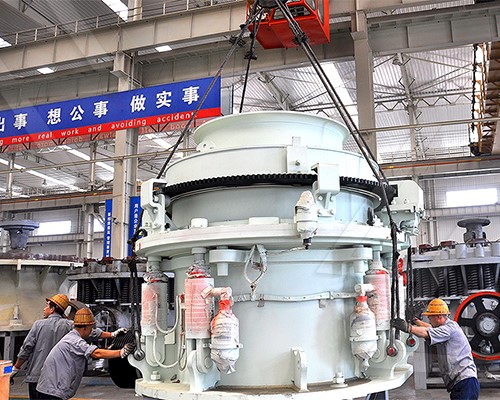
| Secondary Crushing | HPT300 Cone Crusher | 110-440 [cite: 318] | 250 [cite: 318] | 230 [cite: 318] |
| Tertiary Sand Making | VSI6X1040 Sand Maker | 264-515 [cite: 319] | 200~2 [cite: 319] | 40 [cite: 319] |
| Grading & Screening | S5X2160-3 Vibrating Screen | 85-700 [cite: 320] | 30 [cite: 320] | 200 [cite: 320] |
Choke-Feed Dynamics in the Secondary Stage
Operating an HPT300 without a dedicated surge bin creates violent amperage spikes and destroys hydraulic cylinders[cite: 158].
The physics do not care about your production schedule[cite: 195]. When the multi-stage granite crushing circuit fails to provide a uniform feed rate, the cone crusher experiences asymmetrical forces. A continuous choke-feed is strictly required to force the river pebbles to crush against each other, drastically reducing the wear on the alloy concave. You can literally sense this instability—the vibration felt through an operator’s steel-toed boots on the platform [cite: 193] changes from a steady hum to violent, erratic shuddering when the feed drops below 70% cavity capacity.
VSI Rotor Speeds and 0-5mm Yield Precision
Pushing irregular 40mm stones into a starved deep-cavity rotor will shred the wear plates in under 48 hours.
To maximize the 0-5mm sand yield, the VSI6X1040 must operate in a strictly balanced closed-circuit loop with the S5X2160-3 vibrating screen. The raw speed of the dual 200 kW motors provides the kinetic energy, but the volumetric control dictates the particle shape. If the return feed from the screen is too heavy, the rotor housing will choke, sending the motor load into the red zone. The sharp scent of ozone from a high-load motor [cite: 192] is the first indicator that your air-classifying and screening parameters are misaligned.
Circuit Flow Validation: Synchronizing the C6X100 and VSI6X1040
- VSI6X1040 Power Requirement: 200~2 kW [cite: 319]
- S5X2160-3 Screening Capacity: 85-700 tons per hour [cite: 320]
- C6X100 Primary Max Feed: 630 millimeters [cite: 317]
- HPT300 Secondary Capacity: 110-440 tons per hour [cite: 318]
- VSI6X1040 Tertiary Capacity: 264-515 tons per hour [cite: 319]
Technical Index: LH-RIVER PEBBLE CRUSHING AND SAND MAKING PLANT FOR 0-5MM PRODUCTION-April/2026-Ref-#49102
Solution Architect’s Log: Balancing VSI Feed Ratios in High-Silica Rock
Why does the VSI6X1040 fail to produce an adequate 0-5mm yield despite running at maximum RPM? Our site engineers consistently document that poor grading before the tertiary stage destroys efficiency. If the S5X vibrating screen allows excessive fines into the rotor, the kinetic energy is absorbed by the dust blanket rather than fracturing the 40mm stones[cite: 319]. How does erratic primary jaw feeding directly impact the capital payback velocity of the entire plant? Looking back at circuits built prior to closed-loop synchronization, uneven feed from a C6X100 causes severe bottlenecking. The resulting empty-running in the HPT300 burns daily running costs [cite: 95] without producing salable aggregate, destroying your fiscal timelines. What happens if the hydraulic cylinders on the HPT300 are forced to process un-buffered surges of river gravel? Do not ignore the surge bin requirements. Feeding 230mm [cite: 318] river gravel in massive spikes will trigger continuous tramp release events, dumping oil pressure and halting the entire multi-stage circuit within minutes. Can increasing the screen mesh size on the S5X2160-3 resolve a congested VSI circuit? Data proves that simply opening the mesh creates a false sense of throughput. You will inadvertently increase the circulating load of oversized particles, wearing out the VSI6X1040 wear parts exponentially faster while sacrificing the final 0-5mm product shape.
Securing Production-to-Cost Ratios in High-Volume Pebble Operations
Failing to lock down the exact material flow between the 130-420 tons per hour [cite: 317] primary jaw and the 264-515 tons per hour [cite: 319] VSI will result in aggressive rotor wear and total asset degradation next month. Synchronize your feed stages immediately to stop hemorrhaging energy costs.
Stop Guessing on Output Grading
“Align your crushing geometry to the actual site geology.” — From the Desk of your Solution Architect
- > Mobile Jaw Crusher: What Types of Rocks Are Suitable for Crushing?
- > Common Applications of Jaw Crushers in Sand and Gravel Plants
- > Common Issues When Operating a Ball Mill in Stone Quarrying
- > Application of Mobile Jaw Crusher in Urban Demolition
- > Can a Crawler Mobile Crushing Station Be Used for Construction Waste Recycling?
- > The Role of Jaw Crushers in Efficient Rock Crushing Processes
- > Copper Mining Process: Complete Equipment Guide and Solutions
- > The Role of the Jaw Crusher in African Copper Mining Projects


Online


Message