
Based on recent site audits in heavy metallic ore circuits, the biggest threat to system availability isn’t the hardness of the copper ore itself, but the chaotic circulating loads generated by mismatched reduction ratios. Taking a 300 mm feed down to a 10 mm final product represents a 30:1 reduction ratio. Attempting to force this through an unbalanced circuit inevitably leads to choked cavities, spiked motor amperage, and excessive wear on manganese liners. The engineering reality demands a strict two-stage or three-stage mass balance approach, relying on synchronized primary and secondary kinematics to maintain a steady material flow.
Mass Balance Dynamics for Medium-Hard Copper Ore
A 30:1 reduction ratio mandates precise volumetric synchronization between the primary jaw discharge and the secondary cone intake to prevent bridging and zero-load conditions.
Copper ore typically exhibits medium to high compressive strength. When designing the material flow, we must account for the specific gravity and the fracture mechanics of the rock. You cannot simply dump 300 mm rocks into a secondary crusher. The primary jaw reduction must establish a baseline flow. The physical limits of the eccentric shaft and toggle plate dictate that the initial breakdown must reduce the 300 mm feed to an intermediate size of approximately 80-120 mm. This intermediate sizing ensures the downstream hydraulic cone crusher receives a consistent, bulk-density feed, allowing for optimal choke-feeding conditions.
The smell of scorched hydraulic oil in a secondary crusher is the first warning sign of poor mass balance. If the primary crusher allows too much oversize material through, the secondary unit expends its mechanical energy fighting irregular boulders rather than performing efficient crushing. Calibrating the Closed Side Setting (CSS) of the primary stage is the non-negotiable first step in controlling the downstream circulating load.
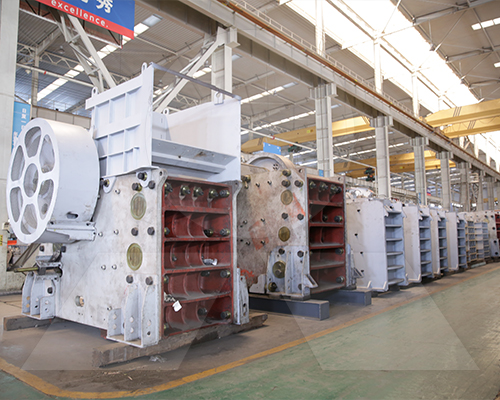
Primary Breakdown: Resolving 300 mm Feed Constraints
Deploying the C6X Series Jaw Crusher mitigates structural fatigue by utilizing a heavy-duty eccentric shaft and optimized V-shaped cavity to process the 300 mm raw feed.
Handling large, blocky copper ore requires immense initial kinetic energy. The C6X Jaw Crusher series addresses this through its kinematic geometry. The angle of the toggle plate and the stroke length of the swing jaw are engineered to force the material downward while applying crushing force. For a 300 mm feed, the C6X80 model offers a 420 mm maximum feed opening, providing sufficient dimensional clearance to prevent material bridging at the intake hopper.
Standing on the operation platform, the vibration felt through steel-toed boots indicates the machine’s load state. A properly fed C6X operates with a rhythmic, consistent frequency. If the feed rate fluctuates, the jaw experiences asynchronous stress loading, accelerating wear on the fixed jaw plate. We integrate the TSW series vibrating feeder to ensure continuous, linear feeding, eliminating the “empty chamber” waiting periods that drain electrical efficiency without producing tonnage.
Interparticle Comminution: Achieving 10 mm Yield
The HPT multi-cylinder hydraulic cone crusher relies on lamination crushing principles to fracture copper ore against itself, maximizing the yield of particles under 10 mm.
Reaching a final product size of 10 mm requires a shift from compression crushing to interparticle comminution. The HPT Series Cone Crusher achieves this by maintaining a dense material bed within the crushing cavity. Instead of the mantle directly crushing every rock against the concave, the high-density environment forces the copper ore particles to grind and fracture against each other. This lamination effect minimizes the creation of micro-cracks in the steel wear parts and significantly improves the cubical shape of the final 10 mm product.
The high-frequency metallic ‘ping’ of copper ore hitting the manganese mantle changes to a deep grinding sound when the HPT is properly choke-fed. Managing the hydraulic pressure is critical here. The multi-cylinder hydraulic system dynamically adjusts the CSS to compensate for liner wear and tramp iron. If an uncrushable object enters the chamber, the hydraulic accumulators instantly relieve the pressure, preventing the main shaft from bending or fracturing.
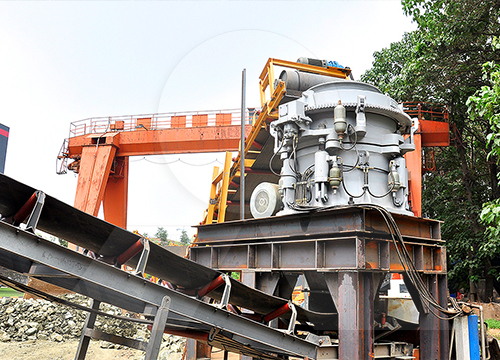
Synchronized Equipment Matrix
To process 300 mm copper ore down to 10 mm at an operational scale, we have engineered the following circuit matrix based on strict mass balance alignment. This configuration assumes a target throughput matching the C6X80 baselines.
| Process Stage | Recommended Model | Capacity (tons per hour) | Max Feed (millimeters) | Power (kilowatts) |
|---|---|---|---|---|
| Primary Feeding | TSW0936 | 130-280 | – | 15 |
| Primary Crushing | C6X80 | 80-290 | 420 | 75 |
| Secondary Crushing | HPT200 | 90-250 | 185 | 160 |
| Closed-Circuit Screening | S5X1845-3 | 60-450 | – | 22 |
Circuit Calibration Log: Synchronizing HPT200 with C6X80 Baselines
- Primary Jaw Max Feed Tolerance: 420 millimeters
- Secondary Cone Input Limit: 185 millimeters
- Primary C6X80 Base Power Draw: 75 kilowatts
- Vibrating Screen Throughput Range: 60-450 tons per hour
- Secondary HPT200 Operational Draw: 160 kilowatts
Technical Index: LH-WHAT EQUIPMENT IS REQUIRED TO CRUSH COPPER ORE FROM 300 MM DOWN TO 10 MM?-April/2026-Ref-#48291
Chief Architect’s Log: Rectifying Circulating Load Bottlenecks in 10 mm Circuits
Why does the S5X screen return over 40% of the material back to the HPT200? Monitoring the belt scale reveals that excessive circulating loads occur when the HPT200 is starved of feed. Without choke-feeding, lamination crushing fails, and the machine merely fractures the copper ore rather than grinding it down to 10 mm, forcing the oversize back through the loop. How does the 300 mm feed size affect the C6X80’s 75 kW motor longevity? Historical telemetry shows that feeding rocks exactly at the 420 mm limit causes amperage spikes. By maintaining a 300 mm average feed, the 75 kW motor operates within its continuous thermal rating, preventing the insulation degradation associated with constant peak-torque demands. What happens if we bypass the C6X and send 300 mm ore directly to the HPT200? Attempting to bypass the primary stage is an engineering catastrophe. The HPT200 has a strict maximum feed opening of 185 mm. A 300 mm block will physically bridge across the mantle and concave, triggering an immediate hydraulic relief sequence and causing a hard shutdown. How do we ensure the 10 mm final product meets exact cubical shape standards? Field data indicates that adjusting the closed side setting (CSS) closer to the target output size increases the interparticle friction zone. Combined with the 160 kW crushing force of the HPT200, this strict calibration shears the flakiness off the particles before they hit the 10 mm screen mesh.
Securing System Throughput in High-Hardness Copper Applications
Ignoring the volumetric mass balance between the 75 kW primary stage and the 160 kW secondary stage creates an unstable circulating load that will aggressively degrade your screening media. The strict 30:1 reduction ratio from 300 mm down to 10 mm requires the structural force of the C6X jaw and the lamination physics of the HPT cone to operate in absolute synchronization. If you fail to calibrate the CSS to match your specific copper ore hardness, your hydraulic cone will succumb to bearing seizure or thermal overload within the next month.
Stop Guessing on Interparticle Comminution Variables
“Submit your copper ore compressive strength data for a complete mass balance audit.” — From the Desk of your Solution Architect
- > Advantages and Disadvantages of Using Vertical Impact Crushers for Nickel Ore Processing
- > HSPF Series Impact Crushers for Ore Crushing
- > High-Efficiency Jaw Crusher for Coal and Basalt in Indonesia
- > Advantages of the Integrated Operation of Mobile Crushers
- > 250TPH Granite Crushing Plant Layout: Multi-Stage Circuit Architecture for High-Abrasion Aggregates
- > The Indispensable Role of a Jaw Crusher in Railway Ballast Production
- > Common Issues Associated with Jaw Crushers and Their Solutions
- > Common Issues in the Operation of Impact Crushers and Their Solutions


Online


Message