
In our recent field evaluations of 500tph aggregate lines, the most critical threat to profitability is rarely the upfront equipment prices, but rather the hidden chaos of multi-stage synchronization. Operators frequently push 200MPa granite through mismatched cavities, leading to severe material accumulation in custom production line hoppers. The microscopic tolerances of secondary and tertiary circuits demand precise flow mechanics; when a primary jaw feeds inconsistent material to a secondary cone, the resulting kinetic imbalance translates directly into inflated daily running costs and mechanical fatigue.
Navigating Compressive Strength and Material Flow Dynamics
Equipment selection must be governed strictly by the ore’s maximum compressive limits and the structural threshold of the primary chamber.
Ignoring rock physics destroys mechanical integrity. When a heavy-duty primary jaw crusher encounters high-silica basalt exceeding 250MPa without the correct toggle plate calibration, the resulting stress vectors bypass the sacrificial liners and attack the main eccentric shaft. The deafening, off-rhythm hum of an unsynchronized circuit is the immediate auditory symptom of mismatched reduction ratios.
You must align the discharge curve of the primary stage with the intake geometry of the secondary stage. If the jaw crusher’s output contains an excessive volume of elongated slabs, the subsequent cone crusher will experience severe cavity packing. This physical bridging forces the hydraulic cylinders to constantly adjust, spiking motor amperage and accelerating mantle wear. The heat-discoloration often observed on main shaft bearings is a direct consequence of this upstream geometric failure.
Synchronized Equipment Matrix: Mining vs. Construction Circuits
To handle variable geology ranging from abrasive ores to mixed demolition waste, we have engineered the following selection parameters to map specific process stages against their optimal configurations.
| Process Stage | Recommended Model | Capacity (tons per hour) | Max Feed (millimeters) | Power (kilowatts) |
|---|---|---|---|---|
| Primary (Hard Rock) | C6X110 Jaw Crusher | 250-400 | 800 | 132 |
| Secondary (Mining/Ore) | HPT300 Cone Crusher | 120-380 | 275 | 315 |
| Tertiary (Construction Sand) | VSI6X1150 Sand Maker | 344-423 | 45 | 400 |
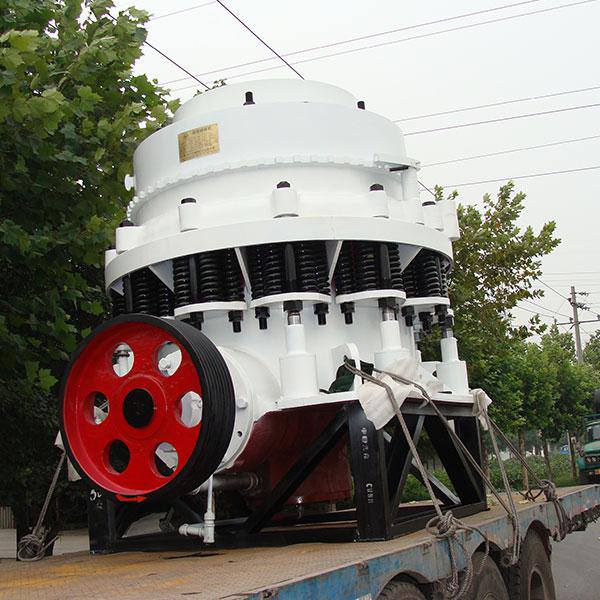
Eliminating Choke Points in Multi-Stage Closed Circuits
True layout efficiency requires matching the exact tonnage output of the secondary stage to the volumetric capacity of the tertiary screening system.
Designing a multi-stage closed circuit means anticipating surge loads. When the return belt deposits oversize aggregate back into the HPT300, the machine experiences a sudden spike in feed density. If the 315kW motor lacks sufficient torque reserve, the internal crushing dynamics collapse, forcing uncrushed material to stall on the mantle. This friction point drastically reduces the profitability timeline of the entire operation.
Construction applications demand strict control over particle shape (flakiness and elongation). The VSI6X1150 utilizes high-velocity particle collisions to eliminate micro-fractures in the final aggregate. Sending material larger than the 45mm threshold into the rotor generates catastrophic localized wear on the throw shoes, driving up the cost per ton of aggregate to unsustainable levels.
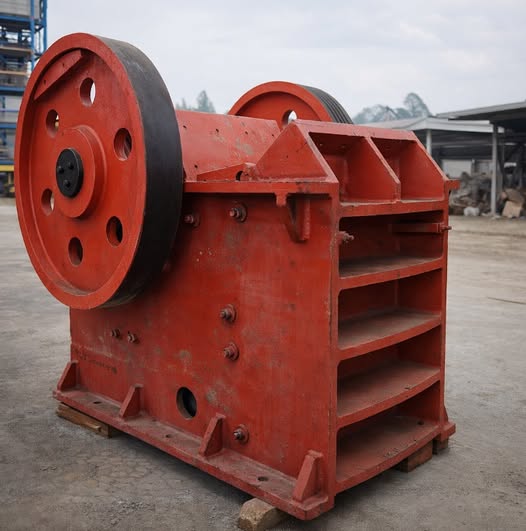
Circuit Load Balancing: 200MPa Granite & VSI6X1150 Parameters
- Maximum Intake Radius: 800 millimeters
- Tertiary Energy Demand: 400 kilowatts
- Secondary Yield Variance: 120-380 tons per hour
- Material Resistance Threshold: 200MPa
- Primary Energy Consumption: 132 kilowatts
Technical Index: LH-HOWTOCHOOSETHERIGHTCRUSHERFORMININGANDCONSTRUCTIONPROJECTS-April/2026-Ref-#89204
Architect’s Memo: Rectifying Synchronization Failures in 400tph Lines
Why does material consistently accumulate in the secondary surge hopper during continuous runs? Observing the load sensors on the main conveyor usually reveals the answer: the primary jaw is discharging slabs that are structurally too robust for the cone’s current Closed Side Setting (CSS). When 800mm feed is not adequately reduced, the secondary hopper acts as a bottleneck rather than a buffer. How does transitioning from mining ores to construction aggregates alter machine longevity? Compared to processing uniform limestone in the early 2010s, modern construction recycling introduces unpredictable compressive strength spikes (rebar, high-grade concrete). This volatile feed profile demands dynamic hydraulic relief systems to prevent structural fracturing in the mainframe. Is there a critical error in mixing different brands across a three-stage circuit? Do not ignore electrical communication latency. If a tertiary VSI requires an emergency shutdown due to a 400kW overload, the upstream secondary cone and primary jaw must halt feeding within milliseconds. Proprietary, mismatched control systems fail to synchronize this halt, resulting in massive material burying the belts. What dictates the optimal sizing of the return belt in a closed-loop setup? Analysis of sieve test data proves that screening efficiency plummets when moisture exceeds 4%. The return belt must be engineered with a 25% volumetric redundancy to handle the unpredictable surge of wet fines that bypass the primary decks and circle back to the HPT300.
Securing Circuit Viability in Multi-Stage Architectures
Synchronizing the 315kW energy demand of your secondary cone crusher with the strict 45mm intake limit of the tertiary stage dictates whether your facility will achieve continuous throughput or suffer catastrophic downtime. If the multi-stage reduction ratios remain misaligned by next month, the resulting hydraulic pressure spikes will guarantee premature bearing seizure and paralyze your production flow.
Audit Your Plant Configuration Metrics
“Prevent geometric bottlenecks before they compromise your structural integrity.” — From the Desk of your Solution Architect
- > Advantages of the Integrated Operation of Mobile Crushers
- > Comprehensive Guide to Choosing the Right Jaw Crusher Model
- > The Application of Jaw Crushers for Coal Crushing in Indonesia
- > Aplicación de Trituradoras Móviles para Basalto, Caliza y Cuarzo en la Industria de Agregados
- > Highly Recommended Impact Crusher for Stone Crushing
- > Impact Crushers for Shaping Construction Aggregates
- > 200 TPH Mobile Impact Crusher: High-Efficiency Solution for On-Site Crushing
- > Application of Mobile Sand Makers in River Regulation Projects


Online


Message