
Based on recent site audits across equatorial Southeast Asia, the biggest threat to your capital payback velocity isn’t the upfront equipment price, but the hidden mechanical hemorrhage caused by abrasive rock and torrential rain. I watch operators drag standard machines into the jungle, only to pull them out as scrap metal three months later. Crushing 200MPa granite in a high-temperature, monsoon-heavy environment requires a physical brutality that most catalog-spec machines simply do not possess. The combination of high-silica rock and 90% humidity demands specific structural defenses, otherwise, you are just financing your own downtime.
The Physics of High-Silica Rock in Equatorial Heat
Heat dissipation and abrasive shear forces dictate the survival of primary crushing stages.
The distinct smell of scorched grease on main bearings is the first warning sign of a collapsing production-to-cost ratio. When you feed hard granite into a standard V-cavity, the crushing dynamics generate extreme localized heat. The toggle plates and swing jaws take the brunt of the kinetic energy. If the eccentric shaft is not forged from heavy-duty alloy, the constant deflection will microscopically warp the bearing housings. In ambient temperatures hitting 40°C, inferior lubrication systems break down, failing to maintain the necessary hydro-dynamic film. We see operators ignoring the grease points, leading to a catastrophic metal-on-metal seizure that halts the entire plant.
You cannot bypass physics with cheap castings. The kinetic load must be distributed evenly across the frame.
Defeating the Monsoon: When Fines Turn to Paste
Tropical rain transforms dry granite fines into an industrial paste that bridges feed hoppers and chokes cavities.
When the rain hits, the physical breakdown of damp fines turning into mud completely changes the material flow. Standard feeders vibrate helplessly while the sticky mass forms a solid arch above the primary high-capacity secondary cone crusher. The jaw cavity chokes. The massive vibration felt through the operator platform signals that the diesel engine is bogging down, desperately fighting the dead weight of packed mud. To prevent this, the feed geometry and the discharge CSS (Closed Side Setting) must be calibrated to allow rapid evacuation of sticky material before it compresses into a brick.
You need continuous material flow, not a bottleneck of wet sludge.
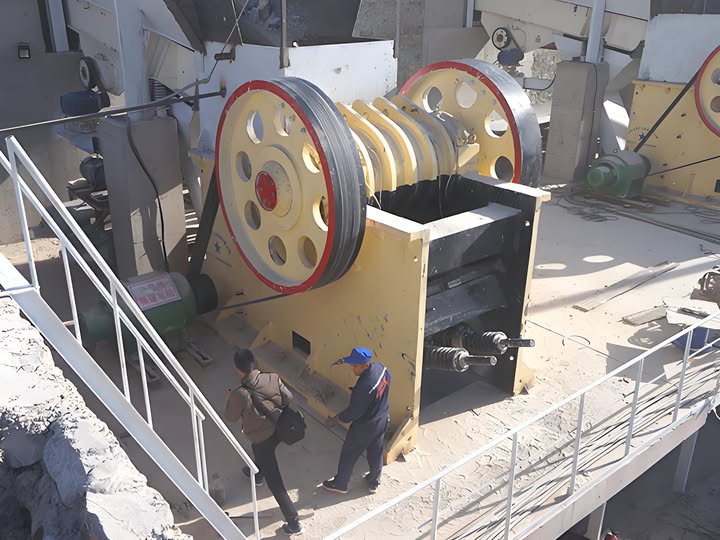
Synchronized Equipment Matrix for 340-400 t/h Circuits
To handle the abrasive silica of river gravel and blasted granite at up to 400 tons per hour, we have engineered the following circuit matrix. Stacking random machines together is financial suicide; each stage must match the throughput of the next to avoid the fatal “empty idling” that destroys your expenditure per shift.
| Process Stage | Recommended Model | Capacity (tons per hour) | Core Component Spec |
|---|---|---|---|
| Primary Mobile Crushing | VTJ1180DP | 340-400 | 1160*760 Jaw (Dual Power) |
| Secondary Tracked Stage | Matched Tracked Cone (e.g., HPT Series) | Matched to 350 | Medium-Coarse Cavity |
Manganese Wear Cycles and Fiscal Bleeding
Ignoring the specific alloy composition of your liners guarantees an escalating cost per ton of aggregate.
The high-frequency metallic ‘ping’ of granite hitting a manganese liner tells you exactly how fast your profits are grinding away. In a multi-stage granite crushing circuit, the primary jaw takes the most brutal punishment. If you use standard Mn13 castings on rock with high silica content, you will swap out jaw plates every two weeks. This is the hidden drag on your profitability timeline. We enforce the use of Mn18Cr2 or higher grade alloys, paired with a reversible tooth profile. When you flip the stationary jaw plate precisely at the 50% wear mark, you physically extend the asset amortization cycle of the wear parts.
Do not wait until the tooth profile is flat; you are just crushing your own output geometry.
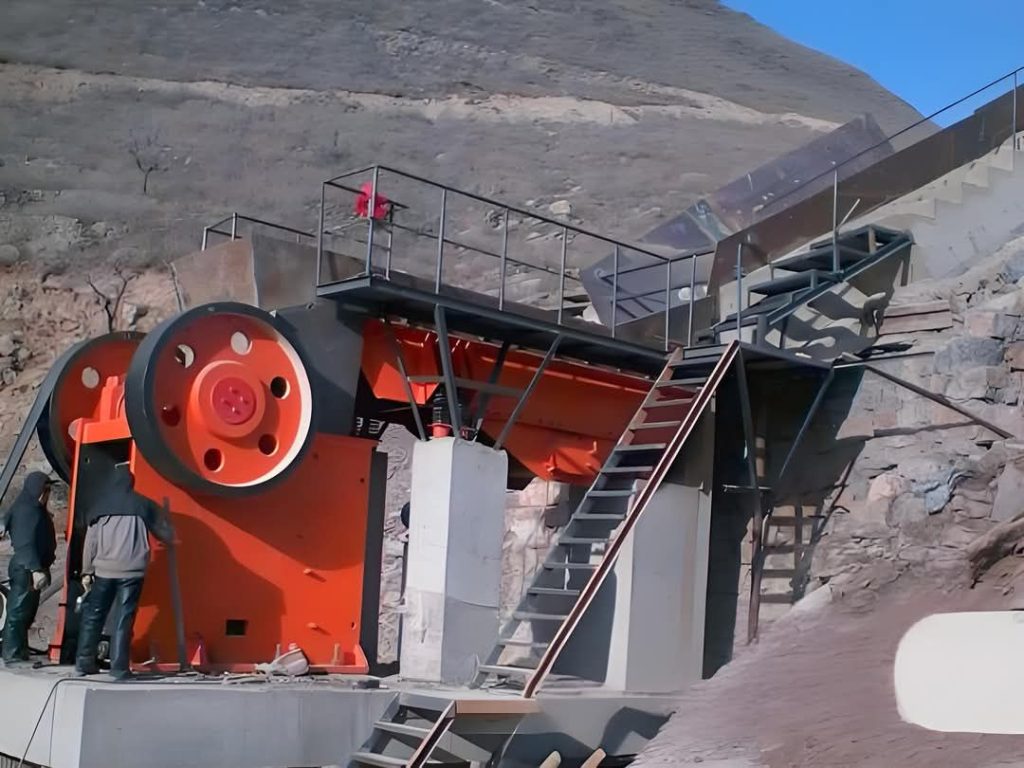
1160×760 Jaw Cavity Benchmarks: VTJ1180DP in High-Moisture Granite
- Primary Main Machine: 1160*760 Jaw (Dual Power)
- Output Throughput Range: 340-400 tons per hour
- Material Hardness Limit: 200MPa+
- Power Architecture: Dual Power (Diesel/Electric Drive capability)
- Primary Risk Factor: Main bearing thermal overload at 40°C ambient
Technical Index: LH-TRACKED MOBILE JAW CRUSHER FOR GRANITE CRUSHING PLANT IN INDONESIA-May/2026-Ref-#48291
Site Lead’s Log: Surviving Thermal Expansion and Mud Chokes in the Tropics
Why does the VTJ1180DP diesel engine bog down so violently during the afternoon monsoons? The physical mass of the feed changes. Dry granite flows, but wet granite mixed with clay fines turns into a highly viscous block. When this sludge enters the 1160×760 opening, the swing jaw is forced to compress water and mud instead of fracturing brittle rock, causing massive torque spikes on the drive belts. How do we stop the toggle plate from snapping when processing unevenly blasted river boulders? Look at your closed side setting and feed size discipline. If operators dump 800mm oversized slabs directly into a cavity set too tight, the mechanical geometry cannot handle the bite angle. The toggle plate snaps precisely because it is designed to fail before the eccentric shaft warps—it is a mechanical fuse, not a defect. Is the dual-power track system actually worth the initial investment over pure diesel? Do not let fuel logistics dictate your uptime. In remote Indonesian islands, diesel supply is volatile and expensive. Running the crusher off the local grid (Electric Drive) slashes your daily running costs. You retain the diesel engine purely for track mobility and emergency backup, securing your capital payback velocity against fuel inflation. What is the exact physical marker that tells us it is time to flip the manganese jaw plates? Measurements dictate action, not guesses. When the lower third of the stationary jaw plate loses its corrugated tooth profile and flattens out, the crushing physics shift from “fracturing” to “grinding.” This increases the motor load by 25% and generates excess dust. Flip it immediately.
Securing Operational Viability Against Abrasive Silica
Deploying a mobile station into a high-heat, high-moisture equatorial environment without understanding the kinetic limits of your bearings is how projects bleed cash. If you ignore the thermal expansion of the eccentric shaft at 340-400 tons per hour and fail to maintain strict lubrication discipline, the resulting metal-on-metal friction will completely destroy the main frame tolerances next month, forcing a total mechanical write-off. Maintain the grease schedule, flip your Mn18Cr2 liners on time, and keep the wet fines out of the primary cavity.
Stop Guessing on Rotor and Liner Wear Cycles
“Send us your feed material hardness and moisture content. Let’s fix the mechanical bleeding before it stops your tracks.” — From the Desk of your Field Technical Director
- > Is a Jaw Crusher Mandatory for the Primary Crushing Stage?
- > Ultrafine Processing of Tailings Slag with Cone Crushers
- > Jaw Crusher with a Capacity of 80 Cubic Meters Per Hour: Applications and Benefits
- > Which Crusher is More Suitable for Making Sand from River Pebble?
- > Impact Crushers for Gold Mining in the Middle East
- > Advantages of Using Vibrating Screens in Industrial Applications
- > Basalt Rock Crushers in New Zealand: A Vital Tool for Construction and Mining
- > The Extensive Use of Popular Mining Ball Mills in Cement Production Lines


Online


Message