
The construction and demolition (C&D) waste stream is diverse and challenging, ranging from clean concrete to mixed debris. Efficiently processing this material on-site is key to reducing landfill use, lowering costs, and creating valuable recycled products. Mobile impact crushers have become a cornerstone of modern C&D recycling due to their unique combination of mobility, high reduction ratios, and excellent product shaping. However, their efficiency varies significantly depending on the waste type. This article provides a clear guide to the specific types of C&D waste most suitable for processing with a mobile impact crusher, along with practical considerations for optimal results.
Ideal Feed Materials for Mobile Impact Crushers
Mobile impact crushers excel with materials that are relatively non-abrasive and friable (brittle). Their high-speed impact action is perfect for breaking materials along natural fault lines.
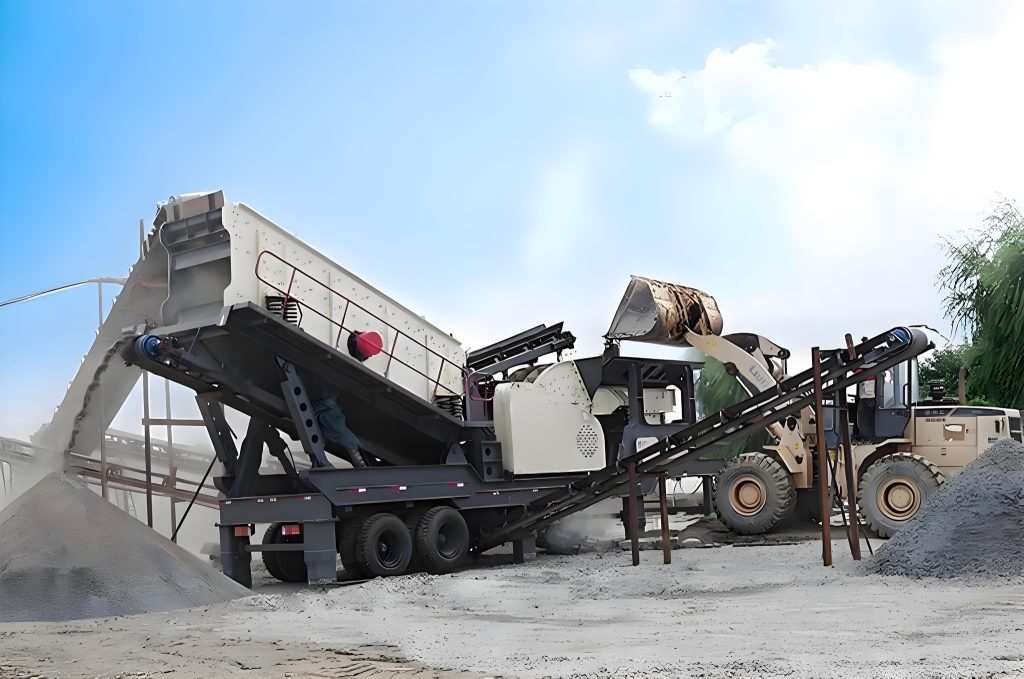
1. Clean Concrete and Reinforced Concrete Debris
- Why it’s ideal: This is the premier application. Concrete is hard but brittle upon impact. The crusher efficiently separates concrete from rebar. The steel is then easily removed by the standard overband magnetic separator, producing clean, high-quality recycled concrete aggregate (RCA).
- End Product: Excellent, cubical RCA for use as road base, drainage material, or aggregate for new concrete.
2. Asphalt Millings and Asphalt Roofing Shingles
- Why it’s ideal: Asphalt is relatively soft and breaks down easily under impact. A mobile impact crusher can quickly process old pavement or roofing material into a consistent, reusable product.
- End Product: Sized recycled asphalt product (RAP) for re-use in new hot-mix or warm-mix asphalt, or as a granular base.
3. Brick, Masonry, and Ceramic Tiles
- Why it’s suitable: These materials are friable and process well. A mobile impact crusher can reduce them to a clean, granular material. Care is needed if significant mortar is present, as it can increase fine, dusty content.
- End Product: Useful for fill material, drainage applications, or as an aggregate in low-strength applications.
4. Mixed C&D Waste (with Pre-Sorting)
- Why it’s conditionally suitable: A mobile impact plant can be effective for mixed waste only after significant pre-sorting. Wood, plastics, paper, and metals must be removed first. The crusher can then process the remaining mineral fraction (concrete, bricks, tiles).
- Critical Requirement: A skilled excavator operator is essential to selectively feed the crusher and avoid contaminants. A robust pre-screening grizzly on the feeder is mandatory.
Materials Requiring Caution or Pre-Treatment
1. Material with High Wood or Light Metal Content
- Risk: These contaminants do not crush and can cause blockages, wrap around the rotor, or damage the crusher. They also contaminate the final aggregate.
- Solution: Mandatory strict pre-sorting before crushing. Use of grapple sorts or screening buckets in the feed process.
2. Highly Abrasive Materials (e.g., contaminated with sand, gravel, high-silica concrete)
- Risk: While concrete itself is manageable, excessive abrasion from sand or certain aggregates accelerates wear on blow bars and impact aprons, increasing operating costs.
- Solution: Use premium wear parts and closely monitor wear rates. Ensure economic viability by calculating cost-per-ton.
3. Material with Excessive Fines or High Moisture (Clay, Dirt)
- Risk: Wet, sticky fines can adhere to the feed chute, crusher cavity, and screens, causing severe clogging and reducing throughput to zero.
- Solution: Pre-screening (scalping) is critical to remove dirt and fine particles before they enter the crusher. Processing very wet material may not be feasible.
Materials Generally NOT Suitable
- Unsorted C&D Waste “Straight from the Pile”: This will lead to constant jams, damage, and a contaminated, unsalable product.
- Virgin Rock/Quarry Stone (as a primary crusher): While capable, the high abrasiveness makes it less cost-effective than a mobile jaw crusher for primary size reduction. Impact crushers are better suited as secondary units in hard rock applications.
- Large, Pure Metal Objects or Heavy Steel Beams: These are not processable and will cause catastrophic damage.
Key Advantages of a Mobile Plant for C&D Waste
- On-Site Processing: Eliminates massive hauling costs for both waste and new aggregate.
- Closed-Circuit Capability: Most units have an onboard screen and return conveyor, allowing for precise sizing of multiple products in a single pass.
- Rapid Setup & Relocation: Enables contractors to process waste at multiple job sites or landfills with one investment.
- High-Quality End Product: The impact crushing principle produces a more cubical, well-graded aggregate compared to compression crushers, enhancing its value and performance.
Conclusion: A Targeted Tool for Maximum Efficiency
A mobile impact crusher is perfectly suited for processing sorted, non-abrasive C&D waste like concrete, asphalt, and masonry. Its strength lies in creating high-value, cubical aggregate directly at the source of waste generation. For mixed or contaminated waste streams, its success is entirely dependent on the quality of upstream sorting and pre-processing.
By carefully matching the waste type to the crusher’s capabilities and implementing necessary pre-sorting steps, contractors and recyclers can unlock significant cost savings, create new revenue streams, and contribute powerfully to a circular construction economy.
Evaluating a mobile impact crusher for your C&D recycling operation? Contact our material processing experts for a waste stream analysis and recommendation on the optimal plant configuration and necessary pre-treatment steps for your specific project.
- > How Much Does a 100 Tons Per Hour Mobile Impact Crushing Station Cost?
- > Advantages of Using Vibrating Screens in Industrial Applications
- > Which Crusher is More Suitable for Making Sand from River Pebble?
- > 200 TPH Mobile Impact Crusher: High-Efficiency Solution for On-Site Crushing
- > Cone Crusher Applications in Pakistan’s Stone Quarrying Industry
- > PY Series High-Efficiency Spring Cone Crusher: Enhancing Crushing Efficiency and Durability
- > High-Performance Impact Crushers for Venezuela’s Mining Industry
- > How to Select the Right Liners for Cone Crusher?


Online


Message